
Abstract
As consumer preference shifts from traditional powders to more convenient delivery formats, creatine gummies have emerged as a rapidly growing category in the sports nutrition market. However, for a Private Label brand or supplement retailer, the transition from powder to gummy is not merely aesthetic—it is a complex challenge of biochemistry and engineering. This article analyzes the technical limitations and standard dosages of creatine in gummy form, exploring how a professional creatine gummies manufacturer balances high potency with stability and texture.

1. The Standard Dosage: Defining the Market Norm
Unlike scoops of powder which can easily deliver 5 grams of pure creatine monohydrate, a gummy matrix has physical limitations.
In the current market, the standard amount of creatine found in a single gummy typically ranges from 500mg to 1,000mg per piece. Consequently, a standard supplement serving size usually consists of:
-
2 Gummies: Delivering 1g – 2g of creatine.
-
4-5 Gummies: Delivering the full research-backed dose of 3g – 5g.
For brand owners, understanding this ratio is crucial. While it is technically possible to load more active ingredients into a gummy, doing so often compromises the structural integrity and taste of the product.
2. The Manufacturing Challenge: “Active Load” vs. Texture
Why can’t we simply pack 5 grams of creatine into a single bear? As a creatine gummies manufacturer, we view this through the lens of “active loading capacity.”
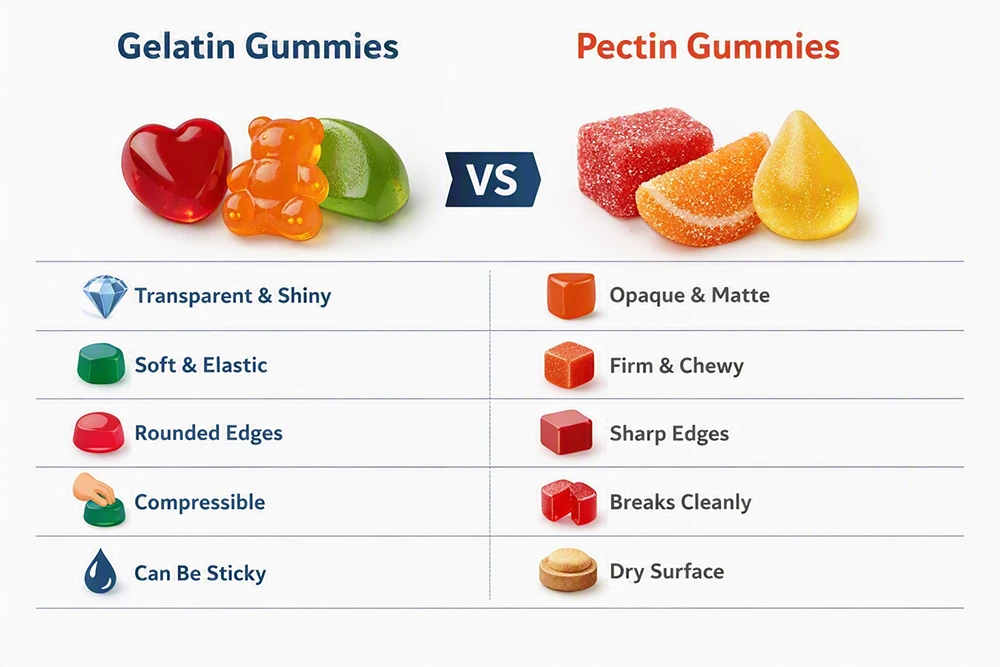
Creatine monohydrate is a crystalline powder. In a gummy formulation, the base (consisting of gelatin or pectin, water, and sweeteners) acts as the carrier.
-
The Sandiness Threshold: If the ratio of dry powder to the liquid base is too high, the gummy loses its chewiness and becomes brittle or “sandy” in texture.
-
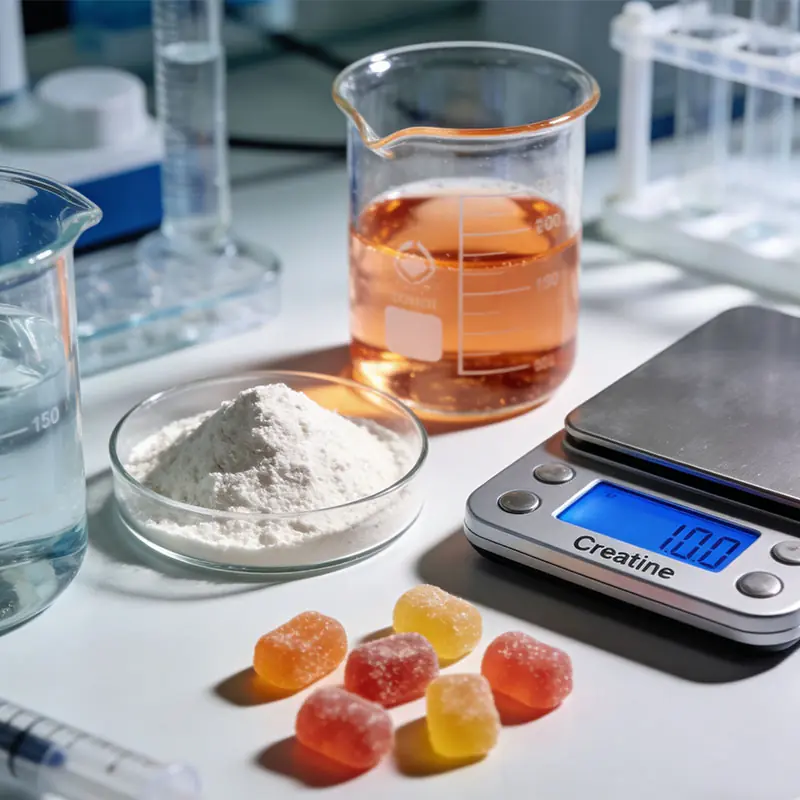
The Solubility Issue: Creatine has low water solubility. In our 10,000-class pharmaceutical-grade laboratories, we utilize specific homogenization techniques to suspend the creatine evenly within the matrix without it precipitating out during the cooling process.
3. Stability: Preventing Conversion to Creatinine
One of the most critical aspects of manufacturing Private Label creatine gummies is ensuring the active ingredient remains effective. Creatine is known to degrade into creatinine (a waste product) when exposed to moisture and heat over time.
To mitigate this, professional manufacturers employ rigorous controls:
-
pH Control: Maintaining a specific pH level during the “cooking” phase to minimize degradation.
-
Low-Temperature Processing: Adding the creatine at the latest possible stage of the production line to reduce heat exposure.
-
Moisture Management: Utilizing precise drying rooms to reach the optimal water activity (Aw) level, preventing the gummy from breaking down the creatine during shelf life.
4. Creatine Monohydrate vs. Creatine HCL in Gummies
To overcome sizing limitations, some brands opt for Creatine HCL (Hydrochloride). Because HCL is claimed to be more soluble and requires a smaller dose (often 750mg) to achieve similar effects to Monohydrate, it is physically easier to fit into a gummy format.
However, Creatine Monohydrate remains the “gold standard” for research. A capable manufacturer must have the R&D capabilities—led by experts in structural biology—to successfully formulate high-dose Monohydrate gummies that remain stable and delicious.
Conclusion
Determining how much creatine is in a gummy is a decision that balances consumer convenience with manufacturing physics. While the industry standard sits between 1g to 3g per serving, the quality of that dosage depends entirely on the manufacturing environment.
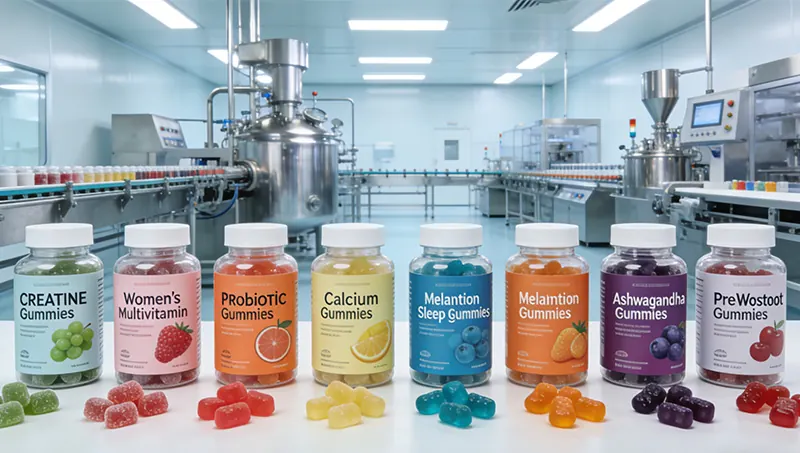
For Private Label brands, success lies in partnering with a manufacturer that possesses pharmaceutical-grade facilities and deep R&D expertise. By strictly adhering to GMP standards and utilizing advanced cleanrooms, we ensure that every gummy delivers precise dosing without contamination or degradation.
FAQ: Common Questions from Brand Owners
Q: Can you manufacture a single gummy with 5g of creatine?
A: Technically, it is extremely difficult to produce a standard-sized gummy (3-4g total weight) with 5g of active load. It would result in a compressed powder block rather than a gummy. We recommend spreading the 5g dose across 3 to 5 gummies to ensure a pleasant texture and proper absorption.
Q: Are creatine gummies as effective as powder?
A: Yes, provided they are manufactured correctly. If the creatine gummies manufacturer uses a stable process that prevents degradation into creatinine, the bioavailable creatine is equally effective. Our R&D team ensures active ingredients remain stable within the gummy matrix.
Q: Do you offer vegan creatine gummies?
A: Absolutely. We specialize in using pectin (plant-based) rather than gelatin to create high-quality vegan supplements. Pectin also offers excellent flavor release and heat stability.
Q: How do you verify the creatine content in the final product?
A: We operate under strict FDA and GMP standards. Every batch undergoes High-Performance Liquid Chromatography (HPLC) testing in our pharmaceutical-grade laboratory to verify that the dosage matches the label claim exactly.