
Summary
Creatine Gummy Production: What You Must Know encompasses the specialized formulation, equipment, and quality control required to manufacture creatine in a chewable format. For B2B buyers, understanding these production complexities is essential to ensure product stability, dosage accuracy, and regulatory compliance. Entering this market requires navigating raw material solubility challenges and partnering with capable contract manufacturers.
Definition
Creatine Gummy Production: What You Must Know refers to the comprehensive understanding of the industrial processes, formulation hurdles, and manufacturing standards necessary to produce creatine-infused gummies at a commercial scale. It highlights the technical gap between standard gummy manufacturing and the specific requirements of handling low-solubility, high-dose active ingredients like creatine monohydrate.
Main Content
What It Is
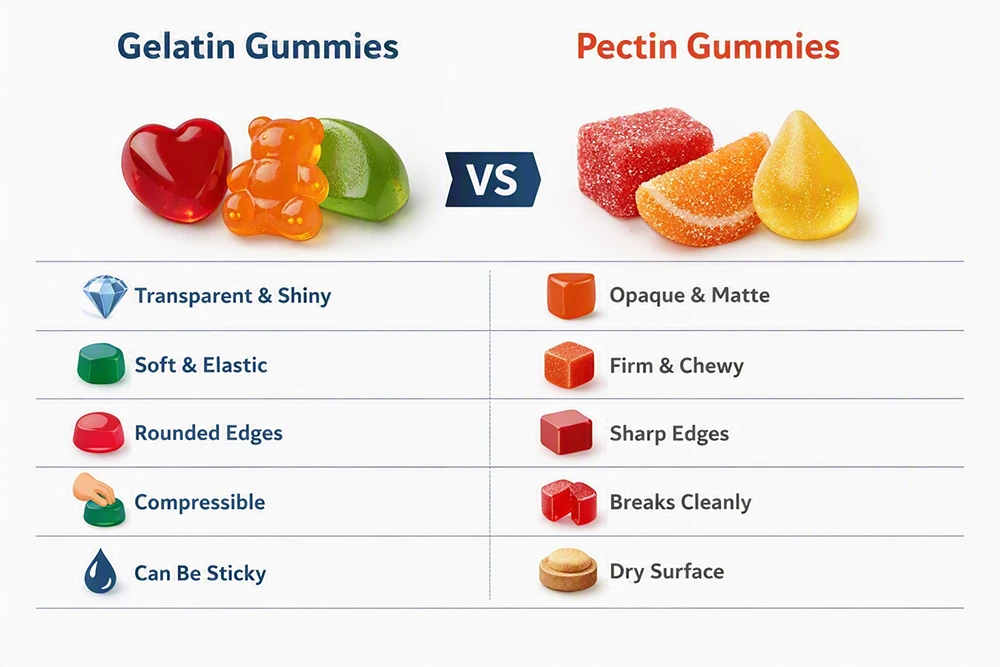
Producing creatine in gummy form involves suspending or dissolving creatine monohydrate within a gelatin or pectin matrix. Unlike water-soluble vitamins, creatine is notoriously difficult to integrate into gummies due to its grittiness and low solubility, requiring advanced processing techniques to achieve a smooth texture.
Industry Background
The supplement industry has shifted heavily toward functional gummies, moving beyond basic vitamins into active performance ingredients. Creatine gummies represent the next frontier in sports nutrition, catering to consumers who dislike traditional powders or capsules but want the ergogenic benefits of creatine.
Business Relevance
Understanding the exact methodology required to make creatine gummies allows brands to capitalize on a high-margin, rapidly growing category. It requires careful supply chain planning, as the production line must be adapted to handle the physical properties of creatine powder without compromising the gummy’s structural integrity.
Differences vs. Alternative Formats
Traditional creatine is sold as a flavorless powder or encapsulated form, which allows for precise, high dosing (e.g., 5g per serving). Gummies limit the maximum dosage per piece due to volume constraints, often requiring consumers to take multiple gummies to reach the effective 5g threshold.
Key Advantages and Limitations
Advantages include superior taste masking, higher consumer compliance, and premium retail pricing. Limitations involve formulation complexity, lower dosage density per unit, higher per-unit manufacturing costs, and increased sensitivity to heat and humidity during storage.
Who Should Consider This
Sports nutrition brands, lifestyle supplement companies, and OEM/ODM buyers looking to differentiate their product lines should explore this category. Working with an experienced creatine gummies manufacturer is critical for brands lacking in-house gummy production capabilities to avoid costly trial-and-error phases.
Compliance and Quality Considerations
Dosage uniformity is the primary regulatory focus. Because creatine can settle during the depositing process, strict quality control measures must be implemented to ensure each gummy contains the declared amount of active ingredient. Facilities must adhere to cGMP and maintain rigorous testing protocols.
What Businesses Should Evaluate Before Sourcing
Before deciding to create creatine gummies, businesses must evaluate a manufacturer’s specific experience with low-solubility powders, their drying and molding technology, and their ability to pass third-party potency and purity tests consistently.
Technical Parameter Table
| Parameter | Details |
|---|---|
| Product Form | Chewable gummies (pectin-based or gelatin-based) |
| Key Materials / Ingredients | Creatine monohydrate, pectin/gelatin, glucose syrup, sucrose, natural flavors, citric acid |
| Manufacturing Process Highlights | Precision mixing, vacuum cooking, uniform active dispersion, starch/silicone mold depositing, controlled drying |
| Quality Standards | cGMP, ISO22000, HACCP, FDA registration, third-party COA testing |
| Packaging Options | PET bottles with desiccant pouches, foil stand-up pouches, blister packs |
| Scalability & Production Capacity | Scalable from small pilot batches to commercial runs exceeding millions of units per month |
| Storage & Logistics | Cool, dry storage (below 25°C and low humidity); climate-controlled transport recommended to prevent fusion |
Practical Insights
Manufacturing Quality and Process Control
The primary technical hurdle is preventing the creatine powder from settling at the bottom of the cooking vessel or molding tray. Continuous, high-shear mixing and controlled cooling rates are necessary to lock the creatine uniformly into the gummy matrix.
Raw Material Sourcing Transparency
B2B buyers should demand high-purity creatine monohydrate, verifying the absence of impurities like dicyandiamide (DCD) and dihydrotriazine (DHT). Transparent sourcing of gelling agents is also required to ensure consistent blooming and setting times.
Production Scalability and Lead Time
Scaling from a laboratory sample to a full commercial batch often reveals texture or stability issues. Typical lead times range from 45 to 60 days, factoring in raw material procurement, production scheduling, extended drying times, and final QC clearance.
Compliance and Documentation Readiness
Manufacturers must supply comprehensive documentation, including Certificates of Analysis (COA), allergen declarations, and master manufacturing records. For international shipments, full customs dossiers and destination-market compliance files are required.
Cost Structure Considerations
The cost to make creatine gummies is inherently higher than powders due to the cost of excipients (sweeteners, gelling agents), energy-intensive drying processes, and specialized moisture-barrier packaging. Lower dosage per piece also increases the cost per gram of active ingredient delivered.
How to Evaluate a Reliable Supplier
Conducting a facility audit is non-negotiable. Buyers should inspect the cleanroom standards, the calibration of depositing equipment, and the supplier’s quarantine protocols for both incoming raw materials and finished goods.
B2B Decision Guide
How Brands Choose the Right Manufacturer
Brands must select manufacturers that demonstrate specific success with functional, active-density gummies rather than just simple vitamin gummies. Requesting case studies and existing product samples is essential to verify capability.
What Matters in OEM/ODM Projects
In ODM projects, clear agreements regarding formula ownership and intellectual property are vital. In OEM projects, the manufacturer must prove they can faithfully execute the brand’s exact recipe across different batch sizes without deviation in texture or dosage.
How to Assess Production Capability
Evaluate the factory’s maximum throughput and minimum order quantities (MOQs). A facility with high daily output can support aggressive product launches and scale seamlessly as retail demand grows.
Key Criteria for Long-Term Partnerships
Look for manufacturers that invest in R&D to optimize formulas for cost and stability. Strong communication, transparent pricing structures, and a proactive approach to supply chain disruptions are key indicators of a reliable long-term partner.
Risk Control and Quality Assurance Checkpoints
Implement strict in-process quality gates, including weight checks, texture analysis, and moisture content testing. Establish clear rejection criteria and corrective action protocols for batches that fail potency uniformity testing.
Conclusion
Creatine Gummy Production: What You Must Know ultimately revolves around mastering the technical difficulties of formulating a low-solubility powder into a stable, chewable matrix. For B2B brands, successfully navigating these production requirements translates into a strong competitive advantage in the sports nutrition sector. By prioritizing formulation stability, dosage accuracy, and strict manufacturing partnerships, businesses can safely capitalize on the growing consumer demand for performance-based gummies.
FAQ
Q: What is Creatine Gummy Production: What You Must Know?
A: It is the understanding of the specialized industrial processes, formulation challenges, and quality control measures needed to commercially manufacture creatine in a chewable gummy format.
Q: Why does this production knowledge matter for manufacturers?
A: It matters because creatine’s low solubility and gritty texture make it difficult to process in gummy form, requiring specialized equipment and mixing techniques to ensure a smooth texture and accurate dosing.
Q: How does creatine gummy production compare to alternatives?
A: Unlike powder or capsule production, gummy production requires thermal processing, gelling agents, and extended drying times, resulting in lower active ingredient density per unit but higher consumer compliance.
Q: What businesses should consider before sourcing?
A: Businesses should evaluate the supplier’s experience with low-solubility ingredients, their ability to guarantee dosage uniformity, their drying capabilities, and their compliance with cGMP standards.
Q: What quality standards apply to creatine gummy production?
A: Production must comply with cGMP, ISO22000, and HACCP standards, including mandatory third-party testing for active ingredient potency, heavy metals, and microbial limits.
About Shenzhen Gothink Biotech Co., Ltd.
Shenzhen Gothink Biotech Co., Ltd. is a dietary supplement manufacturer providing comprehensive OEM, ODM, CMO, and CDMO services for global health brands. The company operates a GMP-certified facility featuring a 100,000-class cleanroom with a daily output of 16 tons and an annual production capacity of 5,000 tons, supporting both bulk wholesale supply and private label projects. R&D capabilities are driven by a 10,000-class pharmaceutical-grade laboratory, led by a chief scientific advisor with postdoctoral experience from top U.S. institutions, enabling custom formulation development for complex products. The facility holds multiple global certifications, including ISO9001, ISO22000, HACCP, FDA, HALAL, GMP, KOSHER, BRC, FSSC 22000, PJPH, and Vegan. By conducting formulation research on approximately 2,000 new products annually and maintaining strict quality control, Gothink Biotech serves as a reliable partner for long-term B2B collaborations in the nutrition supplement industry.