
Abstract
Creatine gummies have gained popularity as a convenient, palatable form of creatine supplementation, appealing to athletes, fitness enthusiasts, and those seeking muscle recovery support. This article explores the formulation and manufacturing considerations for creatine gummies, drawing from established practices in the dietary supplement industry. It provides practical insights for manufacturers, private label brands, and wholesalers interested in producing high-quality creatine gummies supplements. By focusing on ingredient selection, production processes, and quality assurance, the content aims to offer balanced guidance to ensure product stability, efficacy, and compliance with industry standards.

Understanding Creatine in Gummy Form
Creatine is a well-researched compound known for its role in enhancing ATP production, which supports energy during high-intensity activities. When formulated into gummies, it transforms a traditionally powdered supplement into an easy-to-consume option. As a creatine gummies manufacturer, the key is to balance the active ingredient’s bioavailability with the gummy’s texture and taste.
In developing a creatine gummies recipe, start with micronized creatine monohydrate, which offers better solubility and absorption compared to standard forms. Typical dosages range from 3-5 grams per serving, but this should be adjusted based on target user needs and regulatory guidelines. Incorporating natural flavors like berry or citrus can mask creatine’s subtle bitterness, making the product more appealing without relying on excessive sugars.
For private label creatine gummies, customization options include vegan-friendly bases using pectin instead of gelatin, ensuring broader market accessibility. Manufacturers should prioritize stability testing, as creatine can degrade in humid environments, potentially affecting potency over time.
Key Ingredients and Formulation Basics
A solid creatine gummies recipe begins with a gelling agent to achieve the desired chewiness. Pectin, derived from fruits, is a common choice for its plant-based properties and ability to form stable gels at various pH levels. Combine this with sweeteners such as maltitol or erythritol to keep the product low-sugar, aligning with health-conscious trends.
The core active ingredient, creatine monohydrate, should constitute about 10-20% of the formula by weight, depending on serving size. Supporting ingredients might include electrolytes like sodium citrate for better hydration synergy, or vitamins such as B12 to enhance energy metabolism. Water content is critical—aim for 15-20% to maintain texture without promoting microbial growth.
In the context of creatine gummies supplement production, avoid common pitfalls like over-acidification, which can cause creatine to convert to creatinine, reducing efficacy. Lab testing for pH (ideally 4-5) and dissolution rates ensures the gummies release creatine effectively in the digestive system.
Manufacturing Process Overview
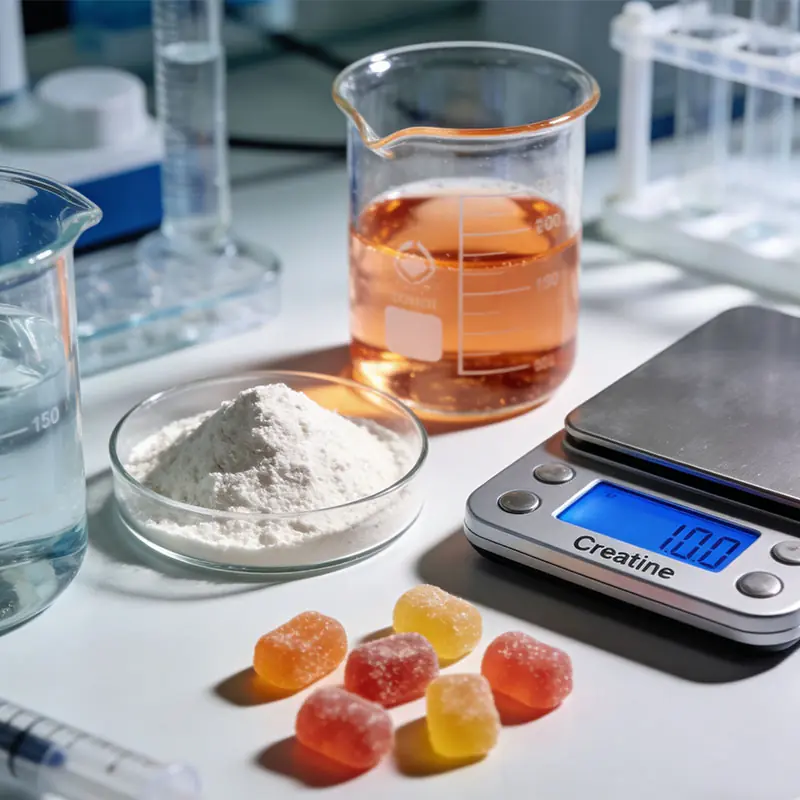
Producing creatine gummies at scale requires a structured approach. Begin with mixing the dry ingredients—creatine, sweeteners, and flavors—in a controlled environment to prevent clumping. Heat the gelling solution (pectin with water and acids) to around 80-90°C, then incorporate the creatine mixture gradually to avoid degradation.
Molding follows, where the hot slurry is deposited into starch molds or silicone trays and cooled to set. Drying time varies from 24-48 hours, depending on humidity controls. As a creatine gummies manufacturer, implementing GMP standards during this phase is essential to minimize contamination risks.
For those exploring private label creatine gummies, scalability is a factor: start with small batches (e.g., 500 kg) to test formulations before ramping up. Equipment like continuous cookers and depositors can streamline production, ensuring uniformity in size and dosage.
Quality Control and Stability Considerations
Quality assurance is paramount in creatine gummies manufacturing. Conduct assays for creatine purity (at least 99%) and heavy metal testing to comply with FDA and international standards. Shelf-life studies under accelerated conditions help predict stability, typically aiming for 18-24 months.
Packaging plays a role—use moisture-barrier materials like foil pouches to protect against humidity, which can soften gummies or degrade creatine. Labeling should include accurate dosing instructions and allergen warnings, fostering trust in the product.
In dietary supplement manufacturing, third-party verification adds credibility, confirming that the gummies deliver the claimed creatine content without fillers.
Regulatory and Market Insights
Navigating regulations is crucial for creatine gummies supplements. In the U.S., creatine is classified as a dietary ingredient under DSHEA, but claims must be substantiated to avoid FDA scrutiny. For international markets, check for restrictions on creatine in countries like France or Denmark.
Market trends show demand for functional gummies, with private label options allowing brands to differentiate through unique blends, such as creatine with beta-alanine for endurance. Wholesalers should consider MOQs that accommodate startups, starting from 1,000 units to enable market testing.
Article Summary
Formulating and manufacturing creatine gummies involves a blend of science and precision to create a product that is both effective and consumer-friendly. By focusing on high-quality ingredients, controlled processes, and rigorous testing, manufacturers can produce reliable creatine gummies supplements. This approach not only meets industry standards but also provides value to private label brands and wholesalers seeking to expand their offerings. Emphasizing stability and compliance ensures long-term success in the competitive dietary supplement space.

FAQ
What is the ideal dosage for creatine in gummies? A standard serving might include 3-5 grams of creatine monohydrate, but consult with formulation experts to tailor it to specific user profiles and ensure it aligns with daily intake recommendations.
Can creatine gummies be made vegan? Yes, by using pectin or carrageenan as gelling agents instead of gelatin, making them suitable for plant-based private label creatine gummies.
How do you ensure creatine stability in gummy form? Through pH control, low-moisture formulations, and protective packaging, along with regular stability testing to monitor degradation over time.
What are common challenges in creatine gummies manufacturing? Maintaining texture without excessive sugars, preventing creatine breakdown, and achieving uniform dosing require precise process controls and quality checks.
Is third-party testing necessary for creatine gummies supplements? While not always mandatory, it enhances trustworthiness and verifies label claims, which is beneficial for manufacturers and brands in regulated markets.