
Melatonin is the best-known sleep active, but it is not always the right one — and in several major markets it is not legally available as a supplement at all. That is why a large and growing share of sleep gummy development is built on non-hormonal actives: amino acids, botanicals and minerals that work through relaxation, stress modulation and nervous system support rather than direct circadian signalling.
For brands, this route has three attractions: it opens markets where melatonin is restricted, it appeals to consumers who actively avoid hormones, and it differentiates the product in a category where melatonin-only SKUs are heavily commoditised. This article covers the mechanisms, evidence, standardisation requirements and formulation risks for each major active. For the full category picture, see our complete sleep gummies manufacturing guide.
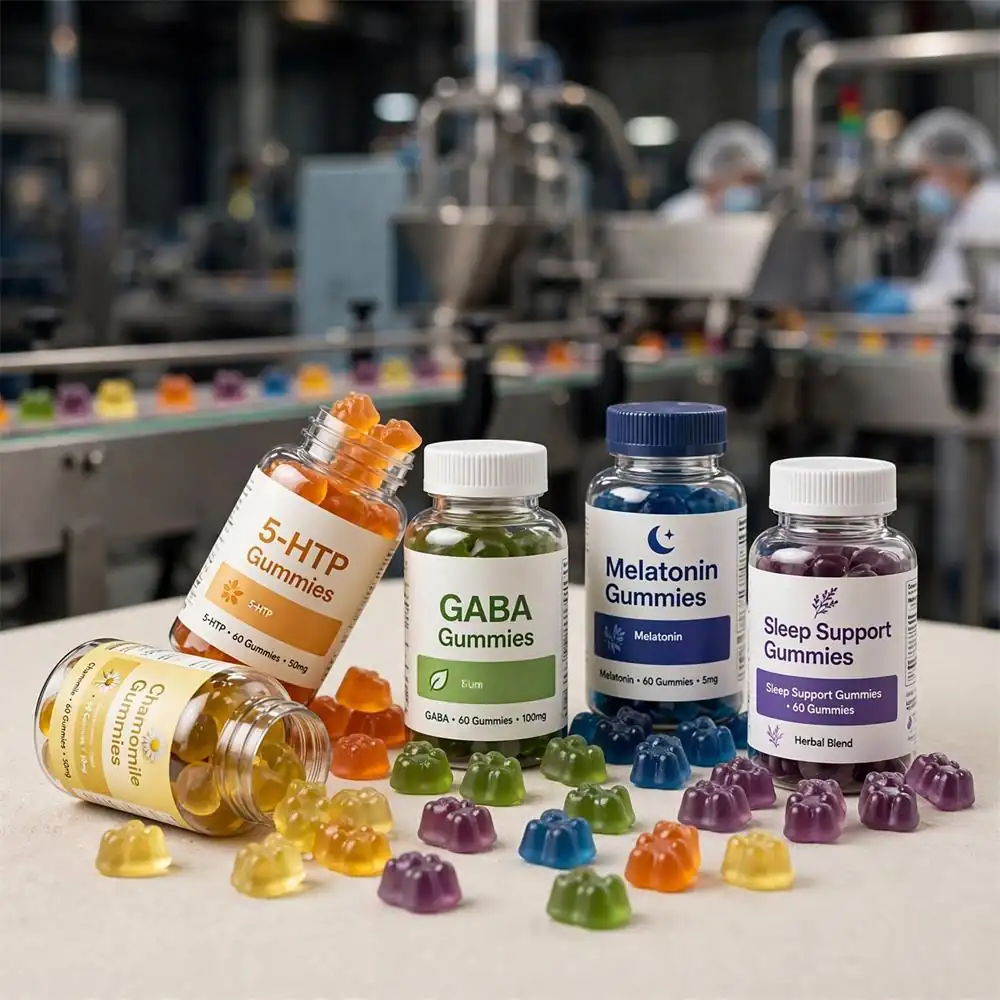
Why Go Non-Hormonal
- Regulatory access. Melatonin is classified as a medicine in several EU member states and is prescription-only above 1 mg in the UK. Botanical and mineral formulations often face a simpler path. Full detail in our melatonin compliance guide.
- Consumer resistance. A meaningful segment of consumers reports grogginess with higher melatonin doses and prefers a “natural” positioning.
- Differentiation. A melatonin-only gummy competes largely on price. A properly constructed stack with a documented rationale does not.
- Adjacent demand. The World Health Organization estimates around 1 billion people worldwide live with mental health conditions. Stress, low mood and sleep disturbance overlap heavily, and consumers increasingly shop for all three at once.
The Actives, One by One
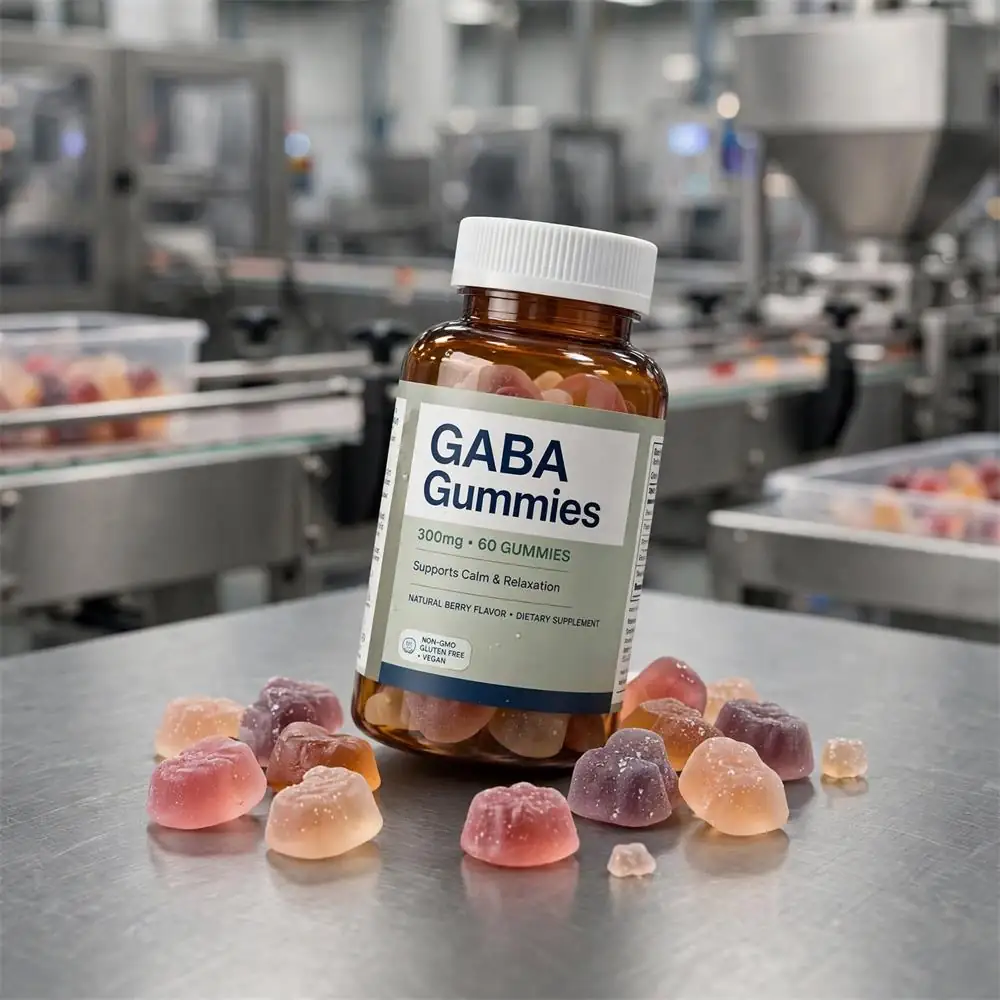
GABA (Gamma-Aminobutyric Acid)
Mechanism. GABA is the primary inhibitory neurotransmitter in the central nervous system. Reduced GABAergic activity is associated with difficulty quieting the brain at bedtime — the “tired but wired” pattern that melatonin does not address well.
Evidence. Oral GABA supplementation has been studied for stress reduction and sleep quality, with results that are promising but not yet definitive. Much of the literature examines GABA in combination with L-theanine rather than alone.
Formulation note. GABA is water-soluble and relatively straightforward to incorporate. The principal challenge is dose: effective amounts are typically in the hundreds of milligrams, which constrains what else can fit in a 3 g gummy.
Regulatory note. Status varies by market; verify before formulation, particularly for the EU.
L-Theanine
Mechanism. An amino acid found in tea leaves, L-theanine promotes relaxed alertness without sedation. It is not a sleeping agent in the conventional sense — it reduces the physiological arousal that prevents sleep onset.
Evidence. Reasonably well studied for stress and sleep quality, and particularly well supported in combination with other actives.
Formulation note. This is the most formulation-friendly active on the list: good stability, mild taste, and a meaningful dose fits comfortably in a gummy. It is the natural partner for low-dose melatonin.
Commercial note. Because it delivers relaxation without drowsiness, L-theanine supports dual positioning — an evening product that does not carry a “knockout” connotation.
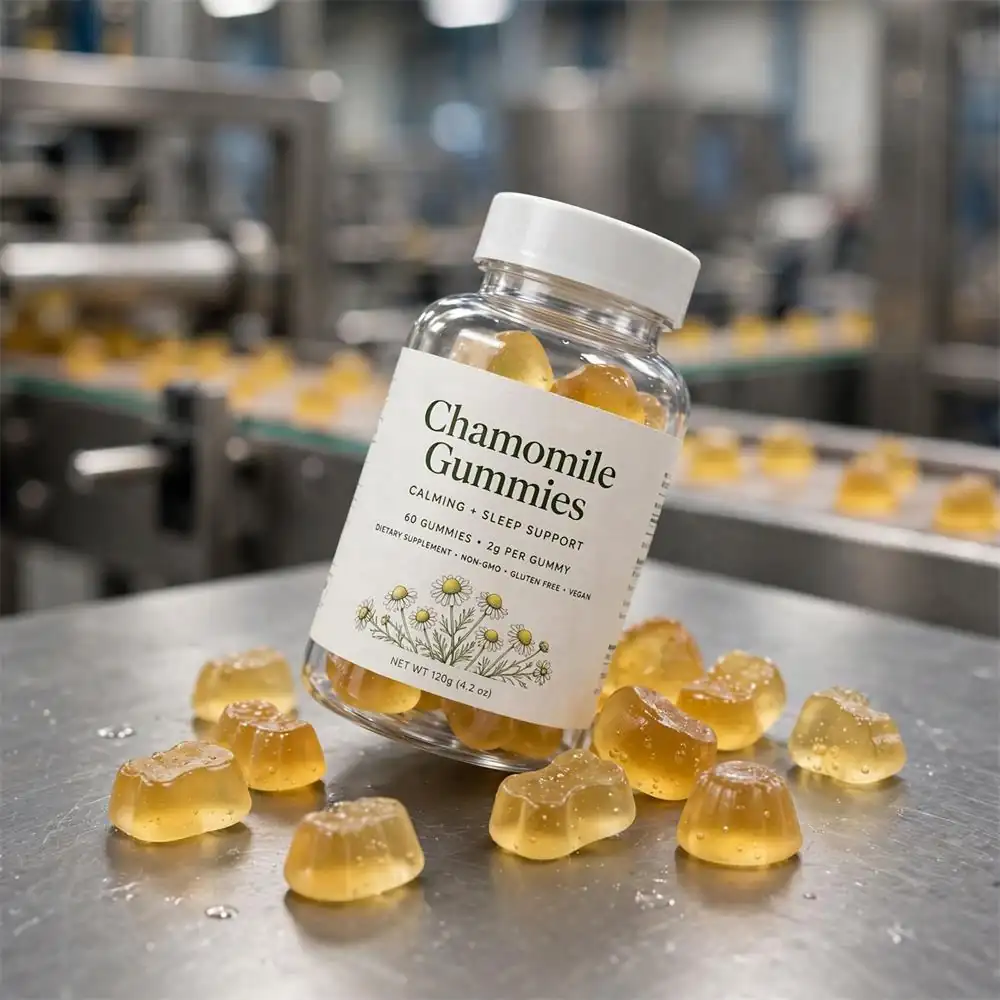
Chamomile (Matricaria chamomilla)
Mechanism. Chamomile is rich in apigenin, a flavonoid that may bind to GABA receptors and promote calmness. Its effect is gentle rather than sedating.
Evidence. Long traditional use, moderate clinical support. Best positioned as a supporting botanical within a blend rather than as a standalone active.
Formulation note. The critical variable is extract standardisation. Always specify the marker compound and the extract ratio; an unstandardised “chamomile powder” delivers no reproducible dose. Chamomile’s flavour is generally agreeable, which is a genuine advantage over valerian.
Magnesium (glycinate, citrate, L-threonate)
Mechanism. Magnesium regulates nervous system function, supports GABA activity and moderates the physiological stress response. Deficiency — common in populations with low intake of leafy greens, nuts and seeds — is associated with difficulty falling and staying asleep.
Evidence. Among the stronger evidence bases in the non-hormonal group, particularly for older adults and stress-related sleep disturbance.
Formulation note. Three constraints, in order of difficulty. First, dose volume: meaningful magnesium doses are large, and this is the single most common reason a magnesium sleep gummy cannot be built to specification. Second, taste: mineral, chalky, persistent. Third, syneresis risk: the instinct to increase acid to mask minerality degrades the pectin matrix over weeks. Buffering agents are the correct answer. See our formulation guide for how these are resolved in practice.
Commercial note. Magnesium supports a dual nutritional and sleep positioning, which broadens the label story considerably.

Ashwagandha (Withania somnifera)
Mechanism. An adaptogen used in Ayurvedic medicine for millennia, ashwagandha is studied for cortisol reduction and for supporting GABA activity, which connects stress reduction to improved sleep quality.
Evidence. Reasonably robust for stress and anxiety, with specific support for sleep. A frequently cited double-blind, placebo-controlled study (Langade et al., Cureus, 2019) examined ashwagandha root extract in insomnia and anxiety.
Formulation note. Use a standardised, branded extract — KSM-66 and Sensoril are the common references — rather than generic root powder. Branded extracts bring consistent withanolide content, their own clinical literature, and cleaner labelling. Note that ashwagandha requires a novel food status check for certain EU markets.
Commercial note. Ashwagandha carries stress, sleep and energy claims simultaneously, which lets brands reuse one active across multiple SKUs and amortise registration cost.
Supporting Botanicals
- Valerian root: among the most studied sleep botanicals, with mild sedative effect. Significant taste-masking challenge — earthy and persistent.
- Passionflower: traditional use for anxiety and insomnia, with some clinical support for mild sleep improvement.
- Lemon balm: frequently paired with valerian; associated with reduced anxiety and improved sleep quality.
- 5-HTP: a precursor to both serotonin and melatonin. Effective, but with more regulatory scrutiny and interaction considerations than the others.
Comparison at a Glance
| Active | Primary mechanism | Evidence strength | Formulation risk | Key watchpoint |
|---|---|---|---|---|
| GABA | Inhibitory neurotransmission | Moderate, often in combination | Low–moderate | Large dose volume; variable market status |
| L-Theanine | Relaxation without sedation | Moderate–good | Low | None significant — the easiest active to work with |
| Chamomile | Apigenin / GABA receptor binding | Traditional plus moderate | Low | Must standardise the extract |
| Magnesium | Nervous system regulation, GABA support | Good | High | Dose volume, mineral taste, syneresis |
| Ashwagandha | Adaptogenic cortisol modulation | Moderate–good | Moderate | Use branded standardised extract; check EU novel food status |
| Valerian | Mild sedation | Moderate | Moderate–high | Aggressive taste masking required |
| 5-HTP | Serotonin and melatonin precursor | Moderate | Moderate | Regulatory scrutiny; interaction profile |
Combination Logic: Additive, Not Redundant
The best-performing sleep stacks combine actives that work through different mechanisms rather than stacking three ingredients that do approximately the same thing.
- Low-dose melatonin + L-theanine. Circadian signal paired with arousal reduction. The most common premium architecture.
- Magnesium + L-theanine + chamomile. A fully non-hormonal build suitable for markets where melatonin is restricted.
- Ashwagandha + magnesium. Stress-led positioning with sleep as the outcome — useful where the consumer self-identifies as stressed rather than insomniac.
- Melatonin + magnesium + L-theanine. The classic three-way stack, and the one most likely to run into dose-volume and taste constraints.
Before committing, ask whether each component contributes a distinct mechanism. Redundant inclusion increases cost and taste burden without improving the product.
Standardisation: The Question That Separates Serious Brands
Botanical quality is not interchangeable. Two chamomile extracts at the same inclusion rate can deliver very different amounts of apigenin. Always require from your manufacturer:
- The standardisation specification for every botanical extract — marker compound and percentage
- The extract ratio (for example 10:1) and the part of plant used
- Whether the extract is a branded, clinically studied material or a generic commodity
- Supplier CoAs and traceability documentation
- Confirmation of novel food status in your target market
This is also the most reliable way to distinguish a genuinely differentiated product from a commodity one with a good label.
Claim Discipline
Botanical ingredients tempt brands toward overclaiming, and that is where regulatory exposure concentrates. In the United States, structure/function claims such as “supports relaxation” are permissible when truthful and accompanied by the required FDA disclaimer; disease claims such as “treats insomnia” are not. In the EU, claims must come from the EFSA-approved register or be substantiated through formal scientific review — a materially stricter standard.
The practical rule: write claims that your ingredient’s clinical literature can defend at the dose actually present in the formula.
Scenario Bundling: A Tactic Worth Copying
One effective positioning approach is to bundle relaxation with adjacent needs rather than selling “sleep” in isolation. A post-holiday recovery product combining digestive support, relaxation and sleep is one example — it gives the consumer a specific occasion to buy, which generic sleep products often lack. The same logic applies to travel, exam periods and shift-work rotations.
Frequently Asked Questions
Can a sleep gummy work without melatonin?
Yes. Magnesium, L-theanine, GABA and standardised botanicals all have plausible mechanisms and varying levels of clinical support. Non-hormonal builds are also the only viable route in several regulated markets.
Which non-melatonin active has the strongest evidence?
Magnesium has one of the stronger evidence bases, particularly for older adults and stress-related sleep disturbance. Ashwagandha has specific clinical support in insomnia and anxiety. L-theanine is well studied for relaxation, though more often in combination than alone.
Why does extract standardisation matter so much?
Because the active marker compound — apigenin in chamomile, withanolides in ashwagandha — is what delivers the effect. Without a standardisation specification, the inclusion rate tells you nothing about the dose.
What is the hardest non-melatonin active to formulate?
Magnesium, because of the combination of large required dose, persistent mineral taste and syneresis risk from acid-based taste masking. It is solvable, but it needs a manufacturer with specific experience.
Can these actives be combined with melatonin?
Yes, and the combination is often the strongest commercial proposition. Verify that each active’s dose still fits the gummy and that stability has been tested in combination, not individually. Stability and dosing detail is covered in our melatonin guide and the formulation guide.
Are there regulatory concerns specific to botanicals?
Yes — novel food status in the EU, country-specific permitted-ingredient lists, and stricter claim rules than the US. Verify per market before formulation rather than after.
About Gothink Biotech
Shenzhen Gothink Biotech Co., Ltd. is a dietary supplement and gummy manufacturer providing OEM, ODM, CMO and CDMO services to global brands. Our 100,000-class GMP-certified cleanroom supports daily output of 16 tons and annual capacity of 5,000 tons, backed by a 10,000-class pharmaceutical-grade R&D laboratory developing more than 2,000 formulations annually. We hold ISO 9001, ISO 22000, HACCP, FDA, GMP, HALAL, KOSHER and Vegan certifications, and support flexible MOQs from trial runs to full-scale production. To see the botanical and mineral sleep formats we produce, visit our sleep support gummies collection.