
Summary
Reducing costs in private label gummy production depends on formulation choices, order volume, packaging strategy, and manufacturer selection. Brands that plan production scale, standardize formulas where possible, and work with an experienced manufacturer typically achieve lower per-unit costs without sacrificing quality. This article outlines the main cost drivers and practical ways B2B buyers can manage them.
Definition
How to reduce costs when ordering private label gummies refers to the set of sourcing, formulation, and production decisions that lower the total cost of manufacturing custom gummy supplements while maintaining product quality and regulatory compliance. It covers ingredient selection, batch sizing, packaging design, and supplier negotiation strategies relevant to brand owners and procurement teams.
Main Content
What Drives Gummy Manufacturing Costs
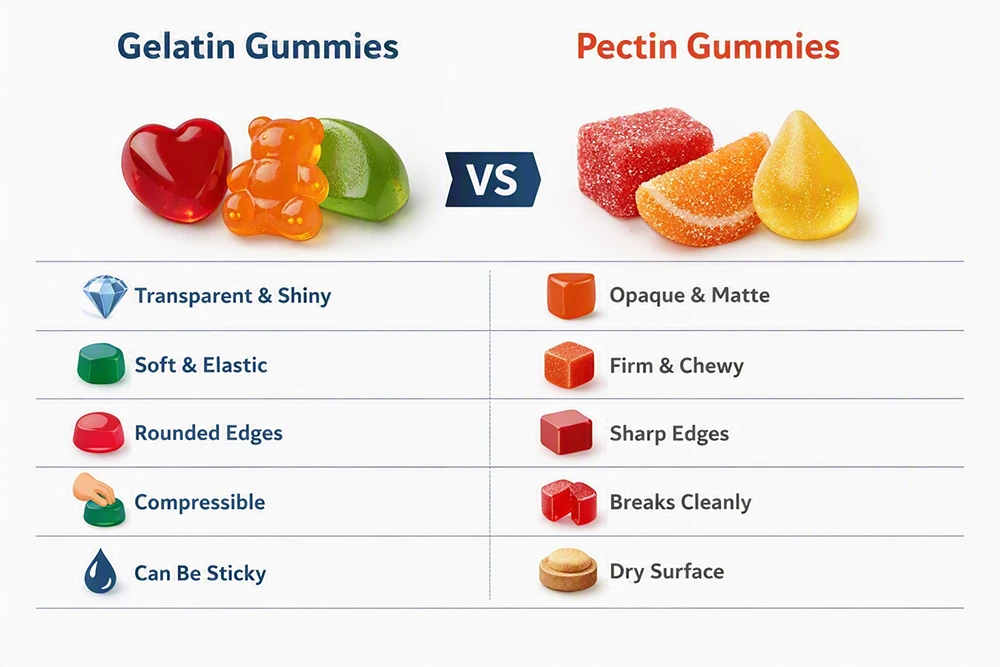
Gummy production costs are shaped by raw material selection (pectin vs. gelatin vs. specialty actives), flavor and color systems, batch size, mold complexity, and packaging format. Functional ingredients such as vitamins, minerals, or botanical extracts also affect cost depending on dosage and sourcing origin.
Industry Background
As demand for functional and vitamin gummies has grown, contract manufacturers have expanded capacity and formulation libraries. This has created more competitive pricing options for brands, particularly those willing to use existing base formulas rather than fully custom development.
Business Relevance
For emerging brands and established companies alike, cost control directly affects retail pricing, margin, and market competitiveness. Understanding where costs originate in the supply chain allows procurement teams to make informed trade-offs between customization and price.
Key Cost Reduction Strategies
Common approaches include:
- Using existing base formulas instead of fully custom formulations
- Increasing order volume to benefit from economies of scale
- Choosing standard shapes and molds instead of custom tooling
- Simplifying packaging design in early production runs
- Consolidating flavors or SKUs to reduce changeover costs
Differences vs. Fully Custom Development
Fully custom formulations require additional R&D time, stability testing, and often higher minimum order quantities (MOQ), which increases per-unit cost. Semi-custom approaches, where a brand adjusts an existing formula’s flavor, color, or dosage, generally offer a faster and more cost-effective path to market.
Who Should Consider Cost-Optimized Sourcing
This approach is relevant for startups entering the supplement market, distributors managing multiple SKUs, and established brands seeking to improve margins on existing product lines.
Compliance and Quality Considerations
Cost reduction should not come at the expense of regulatory compliance or quality assurance. Buyers should confirm that any cost-saving adjustment still meets required certifications and testing standards before finalizing a formula change.
What to Evaluate Before Sourcing
Before placing an order, businesses should evaluate MOQ requirements, ingredient sourcing transparency, lead times, and the manufacturer’s ability to scale production as order volume grows.
Technical Parameter Table
| Category | Cost-Relevant Factors |
|---|---|
| Product Form | Standard shapes vs. custom molds; standard shapes reduce tooling cost |
| Key Materials | Pectin, gelatin, sweeteners, functional actives; sourcing origin affects price |
| Manufacturing Process | Batch size, mixing, molding, drying; larger batches lower per-unit cost |
| Quality Standards | GMP, ISO, third-party testing; maintaining compliance is non-negotiable |
| Packaging Options | Bottles, pouches, blister packs; simpler packaging reduces initial cost |
| Scalability | Higher order volume typically improves pricing tiers |
| Storage & Logistics | Shelf-stable formulations reduce handling and storage costs |
Practical Insights
Manufacturing quality and process control remain essential even when optimizing for cost; cutting corners on production standards can lead to inconsistent products and compliance risk. Raw material sourcing transparency helps buyers understand where cost savings are coming from and whether they affect ingredient quality.
Production scalability and lead time also matter: a manufacturer with flexible capacity can accommodate smaller trial runs at reasonable cost while still offering volume discounts as orders grow. Buyers should request documentation readiness, including certificates of analysis and compliance records, as part of the cost evaluation process.
Cost structure considerations should include not just per-unit price but also MOQ, tooling fees, and any charges tied to formula customization. Evaluating a reliable supplier means comparing total landed cost rather than headline pricing alone.
B2B Decision Guide
Brands choosing a manufacturer for cost-optimized production should compare base formula libraries, MOQ flexibility, and pricing tiers across order volumes. In OEM/ODM projects, clarifying which costs are fixed (tooling, formulation) versus variable (materials, packaging) helps with budgeting.
Assessing production capability involves reviewing a manufacturer’s certifications, cleanroom class, and daily output capacity to confirm they can support growth without repeated re-negotiation. For long-term partnerships, criteria should include consistent quality control, transparent pricing structures, and responsive communication.
Risk control and quality assurance checkpoints, such as batch testing and stability data, should remain part of the evaluation even when cost is the primary driver, since compliance failures ultimately cost more than upfront savings.
Conclusion
Reducing costs in private label gummy manufacturing is achievable through informed choices around formulation, batch size, packaging, and manufacturer selection. A custom gummy manufacturer with flexible MOQ options and an established formula library can help brands balance cost efficiency with product quality and compliance.
FAQ
What is the main driver of private label gummy costs?
Raw material selection, batch size, and packaging complexity are the primary cost drivers in gummy manufacturing.
Why does order volume matter for cost reduction?
Larger batch sizes typically lower per-unit production costs due to economies of scale in mixing, molding, and packaging.
How does semi-custom formulation compare to fully custom development?
Semi-custom formulations, based on existing base recipes, generally cost less and require shorter development time than fully custom formulas.
What should businesses consider before sourcing a gummy manufacturer?
Buyers should evaluate MOQ requirements, certifications, lead times, and scalability before finalizing a sourcing decision.
What quality standards apply to cost-optimized gummy production?
Standards such as GMP, ISO 9001, and third-party testing should be maintained regardless of cost-saving measures.
Does Gummy Contract Manufacturing support flexible order sizes?
Many contract manufacturers offer tiered pricing and flexible minimum order quantities to accommodate both trial runs and full-scale production, which supports a range of private label gummy project sizes.
This article is provided by Gothink Biology, a globally recognized dietary supplement manufacturer, offering.
Shenzhen Gothink Biology Technology Co., Ltd. is a global leading nutrition supplement supplier and dietary supplement manufacturer specializing in OEM, ODM, CMO, and CDMO services for health and wellness brands worldwide. With extensive industry expertise and international certifications including ISO9001, ISO22000, HACCP, FDA, HALAL, GMP, KOSHER, BRC, FSSC 22000, PJPH, and Vegan, we deliver high-quality custom formulation, contract manufacturing, and wholesale solutions for B2B clients across global markets.
For more information, please visit our official website: https://gttbio.com/ or contact our expert team.