
Summary
Private label gummy manufacturing allows supplement brands to launch custom gummy products without owning production facilities. A qualified contract manufacturer handles formulation, sourcing, production, and packaging, while the brand controls marketing and branding. For B2B buyers, understanding this process is essential to selecting a reliable partner, managing costs, and ensuring product quality and compliance before placing an order.
Definition
Private Label Gummy refers to a gummy supplement product that is manufactured by a third-party contract producer and sold under a brand owner’s own label, packaging, and identity. The brand does not need to operate its own manufacturing facility; instead, it partners with an experienced manufacturer who develops the formula, produces the gummies, and packages them according to the brand’s specifications.
Main Content
What Private Label Gummy Manufacturing Is
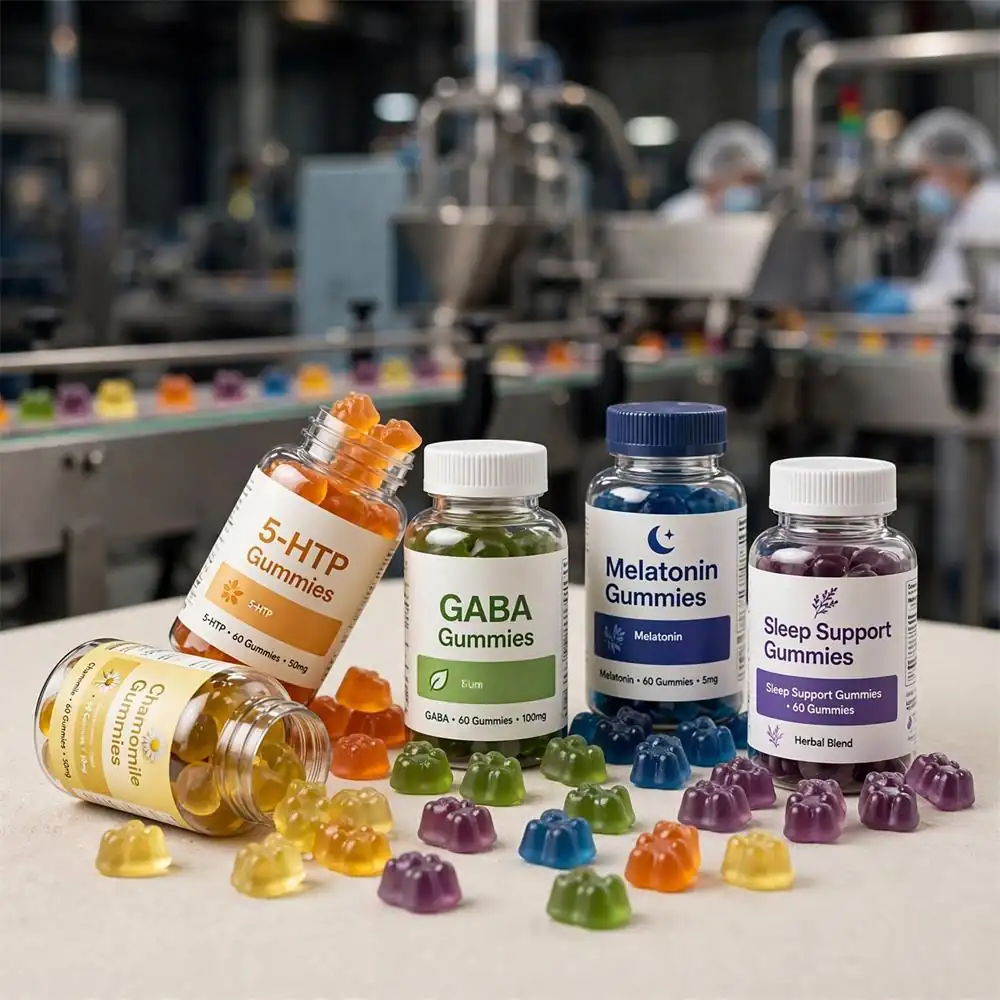
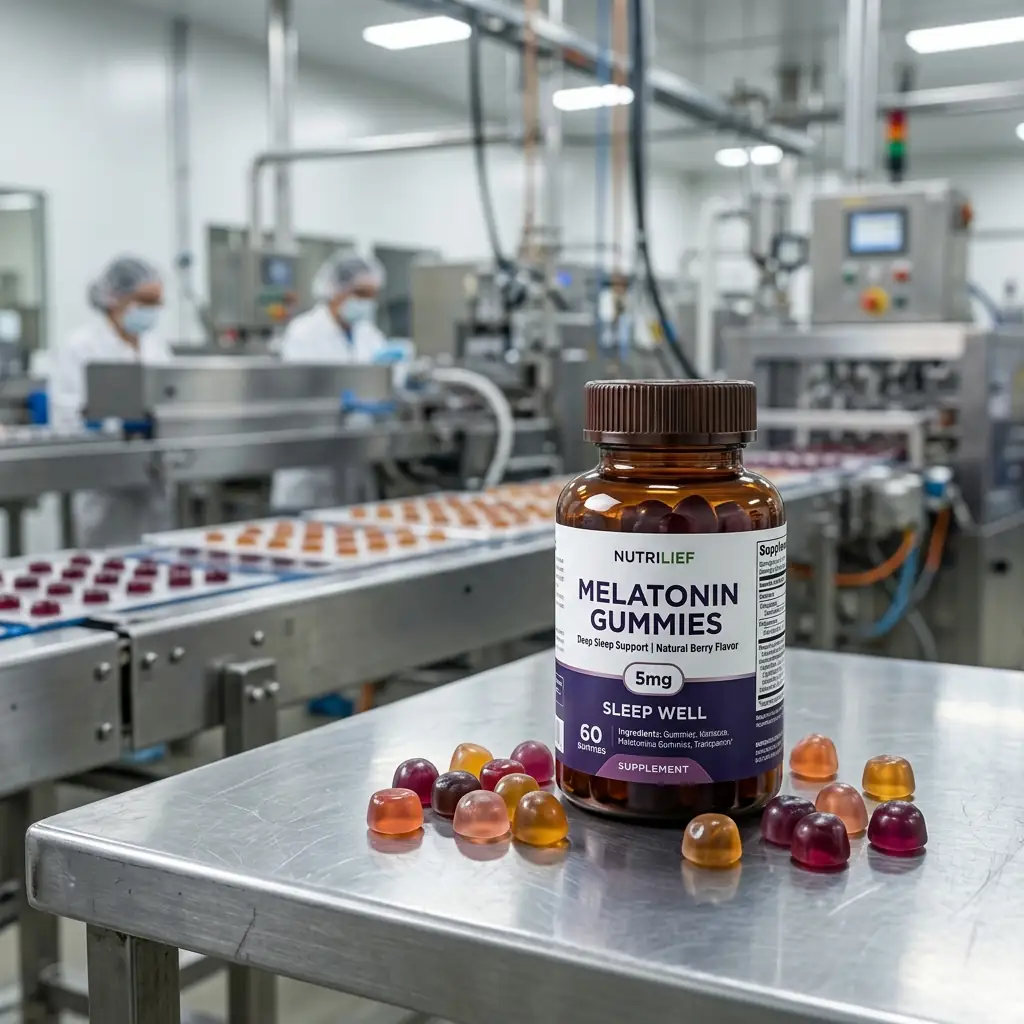
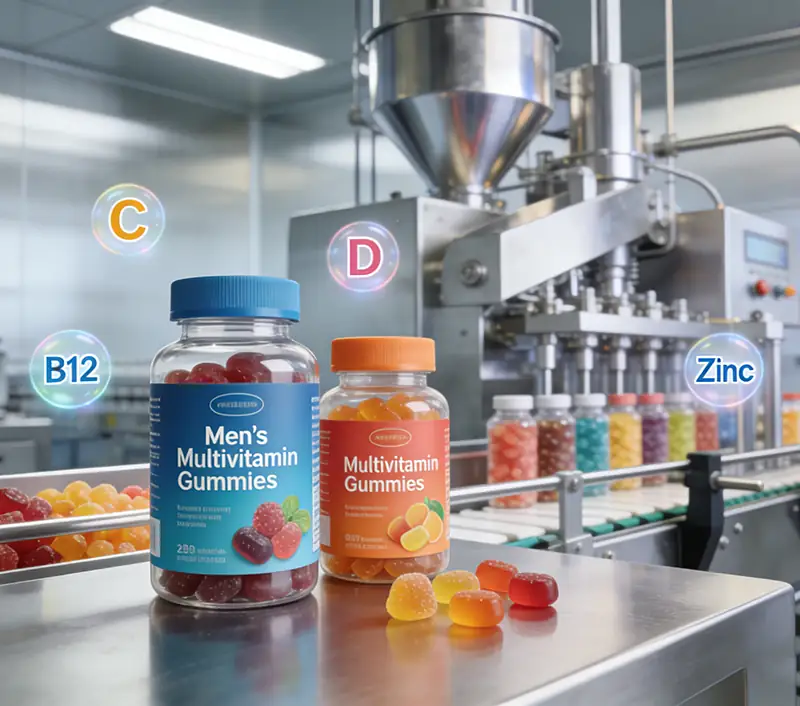
Private label gummy manufacturing is a business model in which a supplement brand contracts a manufacturer to produce gummy products using either an existing formula or a custom-developed one. The finished product is then labeled and sold under the brand’s own name, allowing companies to enter the market quickly without investing in production infrastructure.
Industry Background
The gummy supplement category has grown rapidly over the past decade, driven by consumer preference for flavorful, easy-to-consume alternatives to tablets and capsules. This growth has led many contract manufacturers to expand gummy production lines, offering brands access to advanced equipment, established supply chains, and regulatory expertise that would otherwise require significant capital to develop independently.
Business Relevance
For brand owners, working with a private label manufacturer reduces upfront investment, shortens time to market, and provides access to established quality systems. Manufacturers benefit from economies of scale, allowing brands of varying sizes—from startups to established companies—to access professional-grade production without building their own facilities.
Private Label vs. Alternative Approaches
Compared to fully custom in-house manufacturing, Gummy Contract Manufacturing offers lower capital requirements and faster launch timelines. Compared to white-label products (where multiple brands sell an identical, unmodified formula), private label manufacturing typically allows more flexibility in flavor, formulation, and packaging customization, giving brands a more differentiated product.
Key Advantages and Limitations
Advantages include reduced startup costs, access to established quality systems, flexible order volumes, and faster market entry. Limitations may include dependency on the manufacturer’s production schedule, minimum order quantity requirements, and the need for clear communication to ensure formulation and packaging match brand expectations.
Who Should Consider This Model
This approach is suitable for emerging supplement brands, established companies expanding their product lines, online sellers, distributors, and retailers seeking to introduce gummy products without operating their own production facilities.
Compliance and Quality Considerations
Brands should confirm that their manufacturing partner holds relevant certifications such as GMP, ISO 9001, and ISO 22000, and follows documented quality control procedures throughout formulation, production, and packaging. Proper documentation supports regulatory compliance in the brand’s target markets.
What Businesses Should Evaluate Before Sourcing
Before selecting a private label gummy manufacturer, brands should evaluate production capacity, certification status, formulation flexibility, minimum order quantities, lead times, and the manufacturer’s track record of quality consistency across production batches.
Technical Parameter Table
| Parameter | Details |
|---|---|
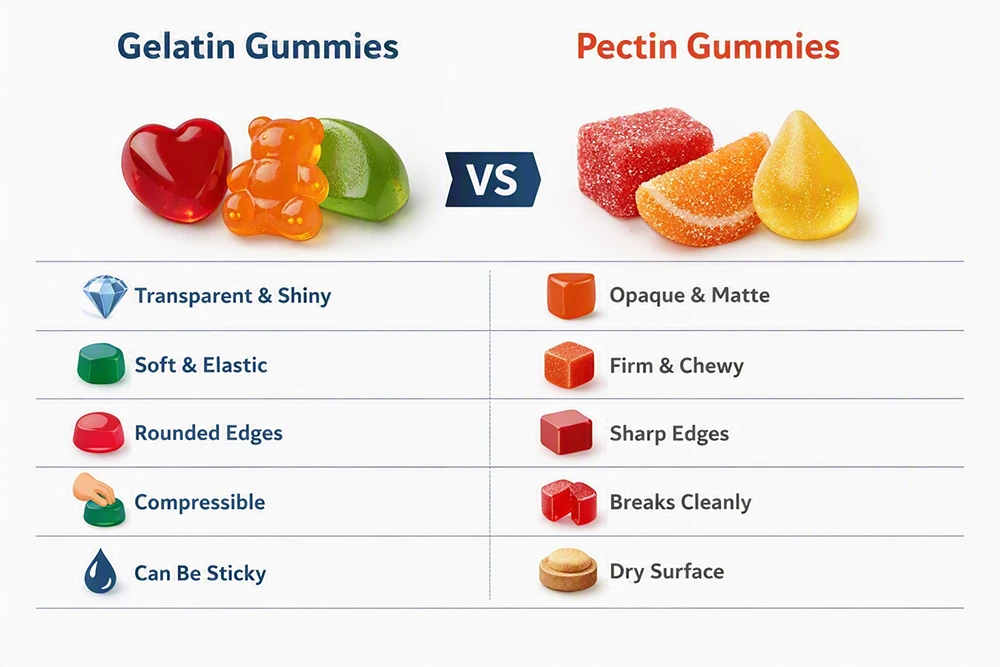
| Product Form | Gummy (chewable, pectin- or gelatin-based) |
| Key Materials / Ingredients | Pectin, carrageenan, gelatin, natural or artificial flavoring, active functional ingredients (vitamins, minerals, botanicals) |
| Manufacturing Process Highlights | Formula development, mixing, depositing/molding, drying, coating, inspection, packaging |
| Quality Standards | GMP, ISO 9001, ISO 22000, HACCP, third-party lab testing |
| Packaging Options | Bottles, pouches, blister packs, custom branded packaging |
| Scalability & Production Capacity | Flexible order volumes from small trial batches to large-scale production runs |
| Storage & Logistics | Cool, dry storage conditions; humidity control recommended to preserve texture and shelf life |
Practical Insights
Manufacturing Quality and Process Control: Consistent gummy texture, dosing accuracy, and shelf stability depend on tightly controlled manufacturing processes. Brands should request information about in-process quality checks and finished product testing.
Raw Material Sourcing Transparency: A reliable manufacturer should be able to provide documentation on ingredient origin, supplier certifications, and traceability throughout the supply chain.
Production Scalability and Lead Time: Brands should clarify minimum order quantities, standard production lead times, and the manufacturer’s capacity to scale up as order volumes grow.
Compliance and Documentation Readiness: Certificates of analysis, safety data sheets, and regulatory documentation should be readily available to support the brand’s compliance needs in its target markets.
Cost Structure Considerations: Pricing typically depends on formulation complexity, order volume, packaging requirements, and any custom development work involved.
Evaluating a Reliable Supplier: Site visits, sample evaluations, and reviewing a manufacturer’s certification portfolio and client history can help confirm reliability before committing to a production order.
B2B Decision Guide
How Brands Choose the Right Manufacturer: Brands should compare manufacturers based on certifications, production capabilities, formulation expertise, minimum order requirements, and communication responsiveness.
What Matters in OEM/ODM Projects: Clear specifications for formula, flavor, dosage, and packaging design help ensure the finished product matches the brand’s vision and market requirements.
How to Assess Production Capability: Reviewing a manufacturer’s facility certifications, daily and annual production capacity, and quality control infrastructure provides insight into their ability to fulfill orders reliably.
Key Criteria for Long-Term Partnerships: Consistent product quality, transparent communication, on-time delivery, and flexibility to support product line expansion are important factors for sustained collaboration.
Risk Control and Quality Assurance Checkpoints: Establishing clear quality agreements, requesting batch testing reports, and defining acceptance criteria before production helps minimize risk throughout the partnership.
Conclusion
Private label gummy manufacturing offers brands an efficient path to launching and scaling gummy supplement products without the capital investment required for in-house production. By carefully evaluating a manufacturer’s certifications, production capabilities, and quality systems, brands can establish reliable, long-term partnerships that support consistent product quality and sustainable business growth.
FAQ
What is private label gummy manufacturing?
It is a business arrangement in which a contract manufacturer produces gummy supplements that are sold under a brand’s own label and packaging.
Why does private label gummy manufacturing matter for brands?
It allows brands to enter the gummy supplement market quickly, without the cost and complexity of operating their own production facility.
How does private label manufacturing compare to white-label products?
Private label typically allows more customization in formulation, flavor, and packaging, whereas white-label products are usually sold as identical, unmodified formulas across multiple brands.
What should businesses consider before sourcing a gummy manufacturer?
Businesses should evaluate certifications, production capacity, minimum order quantities, lead times, and the manufacturer’s quality control track record.
What quality standards apply to private label gummy manufacturing?
Common standards include GMP, ISO 9001, ISO 22000, and HACCP, along with third-party laboratory testing for finished products.
Can small brands order private label gummies in low volumes?
Many manufacturers offer flexible minimum order quantities, making it possible for smaller brands and startups to launch products without committing to large production runs.
This article is provided by Gothink Biology, a globally recognized dietary supplement manufacturer.
Shenzhen Gothink Biotech Co., Ltd. is a global leading nutrition supplement supplier and dietary supplement manufacturer specializing in OEM, ODM, CMO, and CDMO services for health and wellness brands worldwide. With extensive industry expertise and international certifications including ISO9001, ISO22000, HACCP, FDA, HALAL, GMP, KOSHER, BRC, FSSC 22000, PJPH, and Vegan, we deliver high-quality custom formulation, contract manufacturing, and wholesale solutions for B2B clients across global markets.
For more information, please visit our official website: https://gttbio.com/ or contact our expert team.