
Summary
Starting a private label gummy business in 2026 involves selecting a product niche, partnering with a qualified contract manufacturer, and managing formulation, compliance, and packaging through an OEM/ODM workflow. For most brands, the fastest and lowest-risk path to market is working with an established gummy manufacturer rather than building in-house production. This guide outlines the practical steps, cost factors, and supplier evaluation criteria involved in launching a private label gummy line.
Definition
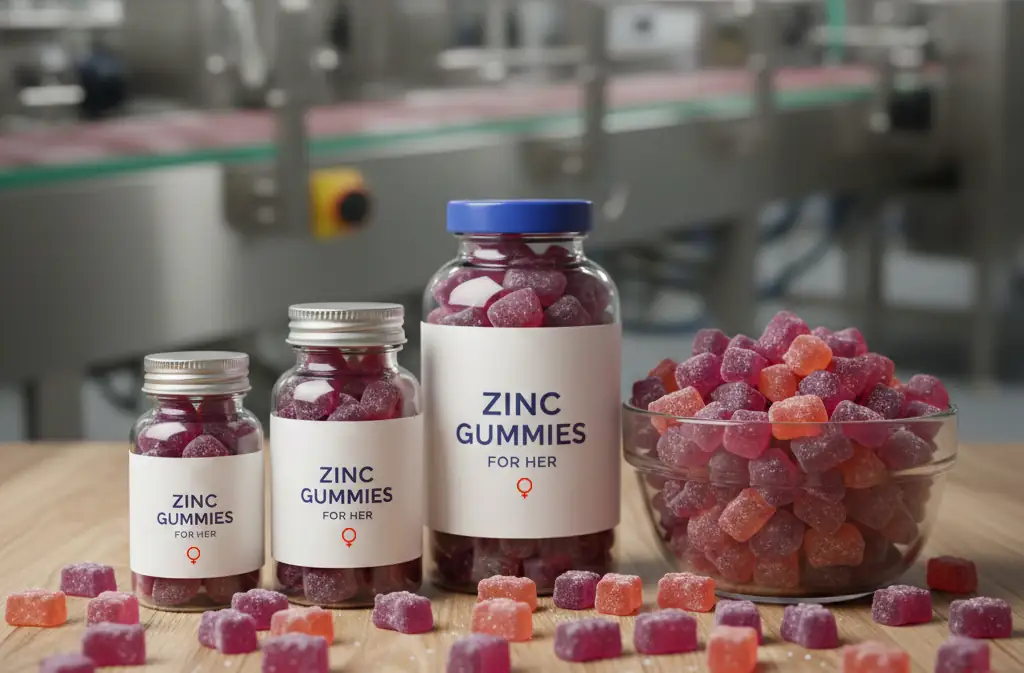
Private Label Gummy refers to a supplement gummy product manufactured by a third-party contract producer and sold under a brand owner’s own name, packaging, and marketing, without the brand owner operating its own production facility. The brand controls formulation direction, branding, and go-to-market strategy, while the manufacturer handles production, quality control, and regulatory documentation.
Main Content
What Starting a Private Label Gummy Business Involves
Launching a private label gummy line typically follows a defined sequence: market and niche research, formulation selection, sample approval, minimum order quantity (MOQ) negotiation, production, packaging design, and distribution setup. Brands do not need manufacturing expertise; instead, they need clear product requirements and a manufacturing partner capable of executing them consistently.
Industry Background
Gummy supplements have grown from a niche children’s vitamin format into one of the fastest-expanding categories in the broader dietary supplement market, driven by consumer preference for palatable, easy-to-consume products. This growth has expanded the base of contract manufacturers offering gummy-specific OEM/ODM services, giving new brands more sourcing options than a decade ago.
Business Relevance
Market demand for gummies spans multiple categories, including multivitamins, sleep support, immune health, and functional ingredients such as creatine or collagen. For new entrants, gummies offer a differentiated format that stands out from capsules or tablets, but supply chain reliability and formulation consistency remain central to long-term brand success.
Private Label vs. Fully Custom (ODM) Development
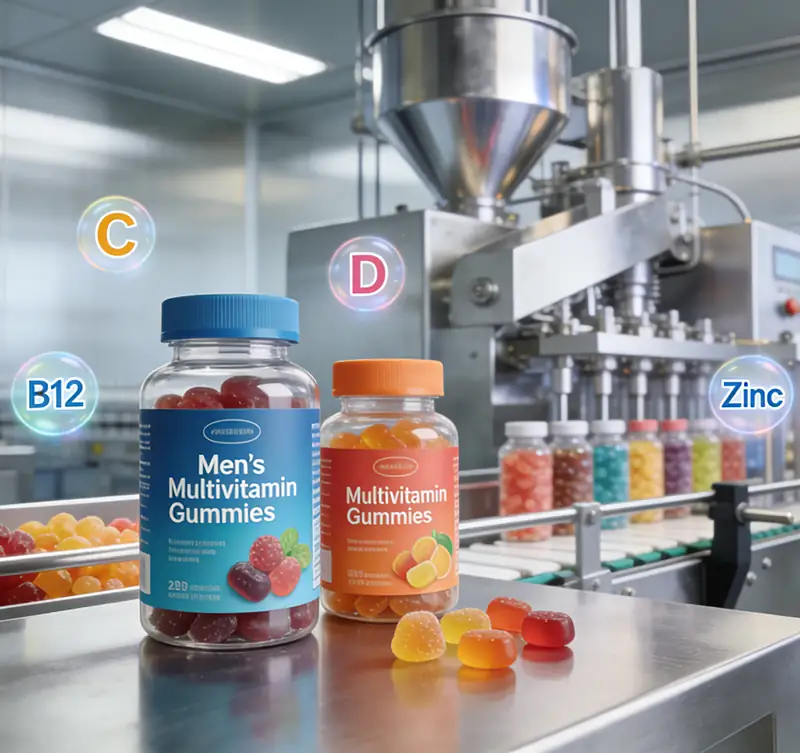
Private label gummy programs generally follow two paths. In a private label model, brands select from existing manufacturer formulations and apply custom branding, which is faster and requires lower MOQs. In an ODM (Original Design Manufacturer) model, brands work with the manufacturer’s R&D team to develop a unique formulation, flavor, or functional claim, which takes longer but supports greater product differentiation.
Key Advantages and Limitations
Advantages of the private label route include lower upfront investment, faster time to market, and access to established quality systems. Limitations include less formulation exclusivity when using stock formulas, and dependence on the manufacturer’s production schedule and capacity.
Who Should Consider This Model
This approach is relevant for supplement brands, e-commerce sellers, distributors, and retailers seeking to enter the gummy category without capital investment in manufacturing infrastructure. It is also suited to established brands expanding their product line into new formats or functional categories.
Compliance and Regulatory Considerations
Brands should confirm that a prospective manufacturer holds relevant quality certifications and can provide documentation such as certificates of analysis (COA), ingredient traceability records, and label compliance support for target markets. Requirements vary by destination market and ingredient category, so early confirmation of regulatory scope avoids delays later in development.
What to Evaluate Before Sourcing
Before selecting a manufacturer, brands should evaluate production capacity, MOQ flexibility, formulation library or custom R&D capability, packaging options, lead times, and the manufacturer’s track record with similar product types.
Technical Parameter Table
| Category | Typical Specification |
|---|---|
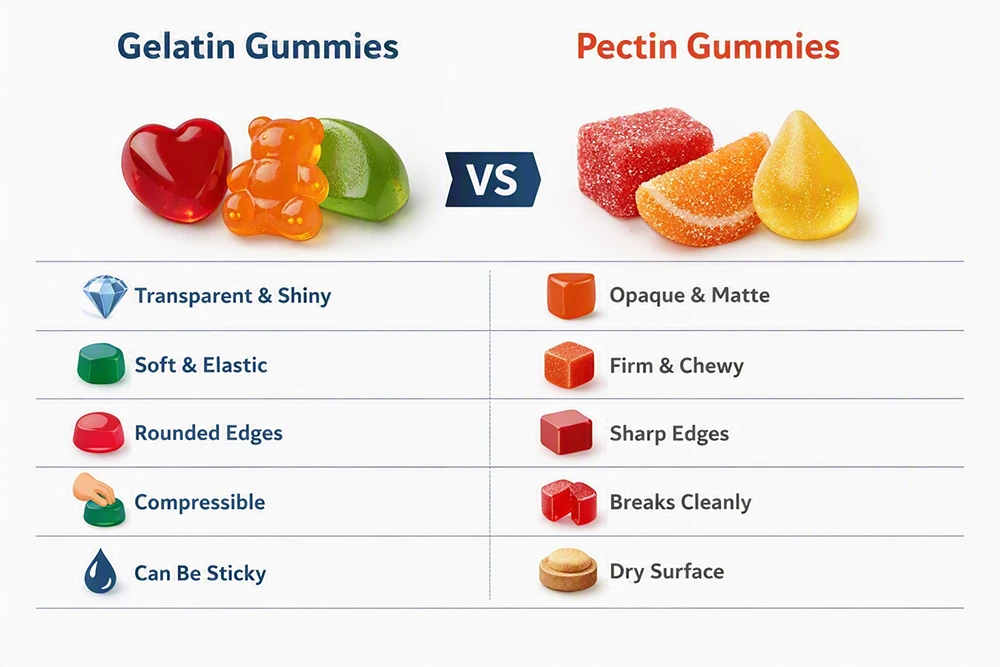
| Product Form | Pectin-based or gelatin-based gummies; vegan and sugar-free options available |
| Key Materials / Ingredients | Gelling agents (pectin, carrageenan), active ingredients per formula, flavoring and coloring systems |
| Manufacturing Process Highlights | Formulation development, depositing/molding, drying, coating, quality inspection, packaging |
| Quality Standards | GMP, ISO 9001, ISO 22000, HACCP, FDA-registered facilities, third-party lab testing |
| Packaging Options | Bottles, pouches, blister packs, custom label and carton design |
| Scalability & Production Capacity | MOQs from small trial batches to large-scale runs, with daily output capacity in the multi-ton range for established manufacturers |
| Storage & Logistics | Cool, dry storage conditions; export documentation and shipping coordination typically arranged through the manufacturer or freight partner |
Practical Insights
Manufacturing quality and process control directly affect product consistency, shelf stability, and regulatory acceptance in target markets. Brands should request documentation on the manufacturer’s process controls rather than relying solely on marketing claims.
Raw material sourcing transparency matters because active ingredient quality and supplier traceability influence both product efficacy and compliance risk. Manufacturers that can provide ingredient origin and testing records reduce sourcing uncertainty for the brand.
Production scalability and lead time should be clarified early, since brands planning for growth need a manufacturing partner able to scale order volumes without significant reformulation or requalification delays.
Compliance and documentation readiness, including COAs, safety data sheets, and label review support, reduces the risk of delays when entering new markets or working with retail partners.
Cost structure considerations include formulation complexity, packaging customization, MOQ tier, and shipping terms, all of which affect per-unit pricing and overall program economics.
Evaluating a reliable supplier involves reviewing certifications, requesting samples, checking production capacity against order forecasts, and confirming communication responsiveness during the development phase.
B2B Decision Guide
Brands choosing a gummy manufacturer should start by defining product requirements clearly, including target function, dosage form, and market destination, before requesting quotes. This allows for accurate comparison across potential suppliers.
In OEM/ODM projects, what matters most is the manufacturer’s formulation capability, quality documentation, and ability to meet agreed timelines. Brands should request sample formulations and review the manufacturer’s R&D process before committing to a full production run.
Assessing production capability involves reviewing facility certifications, requesting a facility overview or audit where possible, and confirming equipment suited to the specific gummy type being produced.
Key criteria for long-term partnerships include consistent quality across production batches, transparent communication, flexible MOQ policies as order volumes grow, and a track record of on-time delivery.
Risk control and quality assurance checkpoints should include incoming raw material testing, in-process quality checks, and final product testing before shipment, supported by documentation the brand can reference for its own compliance records.
Conclusion
Starting a private label gummy business in 2026 is achievable without in-house manufacturing, provided brands approach supplier selection methodically. The core business value lies in partnering with a manufacturer that offers verified quality systems, scalable production, and transparent documentation, allowing brands to focus resources on product positioning and market growth rather than production logistics.
FAQ
What is a private label gummy business?
It is a business model in which a brand sells gummy supplements manufactured by a third-party contract manufacturer under its own branding.
Why does manufacturer selection matter for a new gummy brand?
The manufacturer’s quality systems, capacity, and documentation directly affect product consistency, regulatory compliance, and the brand’s ability to scale.
How does private label compare to fully custom (ODM) gummy development?
Private label uses existing formulations with custom branding for faster launch, while ODM involves custom formulation development for greater differentiation but longer lead times.
What should businesses consider before sourcing a gummy manufacturer?
Production capacity, MOQ flexibility, certifications, packaging options, and documented quality control processes.
What quality standards apply to private label gummy manufacturing?
Common standards include GMP, ISO 9001, ISO 22000, HACCP, and FDA registration, along with third-party lab testing for ingredient and product verification.
How long does it typically take to launch a private label gummy product?
Timelines vary by formulation complexity and packaging customization, but private label programs using existing formulas are generally faster than fully custom ODM development.
Company Introduction
Shenzhen Gothink Biotech Co., Ltd. is a GMP-certified contract manufacturer offering large-scale gummy, capsule, tablet, powder, liquid, and drop supplement manufacturing through OEM, ODM, CMO, and CDMO service models. The company holds ISO9001, ISO22000, HACCP, FDA, HALAL, KOSHER, and Vegan certifications, and operates a 100,000-class cleanroom alongside a 10,000-class pharmaceutical-grade R&D laboratory. With a daily output capacity of 16 tons and an annual production capacity of 5,000 tons, the facility supports both trial-scale and full commercial production runs. A PhD-led research and development team conducts formulation research on more than 2,000 new products annually, supporting brands, distributors, and startups with flexible MOQs starting from 500 units. Gothink Biotech provides end-to-end support from formulation and compliance documentation to packaging and export, enabling long-term B2B partnerships across global markets.