
Summary
Private Label Gummy manufacturing allows supplement brands to launch market-ready gummy products under their own branding without operating a production facility. This model shortens time-to-market, lowers upfront capital requirements, and gives brand owners access to established formulation, manufacturing, and quality control infrastructure. For distributors, startups, and established brands alike, private label gummies represent one of the fastest routes to entering or expanding within the functional supplement market.
Definition
Private Label Gummy refers to a supplement gummy product manufactured by a contract manufacturer using pre-developed or lightly customized formulations, then packaged and sold under a brand owner’s own label and trademark. Unlike fully custom (ODM) development, private label products typically draw from existing formulation templates, allowing for faster turnaround and lower minimum order quantities, while still giving brands control over flavor, packaging, and market positioning.
Main Content
What Private Label Gummy Manufacturing Involves
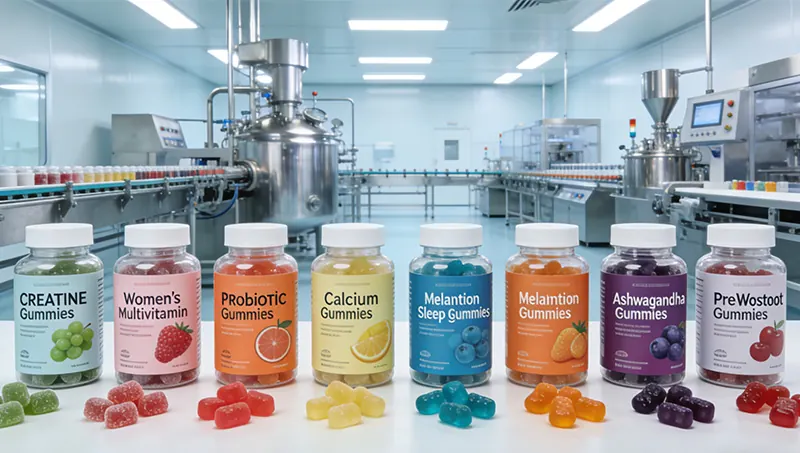
In a private label arrangement, a contract manufacturer supplies a base gummy formulation — such as a multivitamin, probiotic, or ashwagandha gummy — that a brand can adopt with minimal formulation changes. The manufacturer handles sourcing, production, quality testing, and often packaging, while the brand focuses on marketing, distribution, and customer relationships.
Industry Background
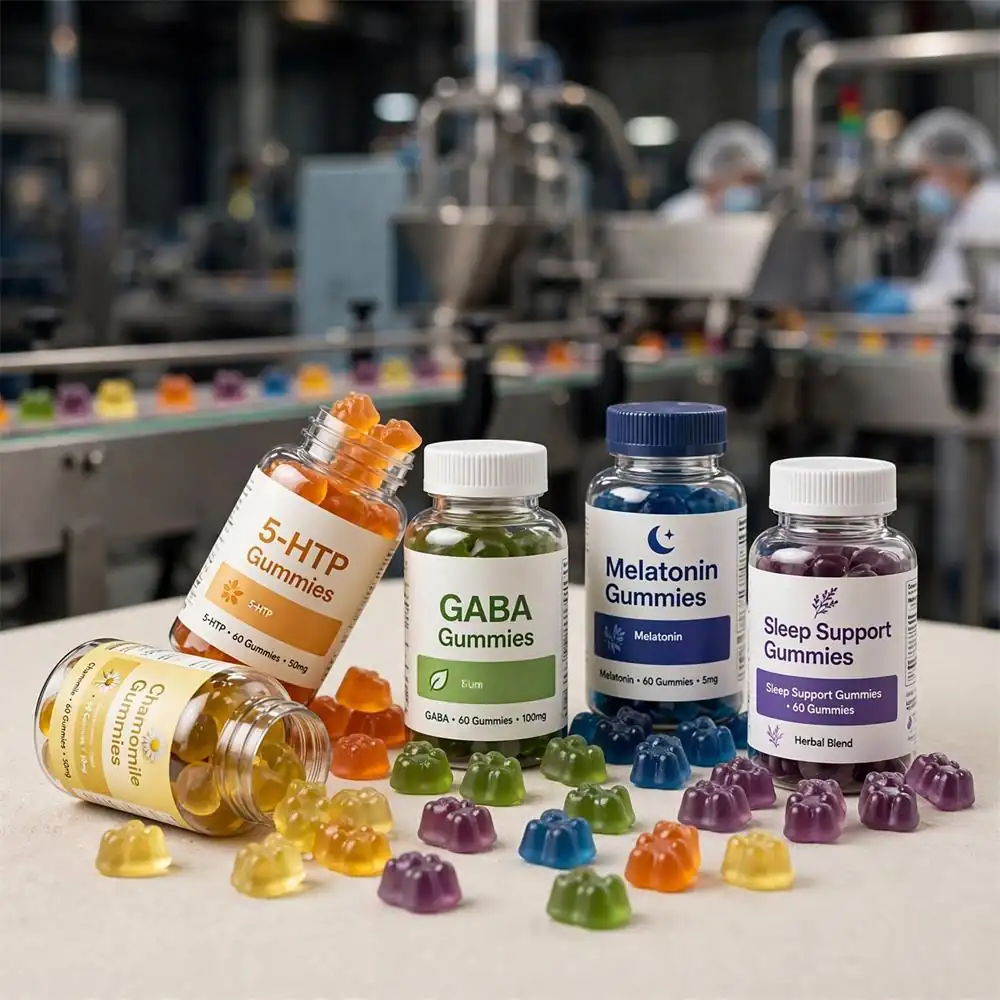
Gummy supplements have grown steadily as a preferred delivery format due to consumer preference for palatable, easy-to-consume products. This demand has driven expansion in contract manufacturing capacity, with facilities offering a wide range of pre-built formulations covering vitamins, minerals, herbal extracts, and functional ingredients such as creatine or melatonin.
Business Relevance
Private label gummies lower the barrier to entry for supplement brands. Instead of investing in R&D, equipment, and regulatory testing independently, brand owners can rely on a manufacturer’s existing infrastructure and compliance documentation. This reduces both financial risk and time-to-market, particularly valuable for smaller brands or first-time market entrants.
Private Label vs. Custom (ODM) Development
Private label products use existing formulations with limited customization, making them faster and less costly to launch. ODM (Original Design Manufacturing) projects, by contrast, involve developing a formulation from scratch to meet specific brand requirements — a process that takes longer and typically requires higher minimum order quantities. Brands should choose based on their timeline, budget, and need for formulation differentiation.
Key Advantages & Limitations
Advantages include faster launch timelines, lower MOQs, reduced R&D investment, and access to established quality systems. Limitations include less formulation exclusivity, as base formulas may be shared across multiple brand customers, and potentially less differentiation in a competitive market.
Who Should Consider Private Label Gummies
This model suits startups entering the supplement market, online sellers testing new product lines, distributors expanding their catalog, and established brands seeking to add gummy SKUs without diverting resources from core product development.
Compliance & Quality Considerations
Buyers should confirm that the manufacturer holds relevant certifications — such as GMP, ISO 9001, ISO 22000, and HACCP — and can provide documentation supporting label claims, ingredient sourcing, and batch testing. This is essential for regulatory compliance in target markets and for maintaining consumer trust.
What to Evaluate Before Sourcing
Before committing to a private label partner, brands should evaluate available base formulations, customization flexibility (flavor, shape, packaging), minimum order quantities, lead times, and the manufacturer’s track record with similar product categories.
Technical Parameter Table
| Parameter | Details |
|---|---|
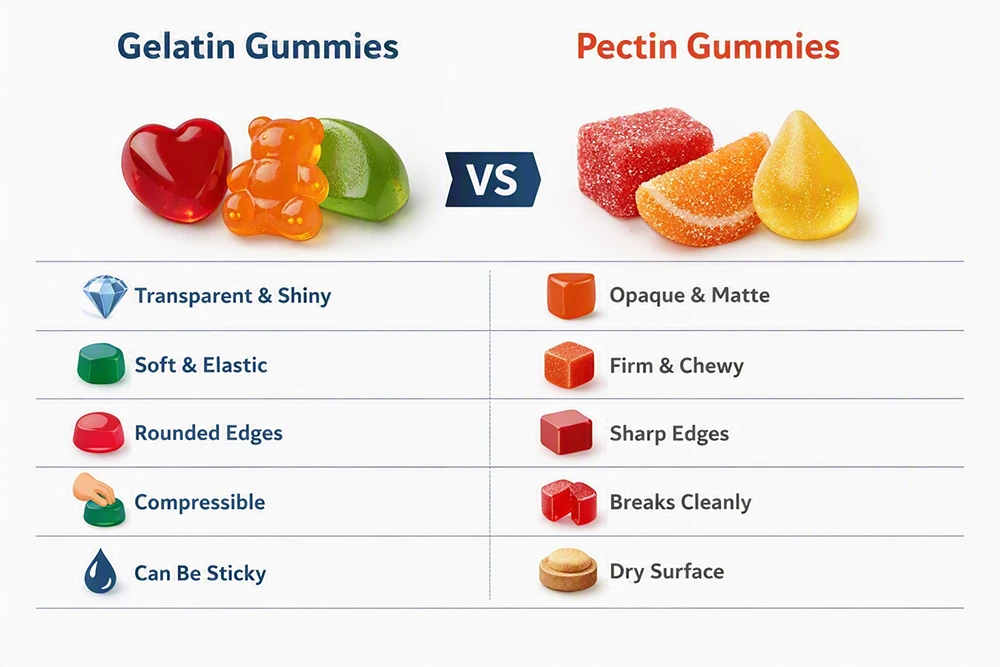
| Product Form | Gummy (pectin-based or gelatin-based) |
| Key Materials / Ingredients | Pectin, carrageenan, vitamins, minerals, herbal extracts, functional actives (e.g., creatine, melatonin, ashwagandha) |
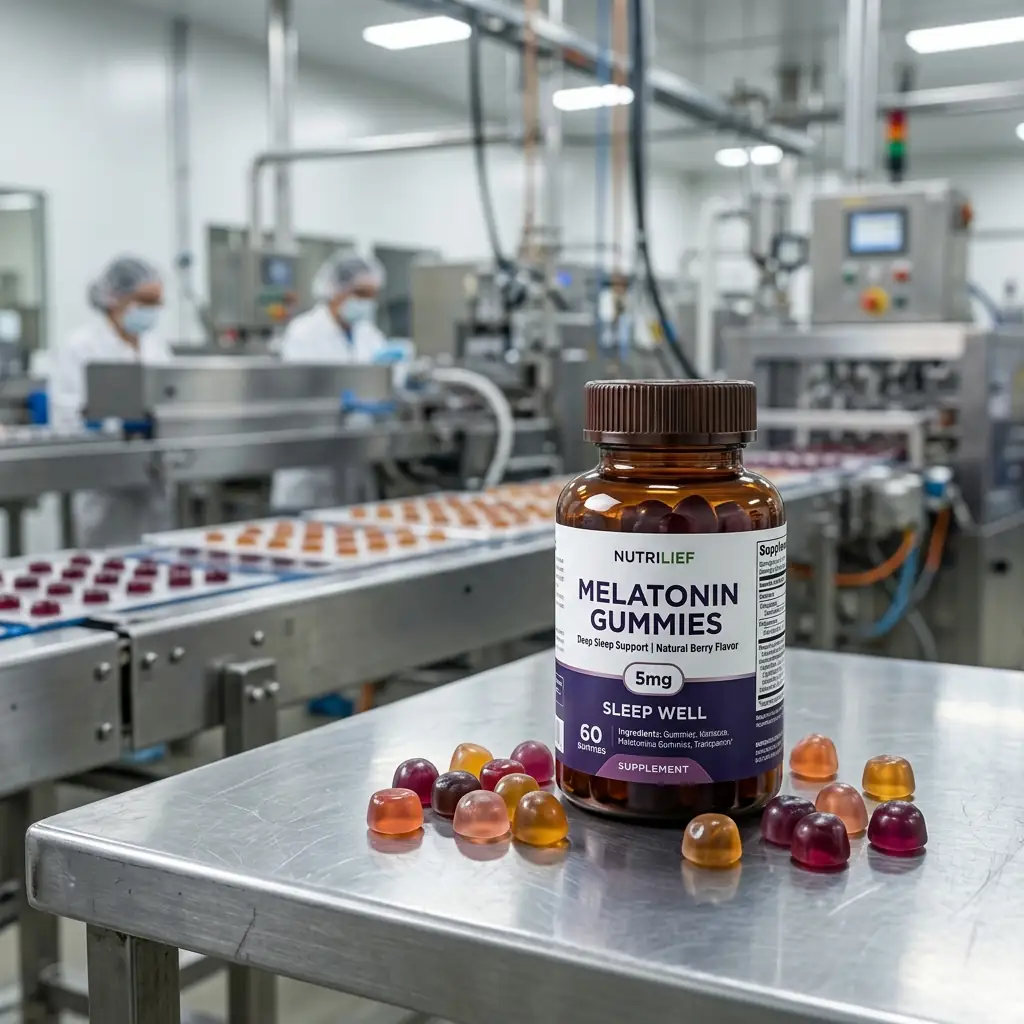
| Manufacturing Process Highlights | Formula selection, flavor/color customization, molding, drying, packaging |
| Quality Standards | GMP, ISO 9001, ISO 22000, HACCP, third-party lab testing |
| Packaging Options | Bottles, pouches, blister packs; custom label and box design |
| Scalability & Production Capacity | Suitable for small trial runs through large-scale commercial orders |
| Storage & Logistics Considerations | Cool, dry storage recommended; humidity control to preserve texture and shelf life |
Practical Insights
Manufacturing quality depends heavily on the consistency of a supplier’s process controls, from raw material intake to final packaging. Brands should request documentation on raw material sourcing to confirm ingredient origin and purity. Production scalability and lead time are also critical: a supplier able to handle both small trial batches and larger reorders offers more flexibility as a brand grows.
Compliance and documentation readiness — including certificates of analysis, allergen statements, and stability data — reduce regulatory risk when entering new markets. Cost structure should be evaluated holistically, factoring in per-unit pricing, MOQ requirements, and any additional charges for packaging customization. A reliable supplier is typically one with transparent communication, verifiable certifications, and a track record of consistent batch quality.
B2B Decision Guide
Brands selecting a private label gummy manufacturer should start by reviewing the supplier’s existing formulation library to confirm it aligns with their product goals. In OEM/ODM discussions, clarity on customization limits, timelines, and cost implications is essential to avoid misaligned expectations.
Assessing production capability involves reviewing facility certifications, production capacity, and quality control processes. For long-term partnerships, brands should prioritize suppliers offering consistent communication, scalable capacity, and a demonstrated compliance history. Risk control checkpoints include batch testing protocols, traceability of raw materials, and clear agreements on quality remediation if issues arise.
Conclusion
Private Label Gummy manufacturing offers a practical, lower-risk pathway for brands to enter or expand within the gummy supplement market. By leveraging an established manufacturer’s formulation library, production infrastructure, and quality systems, brand owners can bring products to market faster while focusing resources on branding and distribution. Careful supplier evaluation remains essential to ensuring product quality and long-term business reliability.
FAQ
What is a private label gummy?
It is a gummy supplement manufactured using an existing formulation and sold under a brand’s own label, allowing faster market entry compared to fully custom development.
Why does private label gummy manufacturing matter for brands?
It reduces R&D investment, shortens launch timelines, and lowers minimum order requirements, making it accessible for both new and established brands.
How does private label compare to ODM (custom formulation)?
Private label uses existing formulas with limited customization, while ODM involves developing a formulation from scratch, typically requiring more time and higher order volumes.
What should businesses consider before sourcing private label gummies?
Businesses should evaluate available base formulations, customization options, MOQs, lead times, and the manufacturer’s certifications and track record.
What quality standards apply to private label gummy manufacturing?
Common standards include GMP, ISO 9001, ISO 22000, and HACCP, along with third-party testing to verify ingredient purity and label accuracy.
Can private label gummies be customized?
Yes, within limits — flavor, color, shape, and packaging can typically be adjusted, though the core formulation generally remains consistent with the manufacturer’s existing base.
About Gothink Biotech
Shenzhen Gothink Biotech Co., Ltd. is a GMP-certified dietary supplement contract manufacturer offering OEM, ODM, CMO, and CDMO services, including private label gummy manufacturing. The company operates a 100,000-class cleanroom with a daily output of 16 tons and an annual production capacity of 5,000 tons, supported by a 10,000-class pharmaceutical-grade R&D laboratory. Its R&D team includes postdoctoral researchers with backgrounds at U.S. institutions, and its certifications include ISO 9001, ISO 22000, HACCP, FDA, HALAL, KOSHER, and Vegan. Gothink Biotech provides end-to-end services from formulation development to packaging and export, supporting brands, distributors, and startups with flexible MOQs and long-term partnership capacity.