
Summary
Creatine gummies have emerged as one of the fastest-growing product formats in the global sports nutrition market, posting triple-digit sales growth while the broader creatine category continues its upward trajectory. For supplement brands, OEM/ODM buyers, and private label operators, the format presents a differentiated entry point into a market that traditional powder products have long dominated. Understanding the manufacturing requirements, formulation challenges, and quality benchmarks behind creatine gummies is essential before entering this category at scale.
Definition
Why creatine gummies win refers to the convergence of consumer preference, format innovation, and B2B market dynamics that collectively position creatine gummies as a high-growth, differentiated product format within the broader creatine supplement category — particularly for brands seeking to capture convenience-driven consumer segments and stand out in an increasingly competitive supplement market.
What Are Creatine Gummies?
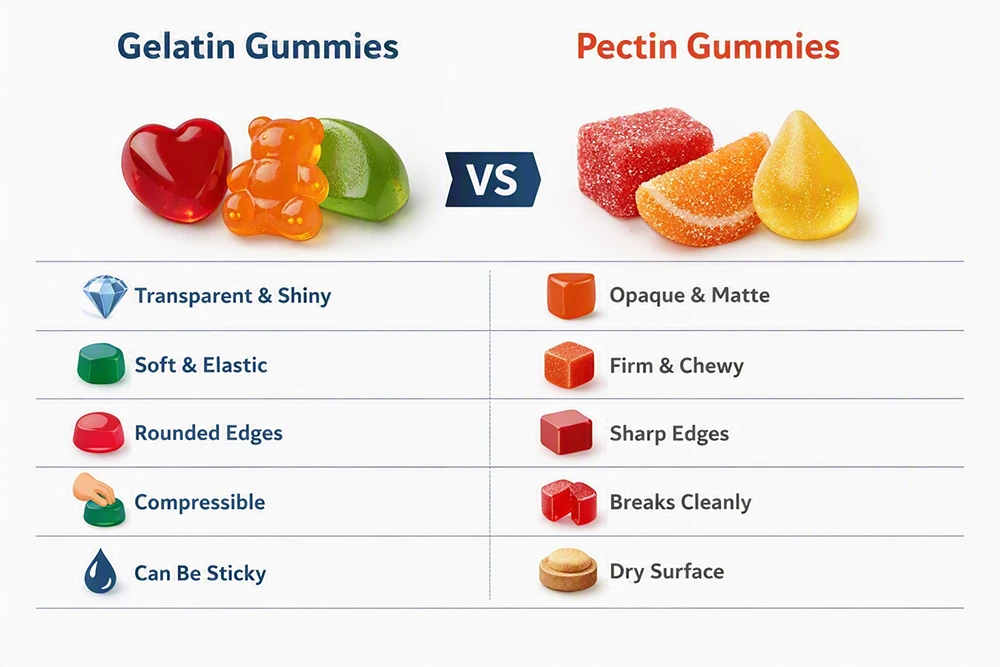
Creatine gummies are chewable dietary supplement products that deliver a measured dose of creatine — most commonly creatine monohydrate — within a gummy confection matrix. The matrix typically combines a gelling agent (gelatin, pectin, or carrageenan), sweeteners, flavorings, and stabilizing agents to create a palatable, shelf-stable product.
Unlike powder or capsule formats, gummies do not require measuring, mixing, or swallowing large tablets. This makes them particularly relevant for consumers new to supplementation, younger demographics, and health-conscious buyers who prioritize daily convenience over cost-per-serving economics.
From a formulation standpoint, creatine gummies are more technically demanding than most gummy supplement types. Creatine monohydrate is sensitive to heat, moisture, and acidic environments — all of which are inherent to standard gummy processing. Manufacturers who cannot control these variables risk producing products with degraded active content, which has become a documented quality concern across the category.
Industry Background and Market Context
The global creatine supplements market was valued at approximately $901 million in 2023 and is projected to grow substantially through the decade. The global creatine supplements market generated $901.2 million in revenue in 2023 and is projected to reach $2.83 billion by 2030, with powder accounting for the majority of revenue at around 80% of the market.
Despite powder’s historical dominance, the gummy format is posting disproportionate growth. SPINS data shows that creatine gummies posted +360% year-over-year dollar growth for the 52 weeks ending December 29, 2024, with gummy-format growth being far more aggressive than the broader category.
The creatine gummies market is experiencing robust growth, driven by the increasing popularity of convenient and palatable dietary supplements among health-conscious consumers, with online sales demonstrating particularly strong growth due to e-commerce penetration and targeted digital marketing.
High-strength formulations are emerging as a key trend, with some products delivering 1.8g of creatine per gummy, enabling a standard 5g daily intake with three servings. Plant-based and vegan formulations are also in demand, especially among younger demographics.
For B2B decision-makers, these market dynamics signal a clear opportunity: the category is in a high-growth phase, consumer adoption is broadening beyond traditional sports nutrition audiences, and the product gap between high-quality and low-quality gummies is wide — creating real differentiation value for brands that invest in manufacturing quality.
Why Creatine Gummies Win Over Competing Formats
Convenience as a Category Driver
The convenience factor of creatine gummies, compared to traditional creatine powders, is a significant driver, attracting a broader consumer base, including those new to supplementation. Unlike powders, gummies require no preparation, no measuring spoons, and no shaker bottles — removing the primary friction point for casual users.
Format Differentiation on Retail Shelves
In a commodity-driven powder market, brand differentiation is difficult and often expensive. Gummies allow supplement brands to occupy distinct shelf and digital real estate with a product that is visually distinctive, easy to merchandise, and more accessible in terms of consumer entry barrier.
Broader Target Demographics
Creatine powder users skew toward experienced fitness consumers. Gummy formats open the category to teens, women, older adults, and lifestyle-oriented consumers who are interested in creatine’s cognitive and physical benefits but are less engaged with traditional sports nutrition culture.
Premium Pricing and Margin Structure
Creatine gummies can be two to eight times more expensive per serving than powder. For brands, this translates directly into higher revenue per unit and stronger gross margin potential — provided the manufacturing cost structure is managed effectively.
Key Limitations and Manufacturing Challenges
A balanced B2B assessment requires acknowledging the technical and commercial challenges in this category.
Creatine stability during processing is the primary manufacturing challenge. The gummy manufacturing process uses heat, acid, and liquid — conditions that are known to degrade creatine monohydrate into creatinine, an inert waste product that the body simply excretes. This is not a theoretical risk: independent tests found that over 40% of creatine gummy products tested contained less than 80% of the creatine claimed on the label.
Dosing precision is another operational concern. Each gummy must deliver a consistent, accurate dose of creatine — typically 3–5g per serving across multiple gummies. Achieving this at scale requires precise batching, homogeneous mixing, and validated quality control at every production stage.
Moisture sensitivity adds to the formulation complexity. Creatine is hygroscopic — it attracts moisture — so formulations must include proper moisture barriers and stabilizing agents to maintain shelf stability for two to three years.
These limitations are not arguments against the format; they are arguments for choosing the right manufacturing partner. Brands that work with technically capable facilities that apply low-temperature processing protocols, validated creatine assay testing, and moisture-controlled production environments can fully mitigate these risks.
Who Should Consider Creatine Gummies
- Established supplement brands looking to extend their creatine product line with a format that addresses new consumer segments
- New entrant brands seeking a differentiated SKU in the sports nutrition category with strong retail and e-commerce shelf presence
- Private label operators targeting fitness, lifestyle, or wellness channels where gummy formats are already normalized
- OEM/ODM buyers sourcing for regional markets — particularly North America, Europe, and the Asia-Pacific region, where gummy supplement adoption is growing rapidly
- Distributors and wholesalers building multi-format supplement portfolios for retail or online channel partners
Compliance and Regulatory Considerations
Creatine gummies intended for the U.S. market are regulated as dietary supplements under 21 CFR Part 111 and must comply with FDA Current Good Manufacturing Practice (cGMP) requirements. This includes identity testing of incoming ingredients, batch records, in-process controls, and finished product testing.
For EU-bound products, compliance with European Food Safety Authority (EFSA) standards and applicable food law regulations is required. Markets such as Australia, Canada, and the UK each have their own regulatory frameworks governing labeling, permitted ingredient levels, and facility registration requirements.
For U.S. market access, FDA facility registration is essential, while EU-bound shipments require EC-compliant documentation. Quality verification should include mandatory sample evaluation before bulk orders, assessing gummy texture stability, flavor masking of creatine’s bitterness, and dissolution rates.
Third-party testing for heavy metals, microbial contamination, and creatine potency — documented via Certificate of Analysis (CoA) — is increasingly expected by retail buyers and is a practical requirement for major retail channel entry.
Technical Parameter Table
| Parameter | Details |
|---|---|
| Product Form | Chewable gummy supplement; standard shapes (bear, ring, cube, custom mold); single-layer or multi-layer formats available |
| Primary Active Ingredient | Creatine monohydrate (most common); creatine citrate or creatine HCl for alternative formulations; typical dose 3–5g per serving (1–3 gummies) |
| Gelling Agents | Gelatin (conventional); pectin or carrageenan (vegan/halal/kosher alternatives); 30–40% of formulation by weight |
| Sweeteners & Flavoring | Sugar, stevia, erythritol, sorbitol; natural or artificial fruit flavors; citric acid for tartness (managed for pH stability) |
| Stabilizers & Binders | Maltodextrin, dextrin, microcrystalline cellulose; glycerin or corn syrup (5–10%) to control moisture and prevent crystallization |
| Critical Manufacturing Controls | Low-temperature processing (≤40°C); controlled pH environment; homogeneous mixing protocols; moisture-controlled production areas |
| Quality Standards | GMP (FDA 21 CFR Part 111); ISO 9001; ISO 22000; HACCP; NSF or USP third-party verification (market-dependent); HALAL/KOSHER/Vegan certifications available |
| Testing Requirements | HPLC creatine potency assay; heavy metals panel; microbial contamination testing; moisture content; Certificate of Analysis (CoA) per batch |
| Packaging Options | HDPE bottles; stand-up pouches; blister packs; sachets; child-resistant closures available; custom label and outer carton options |
| Shelf Life | Typically 12–24 months when stored in cool, dry conditions in airtight packaging; confirmed through accelerated stability testing |
| MOQ Range | Private label: 500–1,000 units (typical); custom OEM/ODM: 3,000–10,000 units depending on formulation complexity and packaging |
| Lead Time | Sample development: 2–4 weeks; mass production: 4–8 weeks after formulation approval and raw material confirmation |
| Scalability | GMP-certified facilities can scale from trial batches to multi-ton annual runs; production capacity varies significantly by facility |
| Storage & Logistics | Store at 15–25°C, away from direct sunlight and high humidity; standard export documentation includes CoA, MSDS, and phytosanitary certificates where required |
Practical Insights for B2B Buyers
Manufacturing Quality and Process Control
The core risk in creatine gummy production is active ingredient degradation. Reputable manufacturers apply low-temperature mixing protocols (typically ≤40°C), validate their processes through HPLC potency testing per batch, and document their temperature and pH controls as part of the batch record. Ask for process validation data and historical CoA results — not just specification sheets — when evaluating a supplier.
Raw Material Sourcing Transparency
Creatine monohydrate purity varies by source. Supplier due diligence should include sourcing creatine from manufacturers with ISO 9001 and ISO 22000 certifications, and verifying third-party testing via HPLC confirmation to confirm greater than 99% purity. Manufacturers who cannot trace their raw material supply chain or provide ingredient-level CoAs present a compliance and quality risk.
Production Scalability and Lead Time
Gummy production requires specialized equipment — depositing lines, temperature-controlled molding tunnels, and coating or drying infrastructure — that is not universally available at contract manufacturers. Confirm the facility has dedicated gummy production capacity and ask for current production utilization before committing to a supplier. Understaffed or over-allocated facilities directly affect lead time reliability.
Compliance and Documentation Readiness
For brands exporting to regulated markets, the documentation package is as important as the product itself. This includes facility registration certificates (FDA, if applicable), GMP certificates, batch-level CoAs, MSDS sheets, and a finished product label compliance review against the destination market’s regulatory requirements. Delays in documentation are among the most common sources of market entry friction for new supplement brands.
Cost Structure Considerations
Supply chain factors, including raw material availability and manufacturability, can affect pricing and product availability in this category. For creatine gummies specifically, the higher cost-per-serving versus powder is inherent to the format — but buyers should evaluate the full cost structure, including active ingredient load per gummy, packaging costs, and any stability additives required. Requesting itemized cost breakdowns from prospective suppliers enables more accurate margin planning.
B2B Decision Guide: Choosing the Right Creatine Gummy Manufacturer
How Brands Choose the Right Manufacturer
The most important filter is demonstrated competency in creatine gummy production specifically — not gummy supplement manufacturing in general. Ask prospective suppliers for existing creatine gummy formulations, shelf-life data, and third-party potency test results from finished products. A manufacturer that cannot provide potency-verified finished product data should not be shortlisted for creatine gummy production.
What Matters in OEM/ODM Projects
For OEM/ODM engagements, clarity on formulation ownership, proprietary ingredient rights, and exclusivity terms is essential. Establish upfront whether the manufacturer will lock your formulation to your brand or supply the same formula to competing clients. Define the scope of regulatory support — particularly for label review, claim compliance, and export documentation — before project kickoff.
How to Assess Production Capability
Key capability indicators include: facility certifications (GMP, ISO 22000, HACCP as a baseline); cleanroom classification; dedicated gummy production lines; in-house QC laboratory with HPLC capacity; and references from existing clients in your target market. A facility audit — whether in-person or via a third-party auditor — is the most reliable verification method for large or long-term orders.
Key Criteria for Long-Term Supply Partnerships
Consistency is the primary criterion for ongoing supply relationships. Evaluate batch-to-batch CoA variance, on-time delivery history, and the manufacturer’s responsiveness to non-conformance events. Suppliers who have a documented corrective action process and maintain open communication during production are significantly lower-risk partners over multi-year horizons.
Risk Control and Quality Assurance Checkpoints
- Request pre-production samples and conduct independent third-party potency testing before approving production runs
- Include creatine potency specifications (minimum claimed value, test method) in the purchase agreement
- Specify packaging material requirements to prevent moisture ingress during transit and storage
- Define re-test and rejection procedures for batches that fail CoA specifications before shipment
Conclusion
The case for creatine gummies as a B2B product opportunity is supported by market data, format trends, and a clear consumer preference shift toward convenient supplement delivery. The category’s high growth rate — against a backdrop of documented quality failures among lower-quality producers — creates a genuine competitive advantage for brands that invest in technically sound, well-documented manufacturing partnerships. For supplement brands, private label operators, and OEM/ODM buyers, the key strategic decision is not whether to enter the creatine gummy category, but which manufacturer has the process controls, quality systems, and formulation expertise to produce a product that consistently delivers on its label claim. Getting that selection right is the single most important determinant of long-term brand success in this format.
FAQ
What are creatine gummies? Creatine gummies are chewable dietary supplement products that deliver creatine monohydrate — or an alternative creatine form — within a gummy confection matrix. They provide the same active ingredient as creatine powder in a convenient, pre-dosed, flavored format that requires no mixing or measuring.
Why are creatine gummies growing faster than other creatine formats? Consumer demand for convenient, palatable supplement formats is driving rapid adoption of gummy delivery systems across the sports nutrition and general wellness categories. Creatine gummies appeal to a broader demographic than powder, including users who are new to supplementation and prefer taste and ease of use over cost-per-serving efficiency.
How do creatine gummies compare to creatine powder for B2B brands? Powder remains the dominant format by volume and revenue share, but gummies offer higher retail price points, stronger brand differentiation, and access to consumer segments that are underserved by powder-centric positioning. The tradeoff is higher manufacturing complexity and cost per serving.
What is the biggest manufacturing challenge for creatine gummies? Creatine monohydrate degrades in the presence of heat, moisture, and acidic conditions — all of which occur during standard gummy manufacturing. Manufacturers that do not control processing temperatures and pH, or that fail to validate potency through HPLC testing, risk producing products with significantly less active ingredient than the label claims.
What quality standards should I require from a creatine gummy manufacturer? At a minimum, require GMP certification (FDA 21 CFR Part 111 for U.S. market products), ISO 9001 or ISO 22000, HACCP protocols, and batch-level Certificates of Analysis that include creatine potency, heavy metals, and microbial testing. Third-party verification by an accredited laboratory is strongly recommended for retail-channel products.
What should B2B buyers evaluate before sourcing creatine gummies? Key evaluation criteria include: the manufacturer’s specific experience with creatine gummy production; available potency test data from finished products; raw material traceability; regulatory documentation readiness for your target market; minimum order quantities relative to your demand; and the facility’s production capacity and current utilization.
About Shenzhen Gothink Biotech Co., Ltd.
Shenzhen Gothink Biotech Co., Ltd. is a China-based dietary supplement contract manufacturer operating a GMP-certified facility with a 100,000-class cleanroom and a daily production output of 16 tons, supporting an annual capacity of 5,000 tons. The company provides comprehensive OEM, ODM, CMO, and CDMO services across gummy, capsule, tablet, powder, liquid, and drop supplement formats, including Gummy Contract Manufacturing for functional and specialty products such as creatine gummies.
Gothink’s custom gummy manufacturer capabilities cover the full product lifecycle: formulation development, raw material sourcing, process validation, production, quality control, packaging design, and export documentation. The facility holds certifications including ISO 9001, ISO 22000, HACCP, GMP, FDA registration, HALAL, KOSHER, and Vegan, enabling product compliance for major global markets.
For brands seeking a private label gummy manufacturer or custom OEM/ODM partner, Gothink supports projects from trial-scale development runs through full commercial production, with flexible minimum order quantities and in-house R&D resources led by researchers with international postdoctoral experience. The company’s quality assurance infrastructure includes an on-site 10,000-class pharmaceutical-grade laboratory capable of in-process and finished-product testing across active ingredient potency, microbial safety, and physical stability parameters.
For B2B inquiries regarding private label gummy products, custom formulation development, or bulk supply, contact Gothink Biotech directly through gttbio.com.