
Definition
How gummy bears are made refers to the end-to-end manufacturing process that transforms raw ingredients—gelling agents, active ingredients, sweeteners, and flavorings—into finished gummy products through formulation, mixing, molding, drying, and coating stages. This process is critical for gummy contract manufacturing providers and brands developing private label gummy products, as it directly impacts product quality, bioavailability, texture, shelf life, and regulatory compliance.
Industry Background and Market Context
The global gummy supplement market has experienced rapid growth over the past decade, driven by consumer preference for easy-to-consume dosage forms and the rise of preventative health products. Gummy bears evolved from confectionery into a legitimate dosage form for vitamins, minerals, herbal extracts, and functional ingredients. This shift created significant demand for specialized custom gummy bears manufacturing, with brands seeking both standard and innovative formulations to differentiate in crowded markets.
Modern gummy bear production requires specialized expertise in food science, regulatory compliance, and process control. Manufacturers must balance palatability (taste, texture, appearance) with stability (shelf life, ingredient integrity) and efficacy (active ingredient retention). This complexity explains why many brands partner with experienced OEM/ODM suppliers rather than developing in-house capabilities.
The Complete Gummy Bear Manufacturing Process
1. Formulation Development and Raw Material Selection
The foundation of gummy bear production is precise formulation design. Manufacturers begin by selecting base materials:
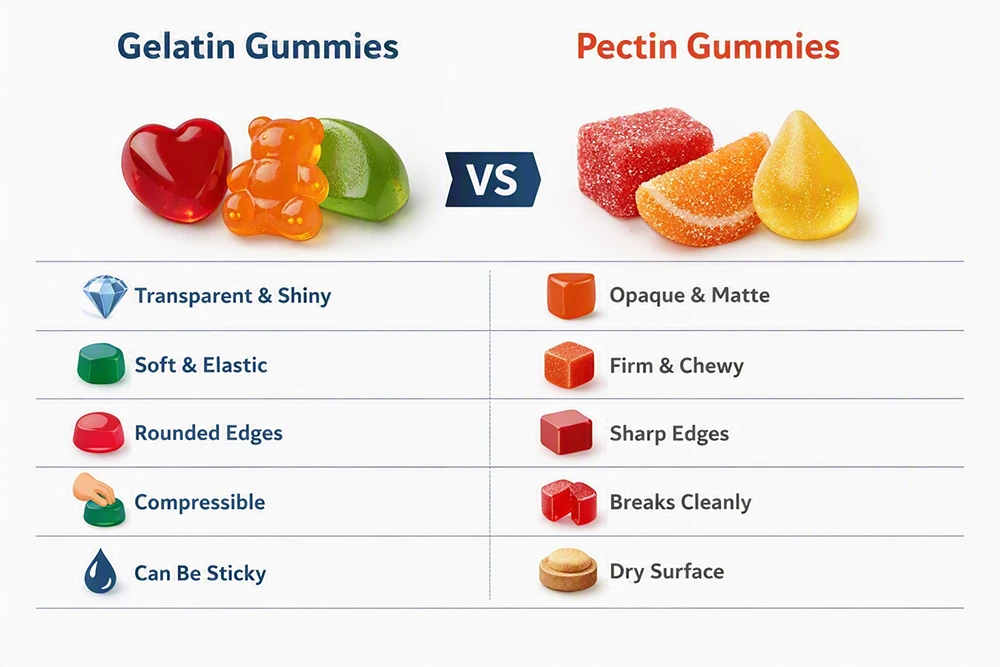
- Gelling Agents: Pectin, carrageenan, gelatin, or agar serve as the primary structure. Pectin (plant-based) and carrageenan enable vegan formulations, while gelatin offers superior texture and clarity in traditional products.
- Sweeteners: Glucose syrup, sugar, stevia, or sugar alcohols (sorbitol, xylitol) determine taste profile and affect product stability.
- Active Ingredients: Vitamins, minerals, amino acids, herbal extracts, or specialized compounds (creatine, collagen, etc.) are carefully selected for solubility and stability.
- Flavorings & Colors: Natural or synthetic flavoring agents and colorants must be certified for dietary supplement use and compatible with other ingredients.
This stage requires rigorous testing to ensure ingredient compatibility, prevent separation, and verify that active ingredients maintain potency through manufacturing and storage.
2. Mixing and Preparation
Raw materials are precisely weighed and fed into industrial mixers. Gelling agents are hydrated in heated water, active ingredients are dissolved or suspended, and sweeteners/flavorings are blended uniformly. Temperature control is critical—excessive heat can degrade thermolabile ingredients (vitamins, some herbal extracts), while inadequate mixing leads to inconsistent product.
Modern facilities use jacketed kettles with temperature monitoring and automated dosing systems to ensure batch consistency and traceability.
3. Molding
The prepared gel mixture is poured into starch molds or silicone forms. Traditional methods use starch depositing (pouring into carved potato/corn starch impressions), while modern facilities use vacuum casting or precision silicone molds for more complex shapes and tighter tolerances. The choice of molding method affects production speed, shape complexity (30+ different shapes are feasible), and labor costs.
4. Drying and Setting
Newly molded gummies contain excess moisture and require controlled drying in climate-controlled rooms (typically 18–24°C, 50–65% relative humidity) for 24–72 hours, depending on size and formulation. Improper drying causes stickiness, mold growth, or crystallization of sugars on the surface. Professional manufacturers use dedicated drying rooms with HVAC systems that maintain precise environmental parameters.
5. Demolding and Defluffing
Dried gummies are removed from molds and excess starch is brushed off using industrial defluffing machines. Any remaining starch residue is minimal and food-safe, though some manufacturers use additional cleaning stages for premium products.
6. Coating (Optional)
Many gummy bear production processes include a final coating to improve appearance and prevent sticking. Options include:
- Wax coating (for shine and water resistance)
- Polishing with additional sugar or polyols
- Sour coating (citric acid or tartaric acid for tart gummies)
7. Quality Control and Testing
Before packaging, gummies undergo multiple QC checks: visual inspection, weight verification, texture testing, and—for regulated products—potency analysis, microbial testing, and heavy metal screening. Reputable manufacturers maintain full traceability records and conduct third-party testing for critical quality attributes.
8. Packaging and Distribution
Finished gummies are counted, weighed, and packaged into bottles, pouches, or blister packs. Packaging includes desiccant packs to control moisture and extended shelf-life labeling. Professional manufacturers offer customizable packaging with your brand label—a core service of private label gummy manufacturer operations.
Technical Parameter Table: Gummy Bear Manufacturing Specifications
| Parameter | Specification / Options | B2B Relevance |
|---|---|---|
| Product Form | Solid gummies (bears, cubes, rings); typical weight 2–5g per piece | Affects packaging density and shipping costs |
| Gelling Agents | Pectin (vegan), gelatin (traditional), carrageenan, agar; concentration 4–8% by weight | Impacts texture, stability, and vegan certification; cost varies 3–5x between types |
| Active Ingredient Content | 0.1–30% depending on type (vitamins: 1–5%; herbs: 5–15%; functional: 10–30%) | Higher concentrations require advanced stabilization; affects cost and bioavailability |
| Sweeteners | Glucose syrup, sugar, stevia, sugar alcohols (sorbitol, xylitol); 40–60% by weight | Sweetener choice affects taste profile, caloric content, and cost; sugar alcohols enable low-sugar positioning |
| Moisture Content | 8–15% post-drying; final moisture in packaged product: 6–12% | Critical for shelf life; too high causes microbial growth; too low causes crystallization |
| Shape & Size Options | 30+ shapes (bears, cubes, rings, custom); typical dimensions 15–30mm | Custom shapes increase setup costs and lead time; standard shapes reduce MOQ and cost |
| Manufacturing Process | Starch depositing or vacuum casting; drying cycle: 24–72 hours; coating optional | Faster molding methods enable quicker turnarounds but may limit shape complexity |
| Quality Standards | GMP, ISO 9001, ISO 22000, HACCP, HALAL, KOSHER, Vegan certification | Certification scope affects market eligibility and compliance burden; third-party testing required for potency |
| Microbial Testing | Total aerobic microbial count, E. coli, Salmonella, Listeria; USP or EP standards | Non-negotiable for regulatory compliance; batch testing adds 3–5 days and 2–4% to cost |
| Potency Analysis | HPLC or spectrophotometry for active ingredients; ±10% of label claim acceptable | Essential for efficacy claims; batch-to-batch variation reflects manufacturing control |
| Packaging Options | PET bottles, plastic jars, blister packs, stand-up pouches; desiccant packs included | Bottle/jar packaging preferred for retail; pouches for bulk/subscription; custom labels standard |
| Production Capacity | Daily output: 5–20+ tons depending on facility; annual capacity: 1,000–5,000+ tons | Larger suppliers offer better pricing and faster scaling; verify unused capacity before committing |
| Lead Time | Standard formulations: 20–30 days; custom formulations: 30–60 days; setup: 7–14 days | First batch longer due to mold preparation and testing; repeat orders faster if standard recipe retained |
| Shelf Life | 2–3 years under standard conditions (room temperature, <65% humidity); varies with formulation | Longer shelf life supports retail distribution; storage conditions affect retailer requirements |
| Storage & Logistics | Room temperature, <65% humidity; avoid direct sunlight; standard pallet stacking safe | No special temperature control required (unlike some supplements); standard warehousing and shipping |
| Regulatory Compliance | FDA compliance (21 CFR 111 for supplements); country-specific label requirements; banned ingredient avoidance | Supplier should manage ingredient sourcing and documentation; brands responsible for final label compliance |
| Minimum Order Quantity (MOQ) | Standard: 10,000–30,000 units; flexible suppliers offer 5,000+ units; custom formulations may have higher MOQ | Higher MOQ reduces per-unit cost; evaluate cash flow impact before committing to first batch |
| Cost Structure | COGS: $0.30–$1.50 per unit (varies by active ingredients, volume); formulation R&D: $2,000–$10,000; setup: $1,000–$3,000 | Volume discounts typical; premium ingredients or complex formulations increase cost; compare landed cost including freight |
Key Advantages and Limitations of Gummy Bear Format
Advantages
- Consumer Appeal: Gummies have higher palatability and compliance than pills, especially for children and seniors. This drives consumer retention and premium pricing.
- Stability: Unlike powders or liquids, gummies have excellent shelf life (2–3 years) under standard conditions, reducing spoilage and distribution complexity.
- Customization: Formulation flexibility allows brands to develop unique flavor profiles, shapes, and functional benefits. Differentiation through custom gummy bears is achievable and valuable in crowded markets.
- Compliance: Gummy format qualifies as a dietary supplement under FDA 21 CFR 111 (versus more restrictive drug classifications), simplifying regulatory pathways for most ingredients.
- Market Demand: The gummy supplement category has consistent double-digit growth, with consumer preference shifting away from traditional pills toward gummies.
Limitations
- Ingredient Constraints: Not all active ingredients are suitable for gummies. Heat-sensitive compounds (some probiotics, certain vitamins) may require special stabilization or encapsulation.
- Higher Manufacturing Cost: Gummy production is more labor-intensive than tablet compression or powder filling, resulting in higher per-unit costs (typically 20–50% more than tablets).
- Dosage Limitations: Gummy format constrains dosage per piece. High-dose products (e.g., 1000mg per dose) may require consuming multiple gummies, reducing consumer convenience.
- Sugar Content Perception: Even low-sugar formulations must contain sufficient sugar or polyols for texture and stability, making sugar-free positioning challenging and potentially affecting palatability.
- Supply Chain Dependency: Gummy manufacturing relies on specialized suppliers with specific equipment and expertise. This reduces sourcing flexibility compared to simpler formats like powders or capsules.
Business Relevance: Who Should Consider Gummy Bear Manufacturing?
- Direct-to-Consumer (DTC) Brands: Building brand loyalty and premium positioning through palatable, differentiated products. Gummies support subscription models and repeat purchases.
- Retail Brands: Seeking shelf space in major retailers (drugstores, natural food channels, mass market). Gummies outsell pills in retail environments and command premium margins.
- Athletes and Functional Food Companies: Launching performance supplements (creatine, amino acids, electrolytes) that benefit from gummy format’s taste and ease-of-use.
- Kids’ Health Products: Vitamins, probiotics, and supplements for children are predominantly gummy-based. This market segment shows strong growth and pricing power.
- Private Label Retailers: E-commerce platforms, subscription boxes, and wellness retailers benefit from exclusive private label gummy products that differentiate their offerings.
- Startups and SMEs: Gummy contract manufacturing enables rapid market entry without significant capital investment. OEM/ODM suppliers handle production complexity while brands focus on marketing and distribution.
Who Should Avoid or Reconsider?
- Ultra-High Dose Products: If your target dose exceeds 500–750mg per serving, gummy format becomes impractical. Consider tablets, capsules, or powders instead.
- Temperature-Sensitive Compounds: Certain probiotics, enzymes, or exotic extracts may degrade during gummy manufacturing. Consult manufacturers about stabilization options.
- Price-Sensitive Markets: If your target customer is cost-conscious, the higher per-unit cost of gummies versus tablets may reduce competitiveness. Evaluate market positioning carefully.
- Very Small Batches: If your production needs are <5,000 units annually, gummy manufacturing may not be economical. Consider contract capsule or tablet manufacturers for lower volumes.
Practical Insights: Critical Factors for B2B Decision-Making
1. Manufacturing Quality and Process Control
Consistency is non-negotiable in supplement manufacturing. Key quality indicators include:
- Batch-to-Batch Potency Variation: Reputable manufacturers maintain potency within ±10% of label claim. Request historical potency data for the specific formulation you’re considering.
- Microbial Control: A GMP facility with a 100,000-class cleanroom and documented microbial testing should be the baseline. Ask about documented instances of microbial failure and corrective actions.
- Environmental Monitoring: Professional facilities monitor cleanroom air quality, water quality, and equipment cleanliness. This data is a sign of operational rigor.
- Traceability System: Ensure the manufacturer can trace each batch back to raw material suppliers and forward to finished goods. This is essential for recalls and regulatory compliance.
2. Raw Material Sourcing Transparency
Ingredient quality directly impacts finished product quality and regulatory compliance. Evaluate suppliers on:
- Ingredient Certifications: Active ingredients should have Certificates of Analysis (CoA) confirming identity, purity, and absence of contaminants. Ask to review CoA for key ingredients.
- Supply Chain Transparency: Reputable suppliers source from established ingredient distributors, not gray-market sources. Request a list of ingredient suppliers to verify legitimacy.
- Banned Ingredient Avoidance: Manufacturers should maintain a list of prohibited ingredients (per FDA, state regulations, retailer requirements) and screen all incoming materials against it.
- Allergen Management: Confirm that the facility has documented procedures for allergen control if your product requires allergen-free claims (e.g., dairy-free, gluten-free, tree nut-free).
3. Production Scalability and Lead Time
As your brand grows, manufacturing capacity must scale without quality degradation. Assess scalability by:
- Available Capacity: Ask about current utilization rates and unused production capacity. A facility operating at 70–80% capacity is ideal; over 90% suggests inflexibility for rush orders.
- Backup Equipment: Does the manufacturer have redundant molding lines, drying rooms, or quality control equipment? Backup systems reduce risk of supply disruptions.
- Lead Time Transparency: Request realistic lead times for standard vs. custom formulations. Be wary of manufacturers quoting 10-day lead times without mentioning validation or testing delays.
- Historical Growth: Has the manufacturer successfully scaled production for other clients? Request references from brands that have grown from 10,000 to 500,000+ units annually.
4. Compliance and Documentation Readiness
Regulatory compliance is a non-negotiable business risk. Verify that manufacturers provide:
- GMP Certification Documents: Request copies of current FDA GMP certification or third-party audit reports (e.g., NSF, USP, ISPE audits). Certifications should be recent (within 3 years) and comprehensive.
- Batch Records: Confirm the manufacturer maintains complete batch records (ingredients, weights, processing times, QC results, personnel names) for the regulatory retention period (typically 2–3 years).
- Stability Data: Ask for accelerated stability study results (showing potency and microbial counts over time). This data supports your product’s shelf-life label claim.
- Adverse Event Tracking: Does the manufacturer have a system to track and report adverse events to the brand? This is required for supplements and protects both parties.
- Label Compliance Support: Reputable manufacturers review your label claims for compliance with FDA regulations and help avoid prohibited structure/function claims.
5. Cost Structure Transparency
Hidden costs can severely impact profitability. Break down costs into:
- Formulation R&D: One-time cost ($2,000–$10,000) to develop or optimize your specific recipe. This cost is amortized across units.
- Setup/Mold Costs: Custom molds for unique shapes cost $1,000–$5,000. Standard shapes may have reusable molds, reducing setup fees.
- Raw Material Costs: Typically 40–50% of final COGS. Ask for ingredient cost breakdowns to identify high-cost components.
- Labor and Overhead: Gummy manufacturing is labor-intensive. Facilities in developed countries typically have higher labor costs but better quality control.
- QC and Testing: Batch testing (microbial, potency) adds 2–4% to COGS. Ask whether testing is included in quotes or charged separately.
- Packaging: Custom labels, bottles, and desiccant packs typically add 30–60% to total product cost. Negotiate packaging costs separately from manufacturing.
- Freight and Logistics: Shipping from a manufacturing hub (especially if international) can be 5–15% of total cost. Clarify whether quotes include freight to your facility.
6. How to Evaluate a Reliable Supplier
Red Flags to Avoid:
- No certifications or reluctance to provide audit reports
- Unable to provide batch records, CoA, or stability data
- Quoting unrealistically low prices (often indicates cutting corners on quality or compliance)
- Unwilling to sign NDAs or provide references
- Frequent excuses about lead times or quality issues
- No documented process for handling customer complaints or recalls
Green Flags Indicating Reliability:
- Multiple relevant certifications (GMP, ISO 9001, ISO 22000, HACCP)
- Transparent batch records and full traceability
- Provides historical potency and stability data for similar formulations
- Willing to provide customer references and facilities tour
- Clear documentation of quality assurance procedures and complaint resolution
- Invests in R&D and stays current with regulatory changes
- Competitive pricing without compromising on quality—pricing roughly 20–30% higher than lowest-cost providers often indicates superior quality
B2B Decision Guide: Selecting the Right Gummy Bear Manufacturer
Step 1: Define Your Product Requirements
Before approaching manufacturers, clearly specify:
- Target active ingredients and doses (confirm they’re suitable for gummy format)
- Desired shape, size, and flavor profile
- Vegan, organic, or allergen-free requirements
- Target retail price (to determine acceptable COGS)
- Expected production volume (Year 1, Year 2, Year 3)
- Timeline to market
Step 2: Request Detailed Quotations
Ask manufacturers for itemized quotes including:
- Formulation development fee (if custom)
- Per-unit manufacturing cost at multiple volume tiers (10K, 50K, 100K units)
- Setup/mold costs
- QC testing and CoA
- Packaging options and costs
- Lead time and payment terms
- Minimum order quantities and restrictions
Compare apples-to-apples: ensure all quotes cover the same testing, packaging, and service scope.
Step 3: Verify Certifications and Quality Systems
Request and independently verify:
- GMP certification (FDA or equivalent)
- ISO 9001 (quality management)
- ISO 22000 (food safety)
- Third-party audit reports
Contact relevant certifying bodies if necessary to confirm current certification status.
Step 4: Assess Production Capability and Capacity
- Visit the facility in person (critical for large commitments)
- Observe cleanroom conditions and equipment
- Review batch records for a similar product (to assess consistency)
- Ask about redundancy and backup equipment
- Confirm production scheduling and flexibility for rush orders
Step 5: Request References and Customer Testimonials
- Request 3–5 references from brands in your target market
- Ask references specifically about lead times, quality consistency, and responsiveness to issues
- Inquire about how the manufacturer handled production problems or recalls
Step 6: Negotiate Terms and Sign a Manufacturing Agreement
- Service Level Agreements (SLAs): Define acceptable tolerances (±10% for potency, <1% defect rate, lead time ±5 days)
- Intellectual Property: Clarify ownership of formulations and molds. Most manufacturers retain mold ownership but allow your exclusive use; ensure non-compete language if desired.
- Quality and Testing: Specify who pays for testing, which labs conduct testing, and what parameters are tested (batch records, microbial, potency, stability).
- Liability and Recalls: Define liability limits, insurance requirements, and recall procedures. Reputable manufacturers carry product liability insurance.
- Payment Terms: Standard terms are 50% upfront (upon order confirmation), 50% upon shipment. Negotiate extended terms (Net 30/60) as volume grows.
- Confidentiality: Ensure an NDA protects your formulation and product specifications from disclosure to competitors.
Step 7: Conduct a Pilot Batch and Quality Validation
- Order an initial batch at your target volume (or smaller pilot batch if available)
- Conduct independent potency and microbial testing (third-party lab, not the manufacturer’s lab)
- Verify batch records align with your specifications
- Assess product appearance, taste, and stability over 30–60 days
- If quality meets expectations, proceed to full production; otherwise, address issues before scaling
Step 8: Establish Long-Term Partnership Framework
- Demand Forecasting: Provide rolling 12-month forecasts to help the manufacturer plan capacity and raw material procurement.
- Regular Communication: Schedule monthly or quarterly business reviews to discuss quality metrics, costs, and improvement initiatives.
- Cost Reduction Initiatives: Collaborate on volume-based discounts, ingredient optimization, and process efficiency gains.
- Continuous Improvement: Use batch data and customer feedback to refine formulations and manufacturing processes.
Risk Control and Quality Assurance Checkpoints
| Risk Category | Potential Issue | Control Measure | Responsibility |
|---|---|---|---|
| Supply Chain | Contaminated or counterfeit ingredients | Require CoA for all raw materials; conduct supplier audits; trace ingredients to primary source | Manufacturer + Brand spot-checks |
| Quality (Potency) | Out-of-spec active ingredient levels | Batch testing by third-party lab; HPLC analysis; historical data review | Brand (independent testing) |
| Quality (Microbial) | E. coli, Salmonella, or mold contamination | Batch microbial testing; environmental monitoring; ingredient sourcing controls | Manufacturer (daily); Brand (batch testing) |
| Compliance | Label claims not supported by evidence; banned ingredients present | Legal review of label claims; banned substance screening; current FDA guidance compliance | Brand (label), Manufacturer (ingredients) |
| Supply Disruption | Manufacturer unable to meet demand; key equipment failure | Confirm backup equipment and capacity; maintain 30-day inventory buffer; diversify suppliers for critical ingredients | Manufacturer (redundancy); Brand (inventory planning) |
| Intellectual Property | Formulation disclosure to competitors; unauthorized use of molds | Signed NDA; clear IP ownership terms in manufacturing agreement; mold control and tracking | Brand (contract enforcement) |
| Adverse Events | Injury or illness linked to product; regulatory investigation | Adverse event tracking system; product liability insurance; recall procedures documented | Brand (monitoring); Manufacturer (notification) |
Conclusion
How gummy bears are made involves a sophisticated blend of food science, regulatory expertise, and manufacturing precision. For B2B buyers—whether brands launching new products, retailers seeking private label solutions, or distributors building inventory—partnering with a capable gummy manufacturer is essential to success. The decision to source gummy bear manufacturing from a contractor offers significant advantages: reduced capital investment, access to specialized expertise, faster time-to-market, and scalability without internal risk.
However, success depends on selecting the right manufacturing partner. This requires evaluating not only price, but quality systems, certifications, production capacity, raw material sourcing transparency, and long-term partnership capability. The most successful custom gummy bears projects are those where brands and manufacturers establish clear requirements upfront, conduct thorough pilot batches, and maintain ongoing communication and quality oversight.
Gummy supplements remain one of the fastest-growing categories in nutrition and health, with consistent consumer demand and premium pricing power. Gummy contract manufacturing enables brands to capture this opportunity without building expensive in-house capabilities. By following the evaluation framework and risk management practices outlined in this guide, B2B buyers can identify reliable gummy bear manufacturers and establish partnerships that support long-term growth.
Frequently Asked Questions (FAQ)
Manufacturing costs (COGS) typically range from $0.30–$1.50 per unit, depending on active ingredients, volume, and complexity. Formulation development adds $2,000–$10,000 (one-time), and setup/molds cost $1,000–$5,000. Packaging, freight, and testing add 50–100% to raw manufacturing cost. High-volume orders (100K+ units) can achieve $0.30–$0.50 COGS for standard formulations; smaller volumes (10K units) may cost $1.00–$1.50 per unit. Request itemized quotes to understand true landed cost.
Timeline depends on complexity: standard formulations (using existing recipes) require 20–30 days; custom formulations (new active ingredients or flavor combinations) require 30–60 days for development, pilot batch, testing, and label approval. Add another 10–20 days for regulatory review and certifications. Total first-to-market timeline is typically 60–90 days. Repeat orders of established recipes are faster (15–25 days lead time).
Non-negotiable standards include: GMP certification (FDA or equivalent), ISO 9001 (quality management), ISO 22000 (food safety), HACCP, and third-party audit reports (NSF, USP, ISPE). Manufacturers should provide batch records, Certificates of Analysis for ingredients, potency testing (±10% accuracy), microbial testing (E. coli, Salmonella, mold-free), and stability data supporting shelf-life claims. Request samples of these documents before commitment.
Gummy bears offer superior taste and consumer appeal but higher per-unit cost and lower maximum dosage per piece. Capsules allow higher doses and lower manufacturing costs but are less palatable and have shorter shelf life if moisture control is poor. Tablets are the lowest-cost format but have poor consumer adoption in dietary supplement categories. Choose gummies for brands emphasizing consumer experience and compliance; choose capsules or tablets for cost-sensitive, high-dose products. Each format requires different manufacturing capabilities and suppliers.
Suitable ingredients: vitamins (A, D, E, B-complex), minerals (calcium, iron, zinc), botanical extracts (standardized to 3–15% active components), amino acids, collagen, creatine, and probiotics (with special stabilization). Unsuitable or challenging: thermolabile compounds (some enzymes, certain probiotics degrade at 50–60°C processing temperatures), very high-dose actives (>750mg/piece becomes impractical), and volatile compounds (essential oils, some flavonoids) that degrade during drying. Consult the manufacturer about your specific ingredients before commitment; they can recommend stabilization strategies if needed.
Work with a manufacturer experienced in dietary supplement GMP compliance and who reviews your product label for structure/function claims (allowed) vs. disease claims (prohibited). Ensure potency is within ±10% of label claims (supported by testing); avoid unsubstantiated claims (e.g., “treats diabetes”); verify all ingredients are on the FDA GRAS list or have documented safety history; conduct adverse event monitoring; and maintain full batch records for 2–3 years. Consider hiring a regulatory consultant to review your label, ingredients, and marketing claims before launch. Reputable manufacturers will assist with compliance review but ultimately the brand is responsible for label accuracy.
About Gothink Biology
Shenzhen Gothink Biotech Co., Ltd. is a leading China-based nutrition supplement manufacturer specializing in comprehensive OEM, ODM, CMO, and CDMO services for gummy, capsule, tablet, powder, liquid, and drop supplements. With a 100,000-class GMP-certified cleanroom facility, daily production capacity of 16 tons, and annual output of up to 5,000 tons, Gothink Biology supports brands from product formulation through final packaging and export.
Gothink Biology’s competitive advantages include:
(1) Advanced R&D Expertise led by postdoctoral researchers with international experience from California Institute of Technology, Emory University, and Ohio State University, supported by a 10,000-class pharmaceutical-grade laboratory;
(2) Comprehensive Quality Assurance with certifications including ISO 9001, ISO 22000, HACCP, FDA, HALAL, KOSHER, and Vegan, ensuring world-class compliance and regulatory readiness;
(3) Flexible Manufacturing Capacity accommodating production runs from small trial batches to full-scale manufacturing, with customizable formulations and packaging solutions;
(4) One-Stop Service Model covering formulation consultation, custom design, manufacturing, quality testing, packaging, and export support, simplifying the product development process for brands and distributors worldwide.
Whether you are launching a new dietary supplement brand, seeking private label gummy manufacturing, or scaling production for an established product line, Gothink Biology provides reliable, end-to-end solutions to bring your supplement vision to market efficiently and compliantly. With over 2,000 formulations researched and developed annually, Gothink Biology combines scientific rigor, manufacturing excellence, and customer partnership to support long-term business growth in the competitive nutrition supplement industry.