
A Comprehensive Manufacturing Guide for Supplement Brands & Contract Manufacturers
Executive Summary
Making creatine gummies requires careful formulation, precise dosing, and adherence to dietary supplement manufacturing standards. This guide covers the complete process from ingredient selection through packaging, including quality assurance protocols, regulatory compliance, and scaling considerations. Whether you’re developing a new supplement product or seeking private label creatine gummies solutions, understanding the manufacturing fundamentals is essential for success.
The Complete Process: How to Make Creatine Gummies
1. Formulation Development & Recipe Design
The foundation of successful creatine gummies lies in precise formulation. Your recipe must balance:
- Creatine Monohydrate: Typically 3-5g per gummy (standard dosing)
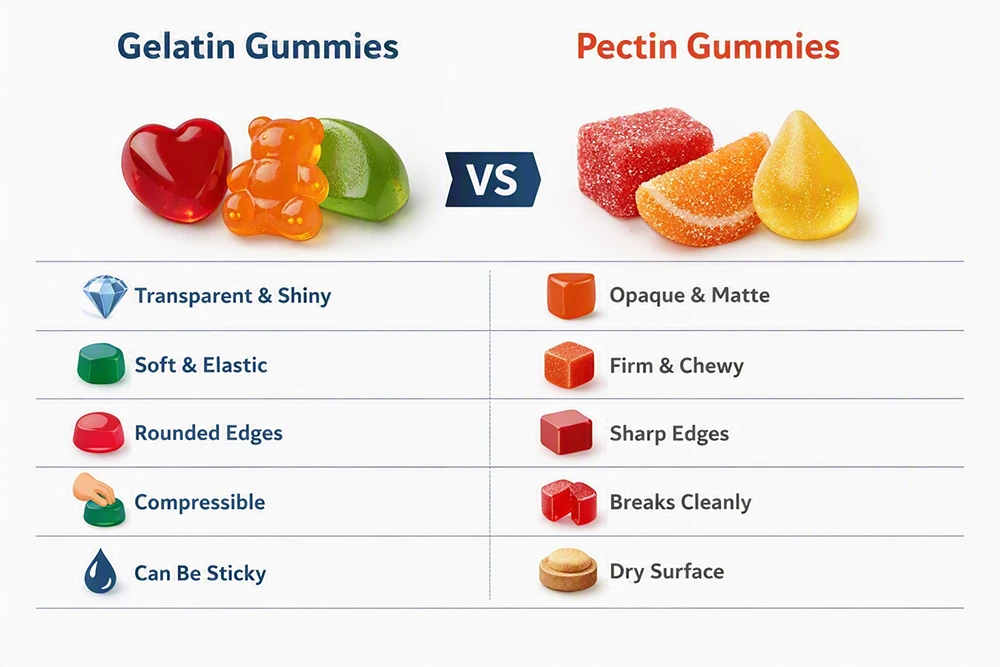
- Gelling Agents: Pectin, gelatin, or carrageenan (30-40% of formulation)
- Sweeteners: Stevia, sugar, sorbitol, or erythritol for taste masking
- Moisture Adjustment: Glycerin or corn syrup (5-10%) to prevent crystallization
- Binders & Stabilizers: Dextrin, maltodextrin, or microcrystalline cellulose
- Flavor Compounds: Natural or synthetic flavoring oils
- Colorants: FD&C approved colors for visual appeal
2. Ingredient Selection & Quality Sourcing
|
|---|
Supplier Due Diligence: Source creatine from manufacturers with ISO 9001, ISO 22000 certifications. Verify third-party testing (HPLC confirmation) to confirm >99% purity and absence of contaminants.
3. Dry Blending & Pre-mixing
- Weigh all dry ingredients according to formulation specifications (±0.5% accuracy)
- Sift creatine monohydrate and other powders through 200-mesh screens to eliminate lumps
- Perform ribbon blending for 15-25 minutes to ensure homogeneous distribution
- Conduct in-process testing: Pull samples to verify color uniformity and absence of segregation
- Store in climate-controlled chambers (18-22°C, <60% RH) to prevent moisture absorption
4. Wet Mixing & Gelling Agent Hydration
- Heat water to 50-65°C and gradually disperse pectin or gelatin to prevent clumping
- Add glycerin and sweetener solution while maintaining temperature control
- Incorporate the dry blend slowly with continuous mixing (5-10 minutes at low speed)
- Monitor viscosity: Target 2000-4000 mPa·s for optimal molding
- Remove air bubbles using vacuum degassing (0.05-0.08 MPa for 3-5 minutes)
- Verify homogeneity: Confirm creatine is evenly distributed with no streaking
5. Molding & Shaping
Two primary methods dominate commercial production:
Method A: Starch Molding (Traditional)
- Press gummy mass into potato starch molds (food-grade)
- Set for 12-24 hours at 18-22°C with 50-70% relative humidity
- Dusting layers prevent sticking and moisture retention
- Remove surface starch residue through tumbling
Method B: Continuous Extrusion & Coating (Industrial)
- Feed formulation through heated extruder with shaped die
- Cut with precision timing to achieve uniform weights
- Gel-setting tunnel with controlled temperature/humidity gradient
- Starch coating applied via vacuum mixing drum
Dosage Precision: Modern lines achieve ±5% weight variation. Implement in-line weight checkers to remove underweight/overweight units automatically.
6. Drying & Moisture Stabilization
- Initial drying phase (12-24 hours): 22-25°C, 60-65% RH to set outer structure
- Progressive drying (24-48 hours): Gradually reduce humidity to 40-45% for internal moisture removal
- Target final moisture content: 8-12% (measured via Karl Fischer titration)
- Avoid over-drying: >8% moisture causes brittleness; <6% invites cracking
7. Starch Removal & Polishing
- Tumbling separation: Rotate in mesh drums for 30-60 minutes to release embedded starch
- Vibrating screens: Polish surface and ensure uniform appearance
- Air classification (optional): Remove ultra-fine particles using negative air pressure
- Visual inspection: Hand-sort for color uniformity and structural defects
Quality Control & Testing Requirements
In-Process Controls (Every Batch)
|
|---|
Finished Product Testing (Before Release)
- Potency Assay: HPLC confirmation of creatine concentration (±10% acceptable range)
- Microbial Analysis: Total aerobic count, E. coli, Salmonella, Listeria monocytogenes
- Stability Testing: 3-month accelerated study (40°C, 75% RH) + 12-month long-term (25°C, 60% RH)
- Heavy Metals Screening: Pb, Cd, Hg, As via ICP-MS
- Allergen Declaration: Written confirmation of presence/absence of major allergens
Manufacturing at Scale: From Small Batch to Commercial Production
Small Batch Production (1-100 kg/month)
Equipment Investment: €5,000-15,000
- Industrial mixer (20L capacity)
- Silicone molds or basic starch molding setup
- Standard kitchen-grade dehumidifier
- Manual drying racks and tumbler
Timeline: 6-8 weeks | Cost per unit: €0.80-1.50
Mid-Scale Production (100-1,000 kg/month)
Equipment Investment: €50,000-150,000
- 50L planetary mixer with temperature control
- Semi-automatic molding line (mechanical press)
- Industrial dehumidification system
- Quality testing equipment (balance, viscometer)
Timeline: 3-4 weeks | Cost per unit: €0.40-0.80
Commercial-Scale Production (1,000+ kg/month)
Equipment Investment: €300,000-800,000
- 200L+ continuous mixer with recipe control software
- Fully automated extrusion line with weight checkers
- Climate-controlled drying chambers (multi-zone)
- In-line quality testing (HPLC, moisture analyzers)
- GMP-compliant facility design (100,000-class cleanroom)
Timeline: 2-3 weeks | Cost per unit: €0.15-0.40
Regulatory Compliance & Quality Standards
Essential Certifications
Legitimate gummy supplement manufacturers must maintain:
- ISO 9001:2015 – Quality Management System
- ISO 22000:2018 – Food Safety Management
- HACCP Certification – Hazard Analysis Critical Control Points
- GMP Compliance – Current Good Manufacturing Practice (FDA 21 CFR Part 111)
- Vegan/Halal/Kosher (if targeting specific markets)
Regulatory Pathways
United States (FDA)
- File DSHEA notification
- Creatine is GRAS (Generally Recognized As Safe) when dosed appropriately
- No pre-market approval needed; post-market surveillance required
European Union
- Creatine monohydrate approved under Novel Food Regulation (EU 2015/2283)
- Mandatory safety dossier required for new supplement products
- Member state approval process (typically 4-8 months)
China (NMPA)
- Health food registration or pharmaceutical registration depending on claims
- Stability and safety testing required in NMPA-approved labs
- Local manufacturing facility typically required
B2B Decision Framework: Making vs. Outsourcing
Should You Manufacture In-House or Partner with a Contract Manufacturer?
| Factor | In-House Production | Contract Manufacturing |
|---|---|---|
| Capital Investment | €150,000-500,000+ | €0 upfront; cost per unit |
| Time to Market | 6-12 months (facility setup) | 4-8 weeks |
| Quality Control | Direct oversight; full accountability | Partner-dependent; requires audits |
| Flexibility | Recipe changes possible mid-production | Subject to partner’s MOQ & lead times |
| Scaling | Unlimited upside (new lines) | Limited by partner capacity; gradual scaling |
| Compliance Risk | Full regulatory responsibility | Shared responsibility |
Selecting a Custom Gummy Manufacturer
Evaluation Criteria:
- Manufacturing Capacity & Certifications
- Verify GMP facility certification (FDA warning letter history available online)
- Confirm annual capacity can handle your growth plan (minimum 50% buffer)
- Request ISO 9001, ISO 22000, HACCP documentation
- Formula Expertise & R&D
- Request case studies of similar creatine formulations
- Assess in-house R&D team credentials (PhD-level chemists preferred)
- Ask about shelf-life stability data for comparable products
- Quality Assurance Infrastructure
- Confirm HPLC lab capability (in-house testing vs. third-party)
- Review stability testing protocol (accelerated + long-term study)
- Request third-party audit reports (SQF, BRC certification preferred)
- Minimum Order Quantities (MOQ) & Pricing
- Negotiate MOQ flexibility: 5-10 kg trial runs before 500 kg commitment
- Request transparent cost breakdowns
- Compare price per unit at 500kg, 1000kg, 5000kg volumes
- Communication & Responsiveness
- Timeline for regulatory documentation
- Dedicated account manager or project coordinator assignment
- Sample approval process (typically 2-3 iterations before production approval)
FAQ: Common Questions About Making Creatine Gummies
1. What is the optimal creatine dose per gummy for effectiveness?
The standard dose is 3-5g creatine monohydrate per gummy serving. Most athletes follow a 5g daily maintenance protocol (post-workout preferred). Some manufacturers create dual-gummy servings (2 × 2.5g gummies = 5g) to reduce individual gummy size and improve swallowing comfort.
2. How long do creatine gummies remain stable on the shelf?
With proper formulation (8-12% moisture, glycerin buffer, oxygen absorbers in packaging), creatine gummies maintain ±10% potency for 24-36 months at ambient storage (20-25°C, <60% RH). Accelerated stability testing (40°C, 75% RH for 3 months) predicts this shelf life.
3. Can I use plant-based gelling agents to make vegan creatine gummies?
Yes. Pectin (from apples/citrus) and carrageenan (seaweed-derived) are plant-based alternatives to gelatin. However, pectin-based formulations are slightly more hygroscopic, requiring increased glycerin content. Both require reformulation and stability retesting before production.
4. What are the main regulatory barriers to selling creatine gummies?
In the U.S., creatine supplements are GRAS and require only post-market FDA notification. The primary regulatory burden involves substantiation of label claims. EU regulations require Novel Food approval if your creatine source hasn’t been used historically (4-8 months). China requires health food registration or pharmaceutical approval (12+ months).
5. How much does it cost to manufacture creatine gummies at scale?
Manufacturing costs (COGS) range from €0.15-0.50 per gummy at volumes >1,000 kg/month. Small-batch production costs €0.80-1.50 per gummy. Contract manufacturers typically charge €2-5 per gummy to brands (including their margin).
6. What testing must I conduct before releasing a batch to market?
Minimum batch testing: HPLC potency assay (±10% label claim), moisture content (8-12%), microbiological analysis, and weight uniformity (±7.5%). Optional but recommended: heavy metals screening, allergen screening, and disintegration/dissolution testing.
Conclusion
Manufacturing creatine gummies demands precision across formulation, processing, and quality assurance. Whether you pursue in-house production or partner with a custom gummy manufacturer, success hinges on understanding ingredient interactions, maintaining moisture control, and ensuring dosage consistency.
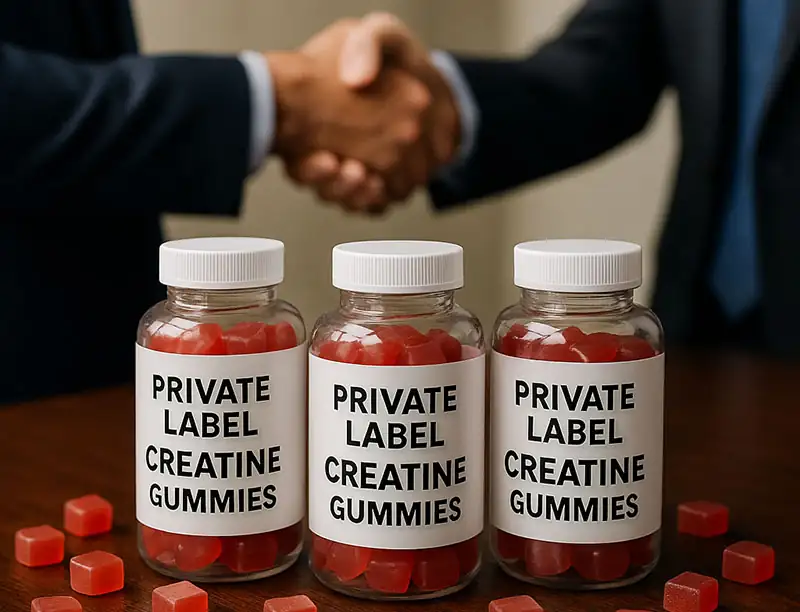
For brands seeking to launch private label creatine gummies efficiently, contract manufacturing with a certified partner accelerates time-to-market while offloading regulatory and quality responsibilities. With proper formulation and quality controls, creatine gummies achieve 2-3 year shelf stability and support the growing consumer demand for convenient, effective supplement formats.
About Shenzhen Gothink Biotech: Your Trusted Gummy Manufacturing Partner
At Shenzhen Gothink Biotech, we specialize in gummy contract manufacturing and custom gummy supplement production for global brands. As a leading gummy manufacturer, we offer comprehensive OEM/ODM services tailored to your vision.
Why Gothink for Your Creatine Gummy Project?
World-Class Manufacturing Capability
- GMP-certified facility with 100,000-class cleanroom
- Annual production capacity: 5,000 tons
- Daily output: 16 tons across multiple product lines
- Certifications: ISO 9001, ISO 22000, HACCP, FDA, HALAL, GMP, KOSHER, Vegan
Advanced R&D & Formulation Expertise
- 10,000-class pharmaceutical-grade laboratory
- Technical team led by postdoctoral researchers from top U.S. universities
- Annual formulation research on 2,000+ new products
- Specialization in creatine, performance supplement, and functional gummy formulations
End-to-End Solutions
We manage every aspect of your creatine gummy project:
- Formulation Development: Custom recipe optimization
- Raw Material Sourcing: Direct partnerships with pharmaceutical-grade suppliers
- Production & Manufacturing: Batch sizes from 5 kg to 5,000+ kg
- Quality Assurance: In-house HPLC testing, stability studies, third-party certification
- Regulatory Compliance: FDA documentation, EU Novel Food pathway support
- Custom Packaging: Private label design, nutrition labeling, bulk formats
Flexible MOQ & Scalability
- Minimum order quantities starting at 5-10 kg for formulation trials
- Transparent pricing at 500 kg, 1,000 kg, 5,000 kg+ volumes
- Dedicated project managers ensuring communication and on-time delivery
- Capacity to scale from startup volumes to 5,000+ kg/month as your brand grows
Ready to Launch Your Creatine Gummy Brand?
Contact our formulation team to discuss your project scope, target specifications, and timeline. We’ll provide formulation samples, manufacturing cost analysis, and a complete project roadmap.