
What to know before you source, formulate, and launch your own gummy supplement line
Abstract
The global gummy supplement market has grown substantially over the past decade, and the category shows no sign of slowing. For entrepreneurs, health brands, retailers, and distributors looking to enter or expand in this space, private label gummy vitamins represent one of the most accessible and scalable entry points. This guide explains how the private label model works, what differentiates a credible gummy vitamins wholesale or bulk supply arrangement from a genuine manufacturing partnership, what regulatory and quality benchmarks matter, and what practical questions buyers should ask before signing any contract. The goal is to provide objective, experience-based guidance rather than a sales pitch.
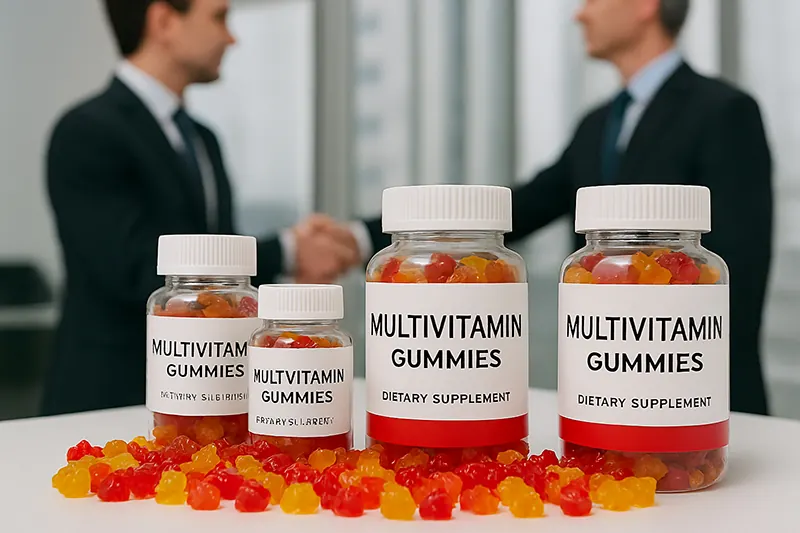
1. Understanding Private Label Gummy Vitamins: What the Model Actually Involves
Private labeling in the dietary supplement industry means sourcing a finished or semi-finished product from a manufacturer and selling it under your own brand identity. In the context of gummy supplements, this typically involves:
- Selecting a base formulation from a manufacturer’s existing portfolio, or collaborating on a custom blend
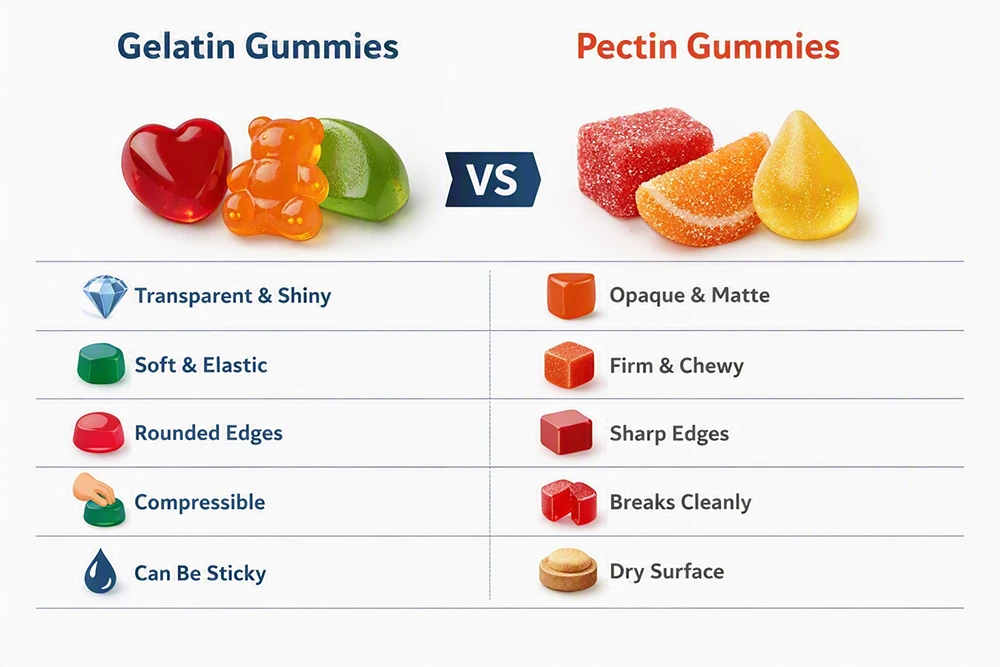
- Defining the gummy format — shape, flavor, color, texture, gelling agent (pectin vs. gelatin), and coating
- Applying your brand’s label, logo, and packaging design
- Placing a minimum order and receiving finished, retail-ready units
The private label route differs from a fully custom Gummy Contract Manufacturing engagement, where the buyer owns a proprietary formulation developed from scratch. Both models are valid; the right choice depends on budget, timeline, differentiation goals, and regulatory ambitions. A manufacturer that handles both gummy supplements private label and full custom development gives brands more flexibility as they grow.
Private Label vs. White Label vs. OEM/ODM
These terms are used inconsistently across the industry, which causes real confusion:
- White label: A ready-made product sold to multiple buyers who each apply their own branding. No formulation input from the buyer.
- Private label: Often used interchangeably with white label, but sometimes implies a degree of customization — flavor, dosage, or minor ingredient adjustments.
- OEM (Original Equipment Manufacturer): The manufacturer produces to the buyer’s specification. The buyer owns the formula.
- ODM (Original Design Manufacturer): The manufacturer designs the product and the buyer markets it under their own brand.
Understanding which model your manufacturer operates under is important both contractually and for long-term brand positioning.
2. The Gummy Supplement Format: Why It Matters for Manufacturers and Buyers
Not every facility that makes nutritional products is equipped for Gummy Manufacturing. Gummies are technically more demanding than capsules or tablets. The reasons are worth understanding before you evaluate suppliers.
2.1 Gelling Agents and Their Implications
Traditional gummies use gelatin, derived from animal collagen. Gelatin produces a firm, elastic texture and is cost-effective. However, it disqualifies a product from vegan, vegetarian, halal, or kosher certification unless the source material meets the appropriate standard. Many modern formulations substitute pectin (derived from fruit peel) or carrageenan (from seaweed). These plant-based gelling agents require different processing parameters — temperature, pH, and mixing protocols differ significantly from gelatin-based production.
If your target market includes consumers with dietary restrictions, you need to confirm that your manufacturer has demonstrated experience with the alternative agent you require. Ask for stability data and reference products, not just a general capability claim.
2.2 Active Ingredient Compatibility
Gummies are an aqueous, slightly acidic, warm-processed matrix. Not all active ingredients survive this environment without degradation. Fat-soluble vitamins (A, D, E, K) require emulsification. Some minerals are hygroscopic and can cause texture issues over shelf life. Probiotics in gummies are technically feasible but present significant stability challenges unless properly microencapsulated.
A competent manufacturer should be able to produce stability data for the specific actives in your formulation, not generic shelf-life claims.
2.3 Sugar Reduction and Functional Variants
Consumer demand for low-sugar, sugar-free, keto-compatible, and pediatric gummies has increased. These variants require alternative sweeteners (erythritol, allulose, stevia, monk fruit) and adjusted processing. Some sugar-free gummies require specific packaging to prevent moisture uptake. If your positioning depends on a reduced-sugar claim, ensure your manufacturer has specific experience in this area.
3. Quality Standards: What to Verify Before Partnering with Any Gummy Manufacturer
When evaluating a custom gummy manufacturer or any supplier offering gummy vitamins bulk or wholesale supply, quality infrastructure matters more than price per unit. The following are non-negotiable benchmarks:
3.1 GMP Certification
Good Manufacturing Practice (GMP) certification is the foundational quality standard for dietary supplement manufacturing. In the United States, the FDA mandates cGMP compliance for all dietary supplement manufacturers under 21 CFR Part 111. Internationally, ISO 22000 and HACCP certification are widely recognized equivalents. A manufacturer without current, verifiable GMP certification represents a regulatory and reputational risk regardless of price.
3.2 Third-Party Testing
GMP certification governs processes; third-party testing validates specific batches. Ask prospective manufacturers whether they conduct Certificate of Analysis (COA) testing through accredited external laboratories. Key test parameters for gummy supplements include: active ingredient potency, microbial contamination, heavy metals, moisture content, and gelling agent identity confirmation.
3.3 Cleanroom Standards
Gummy production is sensitive to environmental contamination. Facilities with ISO-classified cleanrooms reduce the risk of microbial and particulate contamination. A 100,000-class (ISO 8) cleanroom is the standard for dietary supplement manufacturing; pharmaceutical-grade production may use 10,000-class (ISO 7) environments. Ask for facility documentation, not just verbal assurances.
3.4 Allergen and Cross-Contamination Controls
Many supplement consumers have dietary restrictions or allergies. Confirm that the facility has documented allergen management protocols, particularly if you intend to make allergen-free label claims.
4. How to Evaluate a Private Label Gummy Vitamins Manufacturer
Choosing a private label gummy vitamins manufacturer involves more than comparing price sheets. Here is a structured framework for due diligence:
4.1 Formulation and R&D Depth
A manufacturer that can only offer a fixed catalog of white-label formulas offers limited differentiation value. Look for manufacturers with in-house R&D teams capable of custom formulation, ingredient sourcing, and stability testing. The scientific background of the formulation team is a meaningful indicator — researchers with experience in structural biology, biochemistry, or pharmaceutical sciences bring a fundamentally different level of rigor than companies with only production backgrounds.
4.2 MOQ Flexibility
Minimum order quantities (MOQs) vary widely. For brands in early stages, high MOQs create cash flow and inventory risk. A reputable Dietary Supplements Manufacturer should be able to accommodate trial runs at lower volumes with clear pathways to scale. Be cautious of manufacturers who refuse smaller orders entirely — it may indicate limited process flexibility or an over-reliance on standardized mass production.
4.3 Lead Time Transparency
Gummy manufacturing involves multiple stages: raw material procurement, batch formulation, molding, curing, coating, and packaging. Realistic lead times from a qualified manufacturer are typically 6–12 weeks for initial orders, shorter for reorders of established formulations. Be skeptical of unrealistically short timelines, which may indicate corner-cutting or overcommitment.
4.4 Regulatory Support Capability
If you sell in regulated markets — the US, EU, Canada, Australia — you need documentation support. This includes: product dossiers, labeling compliance review, import/export documentation, and market-specific certification (FDA registration, Health Canada, TGA, etc.). A manufacturer experienced in exporting to your target market is a meaningful advantage.
4.5 Communication and Transparency
Supply chain relationships require ongoing communication. Evaluate how a manufacturer handles difficult questions: Can they provide facility audit reports? Do they respond to technical questions with specifics or generalities? Will they allow third-party audits? A manufacturer that is evasive about quality documentation before a contract is unlikely to become more transparent afterward.
5. Gummy Vitamins Wholesale and Bulk: Understanding Supply Arrangements
For retailers, distributors, and e-commerce sellers, gummy vitamins wholesale arrangements differ from branded private label programs. In a wholesale or gummy vitamins bulk arrangement, you are typically purchasing finished goods at volume pricing, either under the manufacturer’s brand or under a simple relabeling arrangement.
Key considerations for wholesale/bulk buyers:
- Volume commitments: Wholesale pricing tiers are tied to order volume. Understand whether pricing is per-unit or per-pallet, and what the commitment structure looks like across multiple orders.
- Shelf life on delivery: Gummies typically have an 18–24 month shelf life from production. Ask what minimum remaining shelf life is guaranteed on delivery — this matters significantly for retail and e-commerce sellers managing inventory.
- Packaging options: Bulk supply may come in commercial packaging for redistribution, or in retail-ready units. Clarify which you are receiving and whether private label packaging is an option at your volume level.
- Regulatory compliance documentation: Even in wholesale arrangements, buyers bear responsibility for compliance in their selling market. Ensure COAs and other documentation accompany every shipment.
6. Common Product Categories in Private Label Gummy Vitamins
The gummy supplement category is broad. The most commercially active segments include:
- Multivitamin gummies: The foundational SKU for most health brands. Available in adult, women’s, men’s, children’s, and senior-specific formulations.
- Sleep and relaxation: Melatonin-based formulations, often combined with L-theanine, magnesium, or botanical extracts such as passionflower.
- Immunity support: Vitamin C, zinc, elderberry, and echinacea-based formulations remain strong sellers in most markets.
- Sports nutrition: Creatine gummies and pre-workout gummies represent a growing segment, driven by demand for convenient alternatives to powders.
- Gut health and probiotics: Technically demanding but commercially attractive. Requires specific encapsulation technology to maintain probiotic viability.
- Adaptogens: Ashwagandha gummies in particular have gained mainstream traction, along with lion’s mane and reishi-based products.
- Bone and joint support: Calcium, vitamin D3, K2, and collagen peptide formulations.
- Liver support: Milk thistle, NAC, and artichoke extract-based formulations targeting wellness-focused demographics.
Each of these categories carries specific formulation, stability, and regulatory considerations. Selecting a manufacturer with experience in your specific target category reduces development risk.
7. Regulatory Landscape: What Brands Need to Know
The regulatory environment for dietary supplements varies significantly by market. This section provides a general orientation — it is not legal advice, and buyers should consult qualified regulatory professionals for their specific situation.
United States
Gummy vitamins sold as dietary supplements are regulated by the FDA under DSHEA (Dietary Supplement Health and Education Act) and must comply with 21 CFR Part 111 (cGMP for dietary supplements). Manufacturers must be registered with the FDA. Structure/function claims require a disclaimer; disease claims are not permitted. Labeling must include a Supplement Facts panel.
European Union
The EU regulates dietary supplements under Directive 2002/46/EC. Permitted ingredients, maximum levels, and labeling requirements vary by member state. Novel food regulations may apply to certain botanical extracts.
Canada
Health Canada regulates supplements as Natural Health Products (NHPs) under the NHPR. Products require a product license (NPN or DIN-HM) before sale. This is a pre-market approval system, unlike the US post-market notification system.
Manufacturers with export experience in your target market should be able to provide relevant documentation and guidance. This is an underappreciated selection criterion.
8. Working With a Contract Manufacturer: From Brief to First Batch
For brands pursuing custom formulation through a Gummy Contract Manufacturing partner, the typical project flow looks like this:
- Product brief: Define the target consumer, desired health benefit, key actives, format preferences, target price point, and intended markets.
- Formulation proposal: The manufacturer’s R&D team proposes an ingredient stack, suggested dosages, and gummy format based on your brief and their stability knowledge.
- Sample development: A small bench-scale batch is produced for sensory and analytical evaluation. Expect 2–4 rounds of iteration on flavor, texture, and appearance.
- Stability testing: Accelerated and real-time stability studies confirm shelf life under defined storage conditions. This step is often compressed under commercial pressure — resist that temptation.
- Regulatory review: Labeling, claims, and ingredient compliance are reviewed against the target market requirements.
- Pilot production: A commercial-scale trial run validates that the bench formulation translates to production-scale output with consistent quality.
- Full production and delivery: Commercial batch production, quality control release, and export documentation.
Realistic timelines for this process range from 4–6 months for straightforward formulations to 12+ months for novel actives or complex regulatory pathways.
9. Pricing Factors in Gummy Manufacturing
Price transparency is important. The following variables most significantly drive unit cost in gummy supplement production:
- Active ingredient cost: High-potency actives (CoQ10, NMN, astaxanthin) or certified organic ingredients command significant premiums over commodity vitamins.
- Gelling agent: Pectin and carrageenan cost more than standard gelatin, typically 15–30% at ingredient level.
- Order volume: Unit cost decreases significantly at scale. Compare pricing at your realistic first-order volume, not at aspirational future volumes.
- Packaging complexity: Bottle type, child-resistant closure, individual sachet packaging, and printed vs. labeled packaging all affect cost.
- Certifications: Products requiring organic, kosher, halal, or non-GMO certification carry incremental costs for ingredient sourcing, documentation, and third-party audits.
- Coating: Uncoated gummies are less expensive than those with carnauba wax or other surface treatments.
When comparing quotes from multiple manufacturers, ensure you are comparing equivalent specifications. A lower quote on a less rigorous product is not a valid comparison point.
Summary
Private label gummy vitamins offer a commercially viable entry point for supplement brands, retailers, and distributors at various stages of development. Success in this category depends on making clear-eyed decisions about formulation strategy, manufacturer selection, and regulatory compliance — not on finding the lowest price. The most important selection criteria for any gummy supplements manufacturing partner are: verified GMP certification, demonstrated formulation expertise, transparent quality documentation, and market-specific regulatory experience.
Whether you are sourcing gummy vitamins bulk for redistribution, launching a private label line, or developing a proprietary formulation through a full Gummy Contract Manufacturing partnership, the fundamentals are the same: ask rigorous questions, verify claims independently, and prioritize quality infrastructure over short-term cost savings. The supplement industry’s regulatory environment rewards manufacturers and brands that invest in quality — and eventually penalizes those that do not.
Frequently Asked Questions (FAQ)
Q1: What is the typical minimum order quantity (MOQ) for private label gummy vitamins?
MOQ varies significantly by manufacturer and product type. For standard private label gummies, MOQs can range from 1,000 to 10,000 units per SKU. Custom formulation projects typically require higher initial volumes to justify development investment. Some manufacturers offer lower MOQs for trial orders, which is particularly useful for brands testing new markets or formulations. Always clarify whether the MOQ refers to units, weight, or production batches.
Q2: How long does it take to bring a private label gummy vitamin product to market?
For a standard private label product using an existing manufacturer formulation, timelines of 6–10 weeks from confirmed order to delivery are realistic. For custom formulation development, including stability testing and regulatory review, 4–6 months is more typical. Complex formulations, novel ingredients, or pre-market regulatory approval requirements (such as Canada’s NPN process) can extend timelines considerably.
Q3: What certifications should I look for in a gummy supplement manufacturer?
At minimum, look for GMP certification (cGMP in the US, or equivalent ISO 22000/HACCP internationally) and FDA facility registration if exporting to the US market. Depending on your target consumer and market, additional certifications such as HALAL, KOSHER, Vegan, or Organic may be relevant. Third-party quality certifications such as NSF International or USP verification provide additional credibility, particularly for the US market.
Q4: Can I create a vegan gummy vitamin using a private label arrangement?
Yes, but confirm the gelling agent explicitly. Vegan gummies must use plant-derived gelling agents such as pectin or carrageenan rather than animal-derived gelatin. Many manufacturers offer both options, but not all have equal experience with plant-based gelling systems. Request samples and stability data specific to the vegan variant, as texture and shelf life can differ from gelatin-based equivalents.
Q5: What documentation should I receive with a bulk or wholesale gummy vitamin order?
At minimum, each shipment should include a Certificate of Analysis (COA) from a qualified laboratory confirming identity, potency, and safety parameters for that specific batch. You should also receive a Specification Sheet, ingredient supplier documentation, and any relevant market-specific compliance certificates. For export shipments, commercial invoices, packing lists, and country-of-origin documentation are typically required by customs authorities.
Q6: How do I verify that a manufacturer’s quality claims are accurate?
Request copies of current GMP certificates (verify the issuing body is recognized and the certificate is in date), facility inspection reports, and recent third-party COAs. Ask to speak with a technical contact rather than only sales representatives. If the scale of your business justifies it, request a facility visit or third-party audit. Be cautious of manufacturers who can produce certificates quickly but are unable to answer specific technical questions about their processes.
Q7: What is the difference between gummy vitamins bulk and private label gummy vitamins?
Gummy vitamins bulk typically refers to purchasing finished gummy supplements in large quantities, often in commercial (non-retail) packaging, for redistribution, repackaging, or retail resale. Private label gummy vitamins refers to a product sold under your own brand identity, with your labeling, packaging design, and brand claims applied to a product manufactured by a third party. Both can be sourced from the same manufacturer; the distinction is in the level of branding and customization involved.
Q8: Is it possible to develop a completely proprietary gummy formula that a manufacturer cannot sell to other brands?
Yes. In a true OEM arrangement, the buyer owns the formulation and the manufacturer is contractually prohibited from using it for other clients. This is typically formalized in a Non-Disclosure Agreement (NDA) and a manufacturing agreement that specifies ownership of intellectual property. Confirm these terms explicitly before sharing proprietary formulation details. Standard private label products, by contrast, are typically non-exclusive and may be sold to multiple brands under different labels.
About the Manufacturer Behind This Resource
Shenzhen Gothink Biotech Co., Ltd. is a Dietary Supplements Manufacturer and gummy supplements specialist headquartered in Shenzhen, China, operating a GMP-certified facility with ISO 9001, ISO 22000, HACCP, FDA, HALAL, KOSHER, and Vegan certifications. The company’s production infrastructure includes a 100,000-class cleanroom with a daily output capacity of 16 metric tons and a 10,000-class pharmaceutical-grade R&D laboratory.
Gothink Biotech provides comprehensive OEM, ODM, and white label manufacturing services across gummy, capsule, tablet, powder, liquid, and drop supplement formats. For brands requiring Gummy Contract Manufacturing, the company supports the full project lifecycle — from formulation development and raw material sourcing through pilot production, quality release, and export documentation. The formulation team is led by researchers with postdoctoral experience at institutions including Cold Spring Harbor Laboratory, Emory University School of Medicine, and The Ohio State University, with published work in peer-reviewed scientific journals.
For gummy vitamins wholesale and gummy vitamins bulk supply, Gothink Biotech offers flexible minimum order quantities suitable for growing brands, online sellers, and retail distributors. Custom formulation projects, private label programs, and bulk supply arrangements are all supported within a single integrated manufacturing environment. The company currently produces over 2,000 new product formulations annually and maintains an annual production capacity of 5,000 metric tons.
For inquiries regarding custom gummy manufacturer services, formulation development, or wholesale pricing, contact Gothink Biotech directly at gttbio.com.