
Summary
Creatine gummies have emerged as one of the fastest-growing segments in the sports nutrition market, offering a palatable, convenient alternative to traditional creatine powders and capsules. For supplement brands, retailers, and entrepreneurs looking to enter this space, understanding the end-to-end process of making high-quality creatine gummies is critical to delivering products that meet regulatory standards, consumer expectations, and business goals. This guide breaks down the manufacturing process, key considerations for formulation, sourcing, and scaling, plus insights for private label, bulk, and wholesale partnerships. Whether you are launching your first private label creatine gummies line or looking to expand your existing supplement portfolio, this resource provides actionable, expert-backed information to help you make informed decisions.

Core Components of High-Quality Creatine Gummies
Before diving into the production process, it is essential to understand the foundational ingredients that define a safe, effective, and marketable creatine gummy product.
Active Ingredient Selection
The core active component of any creatine gummy is creatine monohydrate, the most clinically researched form of creatine with proven efficacy for muscle growth, strength improvement, and exercise recovery. For product safety and consistency, it is critical to source creatine monohydrate that is third-party tested for purity, free of heavy metals and contaminants, and compliant with regional regulatory requirements (including FDA guidelines for dietary supplements in the U.S., and EFSA standards in the EU). Some formulations may incorporate alternative creatine forms such as creatine citrate or creatine hydrochloride, but these should be selected based on clear product positioning and target consumer needs.
Base Gummy Matrix
The gummy matrix determines texture, taste, and shelf stability, and typically includes:
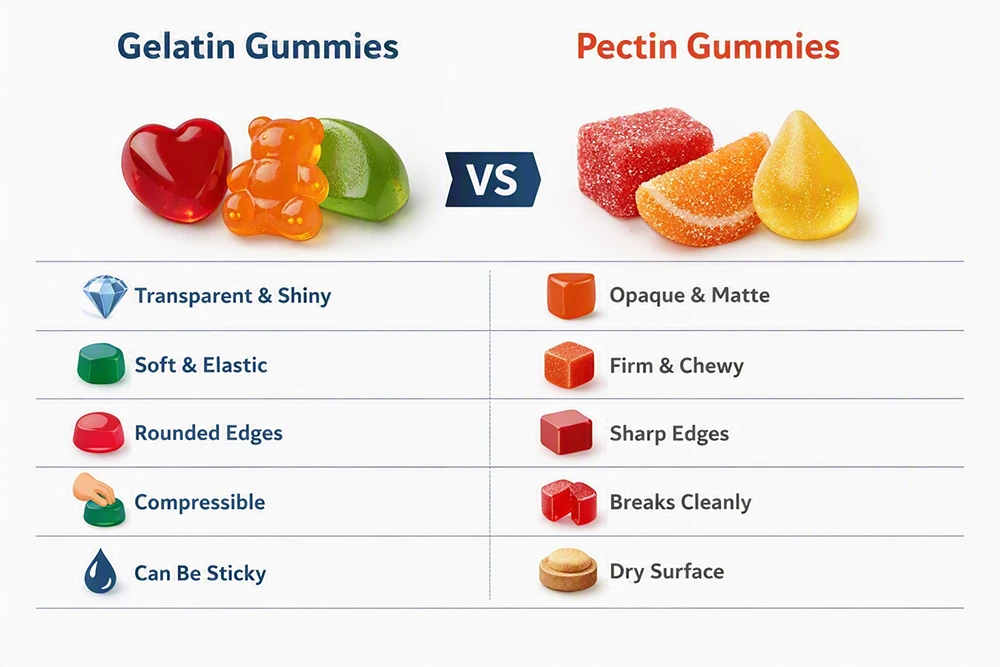
- Gelling agents: Gelatin is the most common option for a chewy, traditional texture, while pectin or agar agar are suitable for vegan, halal, or kosher product lines
- Sweeteners: Low-sugar formulations often use natural sweeteners like stevia, monk fruit, or erythritol to cater to health-conscious consumers, while small amounts of cane sugar or tapioca syrup may be used for improved taste and texture
- Flavors and colors: Natural fruit flavors (berry, citrus, and tropical are the most popular for creatine gummies) and plant-derived colors help avoid artificial additives that many consumers now avoid
- Additional functional ingredients: Optional add-ins such as B vitamins, electrolytes, or L-carnitine can differentiate your product, but must be included at clinically relevant dosages to avoid misleading claims
Step-by-Step Creatine Gummy Manufacturing Process
Professional gummy manufacturing follows a standardized, controlled process to ensure consistent dosage, texture, and safety across every batch. Attempting to produce creatine gummies in non-commercial facilities often leads to inconsistent creatine distribution, short shelf life, and non-compliance with regulatory standards, so partnering with an experienced creatine gummies manufacturer is strongly recommended for commercial products.
1. Formulation and Prototyping
The first step is to finalize your formulation based on your target audience, product positioning, and regulatory requirements. A reputable manufacturer will help you test ingredient compatibility, adjust creatine dosage (most commercial products contain 2-5g of creatine per serving, the clinically recommended daily amount), and refine taste and texture to avoid the bitter aftertaste common in low-quality creatine gummies. Prototyping allows you to test multiple iterations before full production, reducing the risk of costly adjustments later.
2. Ingredient Weighing and Mixing
All raw materials are precisely weighed according to the approved formulation, to ensure consistent creatine dosage across every gummy. Ingredients are mixed in heated, stainless steel vessels to dissolve the gelling agent and create a homogeneous slurry. This step requires strict temperature and timing controls to prevent creatine degradation, as high heat can reduce the efficacy of the active ingredient.
3. Depositing and Molding
The warm mixture is deposited into pre-designed silicone or starch molds using automated depositing equipment, which ensures uniform gummy size and weight. At this stage, any inclusions such as sour coatings, dusting, or layered designs can be added. The filled molds are then moved to temperature-controlled cooling rooms for a set period (typically 12-24 hours) to allow the gummies to solidify fully.
4. Demolding and Finishing
Once set, the gummies are removed from molds and undergo a drying process to achieve the desired moisture content, which is critical for shelf stability. They may then be coated with sour sugar, wax, or a glaze to prevent sticking and improve appearance. Every batch is inspected at this stage to remove misshapen or defective gummies.
5. Dosage Testing and Quality Control
Before packaging, third-party lab testing is conducted to verify:
- Accurate creatine dosage per serving, to ensure consistency with product labeling
- Absence of contaminants, including heavy metals, microbes, and unlisted ingredients
- Compliance with all relevant regulatory standards for dietary supplements
Only batches that pass all quality control checks move forward to packaging.
6. Packaging and Labeling
Gummies are packaged in airtight containers, pouches, or blister packs to protect them from moisture and extend shelf life. Labeling must include all required information: supplement facts panel, ingredient list, allergen warnings, dosage instructions, and manufacturer details, in line with local regulatory requirements.
Key Considerations for Scaling Your Creatine Gummy Business
Once you have a validated formulation, choosing the right partnership model will depend on your business size, brand strategy, and budget.
Private Label Creatine Gummies for Fast Market Entry
For brands looking to launch a product line quickly with minimal upfront investment, private label creatine gummies are the ideal solution. Reputable manufacturers offer pre-formulated, tested creatine gummy products that can be branded with your logo, packaging, and label design. This model eliminates the high costs of formulation development and reduces time to market, often allowing you to launch a product in as little as 4-6 weeks. When selecting a private label partner, confirm that their products are third-party tested, compliant with your regional regulations, and customizable to match your brand identity.
Bulk and Wholesale Options for Retailers and Distributors
If you are an established retailer, distributor, or supplement brand with existing sales channels, sourcing creatine gummies bulk or through creatine gummies wholesale partnerships allows you to benefit from lower per-unit costs and flexible order volumes. Bulk orders are typically shipped in large containers without branded packaging, which you can then package in-house or distribute to other business clients. Wholesale partnerships often include pre-packaged products at discounted rates, suitable for direct resale in stores or e-commerce platforms. When evaluating bulk or wholesale suppliers, prioritize manufacturers with consistent production capacity to avoid supply chain disruptions during peak demand periods.
Custom ODM/OEM for Unique Product Lines
For brands looking to launch a differentiated creatine gummy product (such as vegan formulations, specific flavor combinations, or added functional ingredients), custom ODM/OEM services allow you to build a fully customized product from formulation to packaging. Experienced gummy manufacturing teams will work with you to refine your concept, ensure regulatory compliance, and produce a product that aligns exactly with your brand vision. This model has higher upfront costs and longer lead times, but allows you to create a unique product that stands out in a crowded market.
How to Choose a Reliable Creatine Gummies Manufacturer
The quality of your manufacturer directly impacts the safety, efficacy, and reputation of your product. When evaluating potential partners, look for the following credentials:
- Regulatory certifications: GMP (Good Manufacturing Practices) certification is non-negotiable, as it verifies that the facility follows strict production and quality control standards. Additional certifications such as organic, halal, kosher, or vegan allow you to cater to broader consumer segments
- Industry experience: Look for a manufacturer with a proven track record producing creatine gummies and other dietary supplements, with client testimonials or case studies to verify their reliability
- Transparent testing practices: A trustworthy manufacturer will provide full third-party lab reports for every batch, and be open about their ingredient sourcing and production processes
- Scalability: Ensure the manufacturer can accommodate your current order volumes and scale up production as your business grows, without compromising on quality
Conclusion
Learning how to make creatine gummies for commercial use requires a combination of precise formulation, controlled manufacturing processes, strict quality control, and compliance with regulatory standards. While the process is complex, partnering with an experienced gummy manufacturing partner allows you to bring a high-quality, marketable product to market without the burden of managing production in-house. Whether you opt for private label creatine gummies, source creatine gummies bulk for in-house packaging, or work with a manufacturer to develop a custom formulation, prioritizing safety, consistency, and consumer needs will help you build a successful product line in the fast-growing creatine supplement market.
FAQ
1. How much creatine should be in each gummy?
Most commercial creatine gummies contain 0.5g to 1g of creatine per gummy, with a recommended serving size of 2-5 gummies to deliver the clinically recommended 2-5g daily dosage. Your manufacturer can help you adjust dosage based on your target audience and product positioning.
2. What is the typical shelf life of creatine gummies?
When stored in a cool, dry place in airtight packaging, high-quality creatine gummies have a shelf life of 12-18 months. The exact shelf life will depend on your formulation and packaging choices, and should be verified through stability testing during production.
3. Can I make vegan creatine gummies?
Yes, vegan creatine gummies can be formulated using pectin or agar agar as a gelling agent instead of gelatin, with plant-derived flavors and sweeteners. Many creatine gummies manufacturers offer pre-formulated vegan private label options, or can develop a custom vegan formulation for your brand.
4. What is the minimum order quantity for creatine gummies?
Minimum order quantities (MOQs) vary depending on the partnership model. Private label creatine gummies typically have lower MOQs, often starting at 500 to 1,000 units, making them suitable for small brands. Custom ODM/OEM and creatine gummies bulk orders usually have higher MOQs, starting at 5,000 to 10,000 units, depending on the manufacturer.
5. Are creatine gummies regulated as dietary supplements?
Yes, in most regions including the U.S. and EU, creatine gummies are classified as dietary supplements, and must comply with all relevant regulations for labeling, ingredient safety, and manufacturing practices. A reputable manufacturer will ensure your product meets all regulatory requirements for your target market.
Company Introduction
We are a leading global gummy manufacturer and dietary supplement manufacturer with over 10 years of industry experience, specializing in high-quality, compliant gummy products for brands, retailers, and distributors worldwide. Our GMP-certified production facilities offer a full range of services, including private label, white label, custom ODM/OEM, creatine gummies bulk supply, and creatine gummies wholesale solutions. We produce a wide range of gummy products, from creatine gummies and sports nutrition supplements to vitamin gummies, wellness gummies, and functional formulations, with options for vegan, halal, kosher, and organic certifications to meet diverse market needs. Our in-house R&D team, strict third-party testing protocols, and flexible production capacity allow us to support brands of all sizes, from startups launching their first product line to established enterprises scaling their offerings. We prioritize full transparency, consistent quality, and competitive pricing to help our partners build successful, trusted supplement brands.