
Abstract
The global women’s health supplement market has experienced sustained growth over the past decade, with multivitamin gummies emerging as one of its fastest-expanding segments. Unlike traditional tablets or capsules, gummy-format vitamins offer meaningful advantages in palatability, convenience, and consumer compliance — factors that disproportionately influence purchasing decisions among female consumers. This article examines the nutritional science behind women’s multivitamin formulations, explores the market dynamics driving demand, and provides practical guidance for supplement brands, private label buyers, and wholesale distributors looking to enter or expand within this category. Whether you are evaluating multivitamin gummies manufacturing partners, sourcing bulk product, or building a private label line, this guide is designed to support informed, strategic decision-making.
Why Women’s Multivitamin Gummies Outperform the Broader Supplement Market
Women represent the dominant consumer segment in the dietary supplement industry. Research consistently shows that women are more likely than men to purchase and regularly use nutritional supplements, and this behavioral pattern is especially pronounced in the multivitamin category. Within that category, the gummy format has become the preferred delivery mechanism for a large and growing share of female consumers.
Several converging trends explain this. First, taste and texture matter significantly in long-term adherence. Studies on supplement compliance indicate that consumers — particularly women — are far more likely to maintain a daily supplement routine when the product is enjoyable to consume. Gummies satisfy this requirement in a way that capsules and tablets simply do not. Second, the rise of wellness culture and social media has elevated the visual and experiential aspects of health routines, making gummy supplements natural candidates for brand differentiation and lifestyle positioning. Third, the expansion of the “better-for-you” food and supplement overlap has normalized gummy consumption across age groups well beyond children — the demographic for whom gummies were originally designed.
For supplement brands, retailers, and distributors, this translates into a category with strong and durable consumer pull rather than one driven primarily by push marketing. Demand for multivitamin gummies for women is structural, not cyclical.
The Nutritional Science Behind Women’s Multivitamin Formulations
Not all multivitamin formulations are created equal, and the distinctions that matter most are rooted in the specific physiological needs of women at different life stages. A well-designed women’s multivitamin gummy must account for hormonal variability, bone health, reproductive health, energy metabolism, and common micronutrient deficiencies that affect women more acutely than men.
Iron and Folate
Iron deficiency remains one of the most prevalent nutritional shortfalls among women of reproductive age, particularly during menstruation. Folate (vitamin B9) is essential for DNA synthesis and cellular division, and its importance during pregnancy is well-established. However, incorporating iron into gummy formats presents formulation challenges — iron can negatively affect taste and oxidize other ingredients — which is why many women’s multivitamin gummies are formulated without iron and positioned for a broad adult audience rather than specifically for those who are pregnant or trying to conceive.
Calcium and Vitamin D
Bone density loss is a significant health concern for women, particularly post-menopause. Calcium and Vitamin D work synergistically to support skeletal health. Vitamin D also plays a role in immune function, mood regulation, and cardiovascular health. Including meaningful doses of both in a gummy formulation requires careful attention to the calcium-to-magnesium ratio and the bioavailability of the specific calcium salt used.
B Vitamins (B6, B12, Biotin)
This group of vitamins supports energy metabolism, nervous system function, and — in the case of biotin — hair, skin, and nail health. The latter has become a significant consumer driver, particularly among younger women. Including biotin at effective concentrations is a frequently cited purchasing criterion in the women’s supplement segment.
Vitamin C and Antioxidants
Vitamin C supports immune function and collagen synthesis, which directly intersects with the skin health concerns common among female consumers. Antioxidant ingredients like vitamins E and A are also commonly included, with the understanding that dosing must remain within safe upper limits to avoid toxicity.
Iodine and Zinc
Both play roles in thyroid function and immune health, respectively. Women are statistically more susceptible to thyroid disorders, making iodine a relevant inclusion for formulations targeting general women’s health.
A well-constructed formulation balances efficacy at clinically meaningful doses with the physical and chemical constraints of the gummy matrix — a task that requires genuine formulation expertise and access to quality raw materials.
Gummy Format: Why It Works for This Category
The gummy delivery format has moved from novelty to mainstream in the supplement industry, and for women’s multivitamins specifically, it aligns unusually well with consumer expectations. There are a few reasons the format performs particularly well in this segment.
Palatability drives compliance. The most effective supplement is the one that gets taken consistently. Gummies eliminate the aversion that many consumers have toward large tablets, bitter capsules, or powders that require mixing. For multivitamins — which are intended for daily use over extended periods — this distinction is commercially significant.
Customization potential is high. Gummy supplements can be tailored in shape, color, flavor, and texture to create a product that feels premium and intentional. This matters to female consumers more than the demographic average. A distinctive gummy format — for example, a botanical shape, a pastel color palette, or a natural fruit flavor — can become part of a brand’s identity in a way that a standard capsule never could.
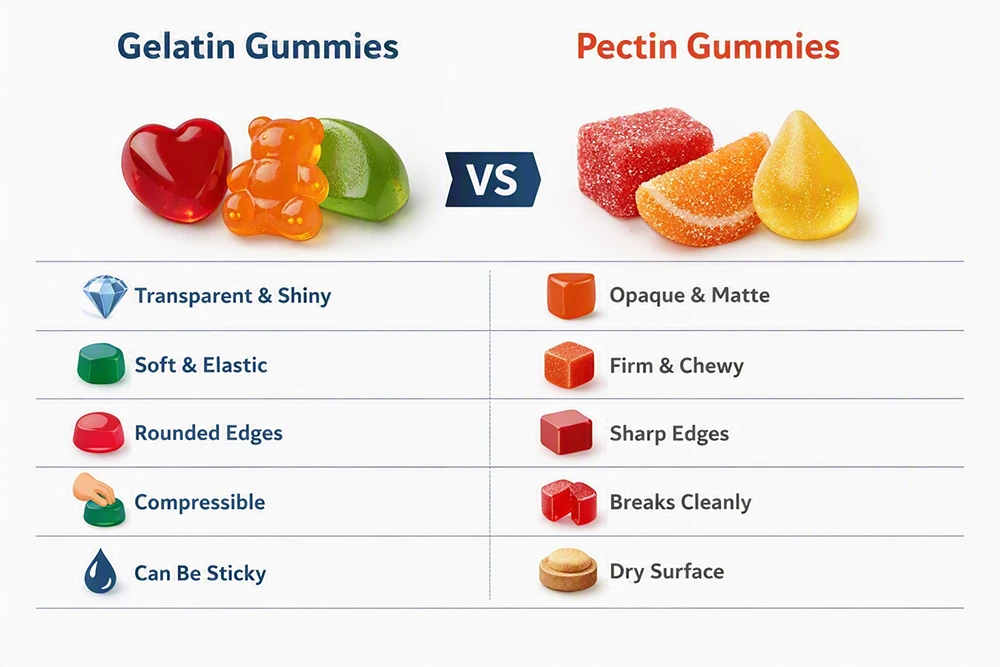
The format supports cleaner label positioning. Consumers increasingly scrutinize ingredient lists. Gummies formulated with pectin (rather than gelatin) are vegan-friendly and appeal to a broader audience. Natural flavors, colors derived from fruit and vegetable sources, and reduced-sugar formulations have all become achievable without sacrificing sensory appeal — provided the manufacturer has the technical capability to execute them.
Market Size and Opportunity for Brands and Distributors
The women’s health supplement market was valued at approximately USD 40 billion globally in recent years and continues to grow at a compound annual rate that outpaces the broader supplement industry. Within this, the gummy sub-segment is among the highest-growth formats.
In North America and Europe, the women’s multivitamin gummy is now a category anchor at both specialty retailers and mass-market chains. In emerging markets across Southeast Asia, Latin America, and the Middle East, penetration is still relatively low, which means the growth runway for well-positioned brands entering these markets is substantial.
For private label brands and online sellers, multivitamin gummies for women represent a high-velocity SKU with strong repeat purchase rates. Consumers who establish a daily gummy routine tend to repurchase at high frequency, which creates favorable lifetime value economics. For wholesale and bulk buyers, the category offers predictable, volume-driven demand that supports efficient supply chain planning.
The gender asymmetry in this market is worth noting explicitly: demand for women’s multivitamin gummies consistently exceeds demand for equivalent men’s products by a meaningful margin across virtually all sales channels. Brands that establish credibility and visibility in the women’s segment gain a significant commercial advantage.
Key Considerations When Selecting a Multivitamin Gummies Manufacturer
For brands sourcing multivitamin gummies manufacturing services, the choice of manufacturer is among the most consequential decisions in the product development process. The following criteria are the most relevant to evaluate.
Certifications and Regulatory Compliance
Any credible gummies manufacturer should hold current GMP certification as a baseline. For products intended for the U.S. market, FDA registration is essential. For markets with specific dietary requirements — halal-certified consumers in the Middle East, kosher observance in certain markets — manufacturers holding HALAL and KOSHER certifications expand your addressable market without requiring a separate supply chain. ISO 9001 and ISO 22000 certifications indicate systematic quality management practices. Vegan certification matters specifically for gummies using pectin-based matrices.
Formulation Capability
A manufacturer’s ability to develop or refine formulations in-house is a critical differentiator. The best multivitamin gummies manufacturers have dedicated R&D teams with deep expertise in both nutritional science and the specific technical demands of gummy production — including gelling agent behavior, moisture control, ingredient compatibility, and shelf stability. Brands that want to differentiate their products need a manufacturing partner capable of genuine formulation innovation, not just copying existing market products.
Production Scale and MOQ Flexibility
Different brands have different volume requirements. Startups and DTC (direct-to-consumer) brands often need lower minimum order quantities to test market response before committing to large production runs. Established brands and wholesale buyers need a manufacturer with sufficient capacity to deliver consistent large-volume orders on time. The right manufacturer can serve both needs — flexible MOQs for early-stage brands and high throughput capacity for scaling brands.
Private Label and OEM/ODM Services
Many brands entering the supplement space — and many retailers expanding their supplement assortment — prefer to work with a manufacturer offering comprehensive private label multivitamin gummies services. This includes not only contract manufacturing but also label design, regulatory documentation support, packaging customization, and export logistics. A full-service OEM/ODM partner reduces operational complexity and accelerates time to market.
Raw Material Sourcing and Ingredient Traceability
The quality of a finished gummy product is only as good as the raw materials used. Transparency in sourcing — including the ability to provide certificates of analysis, country of origin documentation, and third-party testing results for key ingredients — is a non-negotiable standard for reputable brands.
Bulk and Wholesale Multivitamin Gummies: What Buyers Should Know
Businesses purchasing multivitamin gummies bulk or engaging in multivitamin gummies wholesale arrangements require a different set of considerations than retail brands.
For bulk buyers, consistency is paramount. Variations in active ingredient concentration, gummy texture, or moisture content across production batches create quality control problems downstream. Establishing clear product specifications, batch testing protocols, and acceptable variance ranges in the supply agreement is essential.
For wholesale distributors, lead time predictability and packaging flexibility matter significantly. Distributors serving multiple retail clients may need products packaged in different configurations — retail-ready bottles, refill pouches, display units, or bulk containers. A manufacturer with flexible packaging capabilities reduces the need for secondary processing and simplifies logistics.
Both bulk and wholesale buyers benefit from manufacturers with substantial annual production capacity. A manufacturer with a daily output of 16 tons and annual capacity exceeding 5,000 tons offers the kind of scale that supports reliable supply for large-volume buyers without the risk of capacity-driven delays.
Formulation Trends Worth Watching
The women’s multivitamin gummy category is not static. Several emerging trends are reshaping what consumers want and what brands are bringing to market.
Adaptogens and functional ingredients. Ashwagandha, rhodiola, and maca are increasingly incorporated into women’s multivitamin formulations to address stress, hormonal balance, and energy levels — needs that female consumers frequently identify as their top health priorities.
Personalization by life stage. The “one formula for all women” approach is giving way to targeted formulations for specific life stages: women in their 20s and 30s focused on reproductive health and energy; perimenopausal women seeking support for bone density and mood; postmenopausal women prioritizing cardiovascular and cognitive health. This segmentation creates new SKU opportunities for brands willing to invest in differentiated formulation.
Reduced sugar and sugar-free options. Growing consumer awareness around sugar intake has created demand for low-sugar and sugar-free gummy formats. Achieving these without sacrificing texture or taste requires advanced formulation expertise, but the commercial premium for “better-for-you” positioning is real.
Sustainable packaging. Female consumers index higher than average on environmental values. Brands that package their multivitamin gummies in recyclable, reduced-plastic, or refillable containers gain meaningful differentiation in a crowded market.
Summary
Multivitamin gummies for women represent one of the most commercially robust and nutritionally grounded segments in the global supplement industry. The category benefits from strong, consistent consumer demand driven by well-documented nutritional needs, high format preference for gummies among female consumers, and powerful repeat purchase behavior. For supplement brands, private label operators, wholesale distributors, and online sellers, this category offers attractive economics and substantial growth headroom — particularly in markets where penetration remains low.
Success in this category depends on three things: a formulation that genuinely addresses women’s nutritional priorities with appropriate ingredient selection and dosing; a gummy format executed with attention to palatability, visual appeal, and label positioning; and a manufacturing partner with the technical capability, certifications, and service infrastructure to deliver a consistent, compliant product at the required scale.
Brands and buyers who approach these three elements rigorously — rather than defaulting to generic formulations and undifferentiated packaging — are best positioned to capture durable market share.
Frequently Asked Questions
Q1: What are the most important nutrients to include in a multivitamin gummy for women? The core nutrients in a women’s multivitamin gummy typically include Vitamins A, C, D, E, and K; the full B-complex (particularly B6, B12, and folate); biotin; iodine; zinc; and, where the target audience warrants it, calcium. The specific dosing should reflect the target demographic — for example, women of reproductive age have different folate requirements than postmenopausal women.
Q2: What is the minimum order quantity (MOQ) for private label multivitamin gummies? MOQ varies by manufacturer and product configuration. Many contract manufacturers offer trial runs at relatively low volumes for brands testing market response, with pricing structures that scale favorably as volume increases. It is advisable to discuss MOQ flexibility early in the manufacturer evaluation process.
Q3: Are pectin-based gummies suitable for a vegan multivitamin formulation? Yes. Pectin-based gummies use a plant-derived gelling agent rather than animal-derived gelatin, making them suitable for vegan formulations. Carrageenan is another plant-based gelling option. Both require specific formulation expertise to achieve the texture and stability characteristics expected in a premium supplement gummy.
Q4: How long does it typically take to bring a new private label multivitamin gummy to market? Timeline depends on the complexity of the formulation, the availability of raw materials, and the scope of packaging customization required. For brands working from an existing formula base, lead times can be relatively short. Custom formulation development, stability testing, and regulatory documentation add time. A full-service OEM/ODM manufacturer can provide a realistic timeline estimate early in the project.
Q5: What certifications should I look for when selecting a multivitamin gummies manufacturer? At minimum: GMP certification, FDA registration (for U.S.-market products), and ISO 9001. Depending on your target market and consumer audience: HALAL, KOSHER, Vegan certification, and ISO 22000 (food safety management) are valuable additions. These certifications are not only regulatory checkboxes — they signal systematic quality management practices that translate into more consistent finished product.
Q6: What is the difference between OEM and ODM in supplement manufacturing? OEM (Original Equipment Manufacturing) refers to producing a product according to the buyer’s existing formula and specifications. ODM (Original Design Manufacturing) means the manufacturer develops the formula and design, which the buyer then licenses and brands. Both models are widely used in the supplement industry; the right choice depends on whether the brand has proprietary formulation IP or prefers to leverage the manufacturer’s R&D capabilities.
Q7: Is the women’s multivitamin gummy market genuinely larger than the men’s equivalent? Yes, and meaningfully so. Women consistently over-index in supplement purchasing across virtually all categories, and multivitamins are no exception. The gummy format amplifies this asymmetry because it aligns more strongly with female consumer preferences around taste, packaging aesthetics, and daily routine integration. Brands entering the women’s multivitamin gummy space are entering a larger and more commercially active market than an equivalent men’s product would reach.
About Gothink Biotech
Shenzhen Gothink Biotech Co., Ltd. is a professional dietary supplement manufacturer and gummies manufacturer based in China, offering comprehensive OEM, ODM, CMO, and CDMO services to supplement brands, private label operators, online sellers, retailers, and wholesale buyers worldwide. Our capabilities span the full product lifecycle — from formulation development and raw material sourcing to production, quality control, packaging, and export logistics.
We manufacture a complete range of supplement formats including gummy, capsule, tablet, powder, liquid, and drop products, with particular depth of expertise in gummy contract manufacturing. Our facility features a 100,000-class cleanroom with a daily output of 16 tons and annual production capacity of 5,000 tons, supported by a 10,000-class pharmaceutical-grade R&D laboratory led by postdoctoral researchers with experience at institutions including Cold Spring Harbor Laboratory, Emory University, and The Ohio State University.
We hold certifications including GMP, FDA, ISO 9001, ISO 22000, HACCP, HALAL, KOSHER, and Vegan, ensuring compliance with the regulatory and quality standards of major global markets.
Whether you are sourcing multivitamin gummies bulk, establishing a private label multivitamin gummies line, or seeking a reliable multivitamin gummies wholesale partner, Gothink Biotech offers the manufacturing infrastructure, formulation capability, and service flexibility to support your goals — from initial concept through to market-ready product.