
Abstract
Gummy bears are among the most recognized confectionery and supplement formats in the world. But behind their soft, chewy texture and bright colors lies a sophisticated manufacturing process that blends food science, precision engineering, and strict quality control. This article provides an in-depth look at how gummy bears are made — from raw ingredients to finished product — with particular relevance to brands, retailers, and buyers sourcing gummy bears bulk, exploring private label gummies, or seeking a qualified gummy bears manufacturer for OEM/ODM supplement production. Whether you are new to the category or an experienced buyer evaluating gummy manufacturing partners, this guide offers practical, experience-backed insight into the full production process.

1. What Are Gummy Bears Made Of? Understanding the Core Ingredients
Before diving into the process of making gummy bears, it is important to understand what goes into them. The formulation determines not only the sensory experience — taste, texture, and appearance — but also the functional performance, shelf life, and regulatory classification of the final product.
Gelling Agents
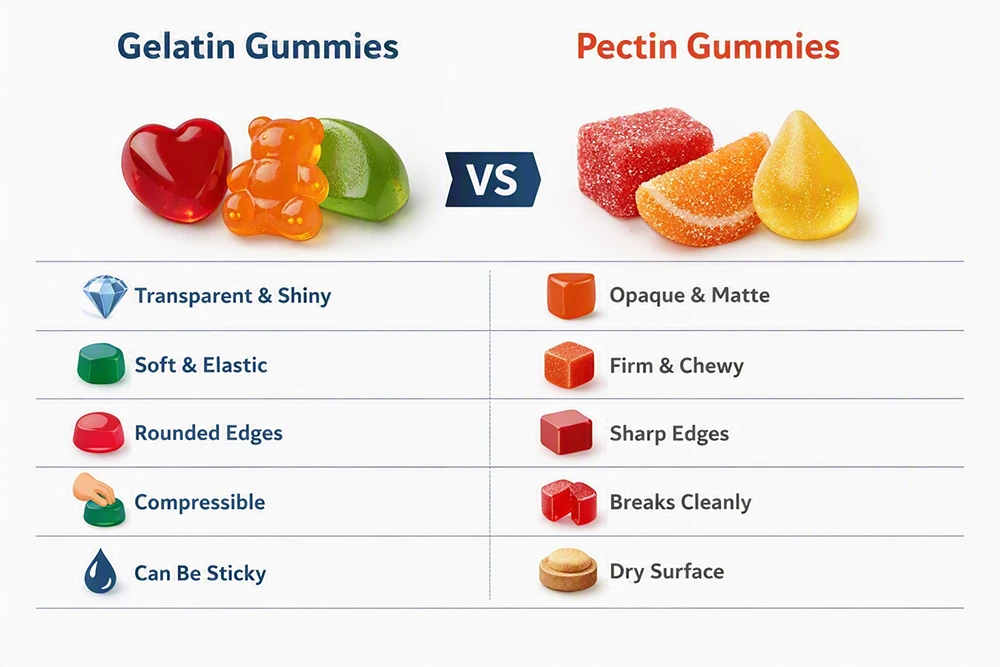
The gelling agent is the backbone of any gummy. Traditional gummy bears use gelatin, derived from animal collagen. Gelatin provides the characteristic bounce and chew that consumers associate with gummy candy. However, growing demand for vegan and halal-compliant options has made pectin (derived from fruit) and carrageenan (derived from seaweed) increasingly common alternatives in modern gummy manufacturing, especially for dietary supplement gummies. Each gelling agent behaves differently during processing and requires different temperature controls, concentration levels, and hydration protocols.
Sweeteners and Syrups
Glucose syrup and sucrose are the primary sweeteners used in conventional gummy bears. They contribute to texture, moisture retention, and mouthfeel. For sugar-free or low-sugar formulations — increasingly relevant in the supplement market — manufacturers use maltitol, erythritol, isomalt, or allulose. These substitutes require careful reformulation to preserve texture and prevent crystallization.
Flavors, Colors, and Acids
Natural and artificial flavor compounds are added to achieve the recognizable fruity profiles of gummy bears. Citric acid or malic acid is typically added to create tartness and act as a mild preservative. Colorants — whether synthetic FD&C dyes or plant-based alternatives like beetroot extract, turmeric, or spirulina — are incorporated to create the iconic multicolored appearance.
Active Ingredients (For Supplement Gummies)
When making gummy bears for the dietary supplement market, active ingredients such as vitamins, minerals, botanical extracts, amino acids, or adaptogens are blended into the formulation. This step significantly increases formulation complexity. The manufacturer must account for ingredient solubility, heat sensitivity, interactions with the gelling matrix, and final dosage accuracy — all while maintaining an appealing taste profile.
2. The Step-by-Step Gummy Manufacturing Process
Making gummy bears at a commercial or pharmaceutical-grade level involves a defined series of steps. Each step must be carefully controlled to ensure consistent product quality across every batch.
Step 1 — Weighing and Raw Material Preparation
All raw materials — gelatin or pectin, sweeteners, water, acids, flavors, and active ingredients — are weighed according to the master formula. At a GMP-certified facility, this step is documented and verified against approved specifications. Any deviation triggers a quality hold before production proceeds.
Step 2 — Hydration and Blooming
Gelatin must be hydrated — or “bloomed” — before it can be used. It is mixed with cold water and allowed to absorb moisture for a set period. This swelling process is critical: insufficient blooming results in incomplete dissolution and poor gummy texture. Pectin-based formulas follow a different hydration protocol and are often combined with calcium salts to initiate gelation.
Step 3 — Cooking the Gummy Mass
The sweetener syrup (glucose and sucrose or their alternatives) is heated in a cooking vessel to dissolve the sugars and reduce moisture content. The bloomed gelatin or pectin is then added to the hot syrup and mixed until fully dissolved. Temperature and time must be precisely controlled during this phase. Overheating can degrade heat-sensitive actives and cause browning; underheating results in poor gelling.
Step 4 — Addition of Colors, Flavors, and Actives
Once the base gummy mass has been cooked and cooled to the appropriate addition temperature, colors, flavors, acids, and any active supplement ingredients are incorporated. For heat-sensitive vitamins such as Vitamin C or certain probiotics, this stage requires careful temperature management to preserve potency. This is one of the more technically demanding aspects of supplement gummy manufacturing and differentiates pharmaceutical-grade producers from standard candy manufacturers.
Step 5 — Depositing into Molds
The liquid gummy mass is deposited into molds using automated depositing machines. These machines control volume with high precision — typically within ±2% — ensuring dosage consistency in supplement applications. Molds are made of starch (in traditional starchless systems) or silicone, and come in a wide variety of shapes. Beyond the classic gummy bear shape, manufacturers can produce custom shapes tailored to brand identity.
Step 6 — Setting and Conditioning
Filled molds are moved into conditioning rooms or tunnels where gummies set at controlled temperature and humidity. This process can take anywhere from several hours to over 24 hours depending on the formula and desired texture. Proper conditioning ensures gummies achieve the right firmness, moisture content, and surface finish. Incomplete conditioning is a common source of soft, sticky, or collapsed gummies.
Step 7 — Demolding and Finishing
After conditioning, gummies are demolded and transferred to finishing stations. A light coating of carnauba wax or oil is often applied to give gummies their characteristic shine and prevent sticking. Sugar coating is another option. Finished gummies are then inspected for shape integrity, color consistency, and weight before proceeding to packaging.
Step 8 — Quality Testing and Release
In a GMP supplement manufacturing environment, every batch undergoes in-process and finished product testing before release. This includes microbiological testing, moisture analysis, pH verification, active ingredient potency testing (for supplement gummies), and organoleptic evaluation (taste, smell, appearance). A certificate of analysis (CoA) is issued with each batch. Only after passing all quality checks are gummies cleared for packaging and shipment.
Step 9 — Packaging
Gummies are counted, weighed, and packed into bottles, pouches, boxes, or bulk containers depending on the order specifications. For private label gummies, custom printed packaging is applied according to the client’s design. Gummies destined for gummy bears bulk or gummy bears wholesale channels are packed into larger format containers with appropriate labeling and shelf-life documentation.
3. Key Factors That Differentiate High-Quality Gummy Manufacturing
Not all gummy manufacturers operate at the same standard. For brands sourcing private label gummies or contract manufacturing, understanding what separates a capable gummy bears manufacturer from a commoditized one is essential.
- GMP Certification: Facilities certified to food or pharmaceutical GMP standards have documented processes, trained staff, and validated equipment — minimizing batch-to-batch variability.
- Cleanroom Infrastructure: For supplement gummies, a 100,000-class cleanroom environment reduces the risk of contamination and supports microbial control requirements.
- R&D Capability: A manufacturer with an in-house formulation team can assist with novel ingredient integration, flavor masking of bitter actives, and stability studies — saving significant time and cost in product development.
- Certifications: ISO 9001, ISO 22000, HACCP, HALAL, KOSHER, and Vegan certifications are relevant for different market segments and export destinations.
- Scalability: From small MOQ trial runs to high-volume gummy bears wholesale production, a capable manufacturer should be able to scale without compromising quality.
4. Gummy Bears for the Supplement Market: What Brands Need to Know
The dietary supplement gummy segment has grown substantially over the past decade. Consumers — particularly millennials and Gen Z — prefer gummies over capsules and tablets for their taste, convenience, and ease of use. For brands entering this category, several considerations apply.
Dosage Accuracy
Unlike tablets, gummies do not allow for the same level of dosage precision. Variability in the gelling process, ingredient distribution, and weight deposition means manufacturers must apply tighter process controls and conduct more frequent in-process checks. Buyers should request CoA data across multiple batches to evaluate a manufacturer’s consistency.
Ingredient Compatibility
Some supplement actives are difficult to incorporate into gummies. Iron, for example, can cause discoloration and off-flavors. Certain probiotics are heat-sensitive. Fish oil introduces palatability challenges. A manufacturer with deep formulation expertise will help identify and resolve these compatibility issues before scale-up, saving significant development cost.
Regulatory Compliance
Supplement gummies sold in the US, EU, and other regulated markets must comply with applicable food and supplement regulations — including labeling, permissible ingredients, and claims standards. A qualified OEM/ODM gummy manufacturer should be able to provide documentation to support regulatory filings and assist with compliance review.
Shelf Life and Stability
Gummies are more susceptible to moisture absorption, melting, and microbiological growth than solid dosage forms. Stability testing under accelerated and real-time conditions should be conducted to establish validated shelf life. Packaging selection — particularly moisture barrier materials — plays a significant role in maintaining product quality through distribution.
5. Sourcing Gummy Bears: Bulk, Wholesale, and Private Label Options
Buyers approaching the gummy market have several sourcing models to consider, each with distinct advantages depending on their business stage and objectives.
Gummy Bears Bulk
Purchasing gummy bears bulk is suited to distributors, repackagers, and retailers who want to apply their own packaging or create custom offerings. Bulk gummies are supplied in large-format containers without retail packaging and are typically priced at lower per-unit cost. Buyers should confirm batch consistency, CoA availability, and shelf life at the time of bulk shipment.
Gummy Bears Wholesale
Gummy bears wholesale channels serve established brands, retail buyers, and distributors purchasing finished, retail-ready products at volume pricing. This model works well for brands with stable, proven SKUs seeking cost efficiency at scale. Wholesale minimum order quantities vary significantly by manufacturer.
Private Label Gummies
Private label gummies allow brands to market a manufacturer’s existing or custom formula under their own brand name. This is the most common entry point for new supplement brands or retailers launching their own product line. The brand controls the label, packaging, and marketing while the manufacturer handles formulation, production, and quality assurance. This model offers faster time-to-market and lower development cost compared to full custom manufacturing.
OEM and ODM Gummy Manufacturing
For brands seeking differentiation, OEM (original equipment manufacturing) and ODM (original design manufacturing) gummy services provide full customization. OEM involves manufacturing to the client’s proprietary formula and specifications. ODM involves the manufacturer developing a new formula on behalf of the client. Both models are supported by experienced contract manufacturers and are well-suited to brands with specific product concepts, target consumer profiles, or ingredient innovation goals.
Summary
Making gummy bears — whether for confectionery or dietary supplement applications — is a multistep process that demands formulation expertise, precision manufacturing, and rigorous quality control. From ingredient selection and cooking to depositing, conditioning, and packaging, every stage affects the final product’s quality, consistency, and regulatory compliance.
For brands, retailers, and distributors evaluating gummy manufacturing options — whether for gummy bears bulk, gummy bears wholesale, private label gummies, or custom OEM/ODM development — the key differentiators are GMP compliance, formulation capability, ingredient handling expertise, and demonstrated batch consistency.
Understanding how gummies are made helps buyers ask better questions, set appropriate quality expectations, and select manufacturing partners who can support long-term product and brand success.
Frequently Asked Questions (FAQ)
Q: What is the main ingredient that makes gummy bears chewy?
A: The primary ingredient responsible for the chewy texture in gummy bears is the gelling agent — typically gelatin in conventional gummies, or pectin and carrageenan in vegan alternatives. These proteins and polysaccharides form a flexible gel matrix when dissolved in hot water and cooled, giving gummies their distinctive bounce and chew.
Q: How long does it take to manufacture a batch of gummy bears?
A: The active production time for gummy manufacturing is relatively short — typically a few hours for cooking and depositing. However, the conditioning and setting phase adds 12–24+ hours to the cycle, and finished product quality testing adds additional time before release. A complete batch cycle from raw materials to packaged product generally takes 3–7 days, depending on the formula, order volume, and testing requirements.
Q: What is the minimum order quantity (MOQ) for private label gummies?
A: MOQ varies by manufacturer and product type. Some manufacturers offer small trial runs suitable for brand validation, while others require large minimum orders. Brands should look for manufacturers that offer flexible MOQ structures — particularly important for startups and new product launches — while still meeting GMP and quality requirements.
Q: Can gummy bears be made without gelatin?
A: Yes. Vegan gummy bears use plant-based gelling agents such as pectin (from citrus or apple) or carrageenan (from red algae). These formulas require different processing conditions and ingredient ratios compared to gelatin-based gummies but can achieve comparable texture profiles. Vegan gummies are increasingly in demand in the supplement category, particularly in markets with strong vegan, halal, or kosher consumer segments.
Q: What is the difference between OEM and private label gummies?
A: Private label gummies typically involve a brand applying their own label to an existing manufacturer formula, with limited customization. OEM gummy manufacturing involves producing to a client’s own proprietary formula and specifications. ODM adds the manufacturer’s formulation and design capability to develop a new product from scratch on the client’s behalf. Each model serves different stages of brand development and different levels of product differentiation.
Q: How should I evaluate a gummy bears manufacturer before placing an order?
A: Key evaluation criteria include: GMP certification and facility audit records, third-party testing capability and CoA availability, experience with supplement-grade gummy production, flexibility in MOQ, formulation support capability, and references or case studies from comparable brand clients. Requesting a pilot sample batch is a recommended step before committing to full production.
About Gothink Biotech — Gummy Manufacturer & Dietary Supplement Manufacturer
Shenzhen Gothink Biotech Co., Ltd. is a China-based dietary supplement manufacturer and gummy bears manufacturer offering comprehensive OEM, ODM, CMO, and CDMO services for global health brands. Our production capabilities span gummy bears, capsules, tablets, powders, liquids, and drops — covering the full spectrum of supplement formats.
Our GMP-certified facility features a 100,000-class cleanroom with a daily output of 16 tons and an annual production capacity of 5,000 tons. For clients sourcing gummy bears bulk or pursuing gummy bears wholesale programs, we offer scalable production with consistent quality and competitive lead times. For brands seeking private label gummies or fully custom gummy manufacturing through OEM and ODM arrangements, our in-house R&D team — led by postdoctoral researchers from leading U.S. universities — supports formulation development, stability testing, and regulatory documentation from concept to shelf.
We hold certifications including ISO 9001, ISO 22000, HACCP, FDA, HALAL, GMP, KOSHER, and Vegan — enabling us to serve clients across North America, Europe, Southeast Asia, and beyond. From small trial runs to high-volume production, we provide end-to-end turnkey solutions covering formulation, raw material sourcing, manufacturing, packaging, and export support.
If you are looking for a reliable gummy bears manufacturer or dietary supplement manufacturer to support your product launch or growth strategy, we invite you to contact our team for formulation consultation, factory information, and pricing.