
Abstract
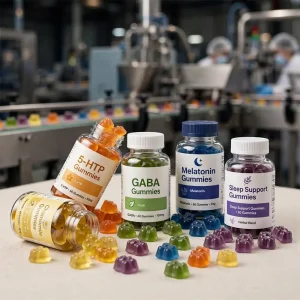
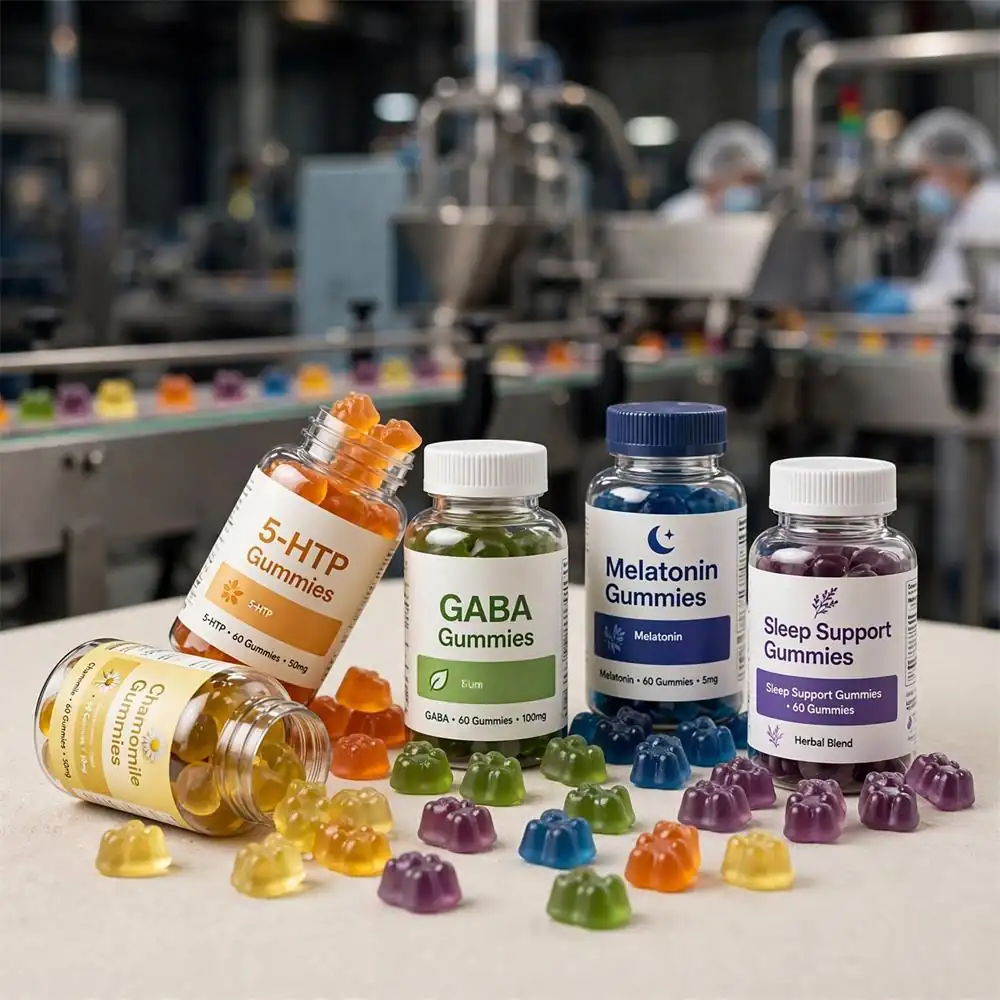
Gummy candy manufacturing combines precise food science, advanced processing technology, and strict quality controls to transform simple raw materials into stable, palatable, and effective products. For dietary supplement brands, wholesalers, and private-label businesses, understanding every stage of gummy candy manufacturing is essential to evaluate manufacturers, ensure batch consistency, maintain active-ingredient potency, and meet regulatory standards. This guide walks through the complete process of producing gummy Supplements—from ingredient selection to final packaging—offering clear, actionable insights that help industry professionals make informed sourcing decisions.

The Essential Ingredients Behind High-Quality Gummy Candy Manufacturing
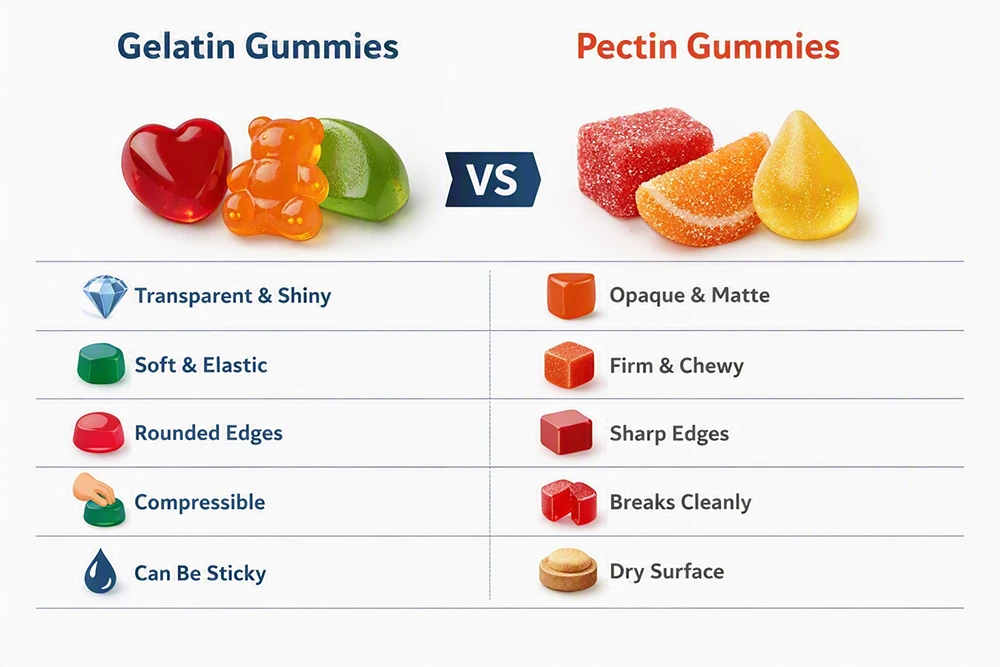
Every batch of gummy candy begins with a carefully balanced formula. The primary gelling agent is either animal-derived gelatin or plant-based pectin (for vegan gummy Supplements). Sweeteners such as cane sugar, glucose syrup, and sometimes maltitol or erythritol provide structure, sweetness, and moisture control. Purified water acts as the medium for dissolving and cooking these components.
In gummy Supplement production, functional actives—vitamins, minerals, herbal extracts, probiotics, or amino acids—are added at precise concentrations. Citric acid or malic acid adjusts pH and enhances flavor, while natural colors and flavors derived from fruits or vegetables complete the sensory profile. Each ingredient must be sourced to pharmaceutical-grade specifications because even minor variations in particle size or purity can affect texture, shelf life, and bioavailability. Reputable gummy manufacturers maintain detailed supplier qualification programs and incoming-material testing protocols to guarantee consistency across thousands of kilograms of daily output.
Step-by-Step Process of Gummy Candy Manufacturing
The production sequence follows a controlled thermal and mechanical workflow designed to preserve both texture and active potency.
First, the base syrup is prepared by dissolving sweeteners and water under controlled heating (typically 110–120 °C). Simultaneously, the gelling agent is bloomed in a separate vessel to ensure full hydration. Once the syrup reaches target temperature and Brix level, the bloomed gelatin or pectin is blended in, followed by pH adjustment.
Functional ingredients for gummy Supplements are incorporated next—often at lower temperatures—to minimize heat degradation of sensitive compounds such as vitamin C, melatonin, or live cultures. The homogeneous mass is then pumped through heated lines to depositor heads.
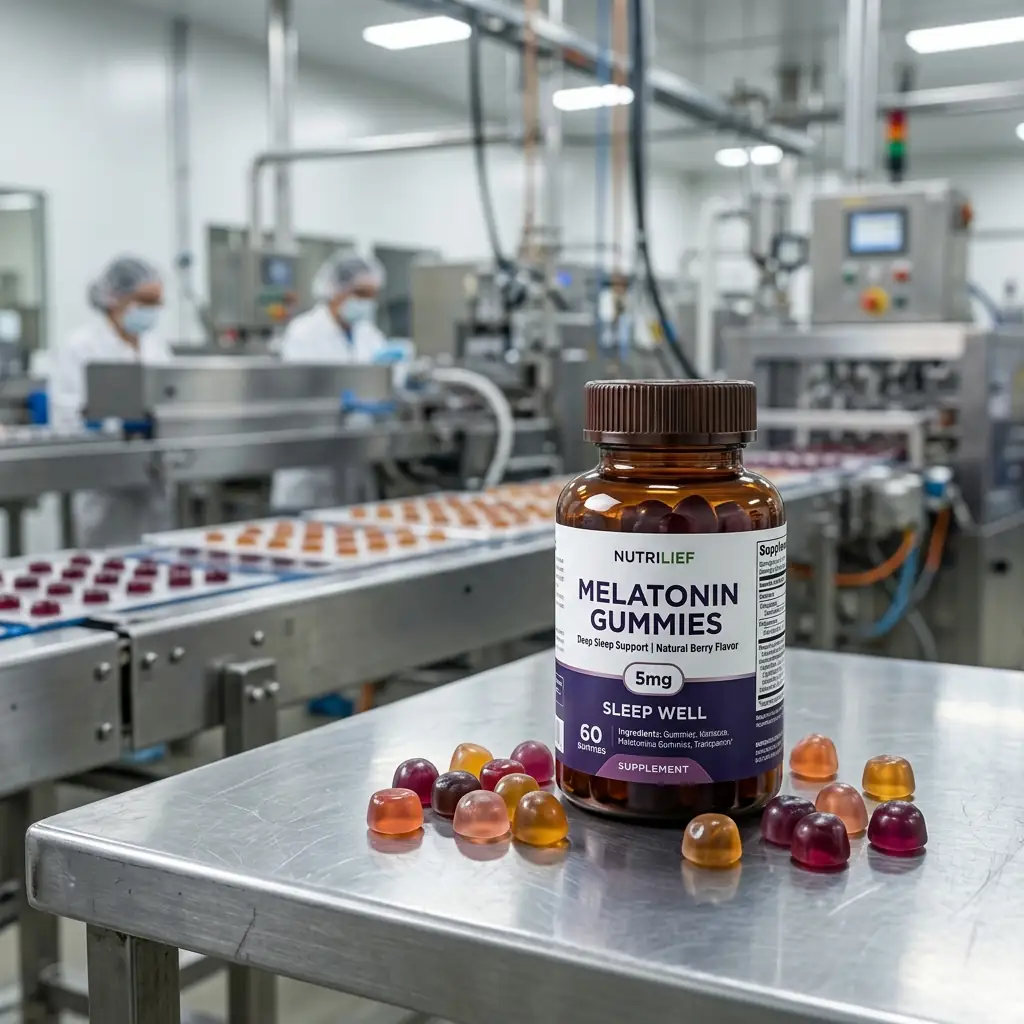
Depositing occurs into pre-formed starch trays or silicone molds engineered for 30+ shapes and sizes. The trays move through a cooling tunnel where temperature and humidity are tightly regulated for 30–60 minutes, allowing the gummies to set into their characteristic chewy texture.
After demolding, a controlled drying phase (usually 24–72 hours in conditioned rooms) reduces moisture content to the precise level required for shelf stability. Optional finishing steps include light oil coating to prevent sticking or a final sugar/sour sanding for specific product lines. Finally, automated inspection systems remove defects before packaging.
Quality Control and Regulatory Standards in Professional Gummy Manufacturer Facilities
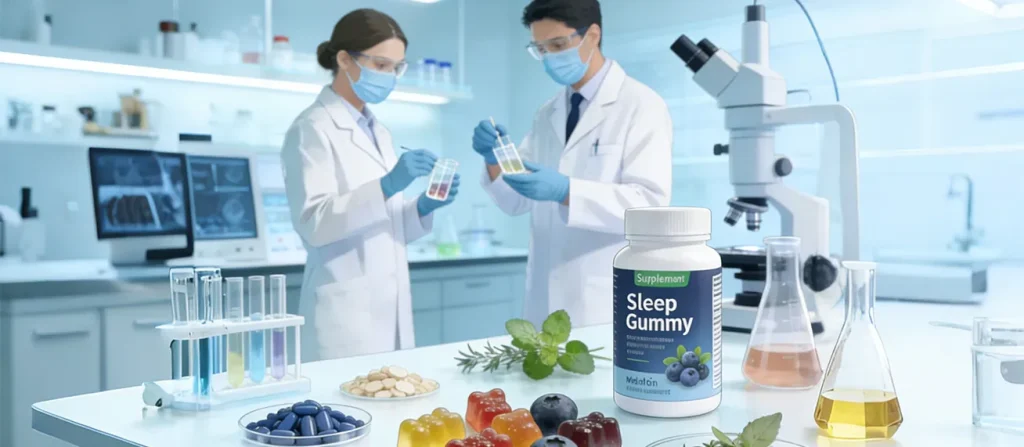
Modern gummy candy manufacturing operates under pharmaceutical-level hygiene. Facilities maintain 100,000-class cleanrooms, continuous environmental monitoring, and validated cleaning protocols. Every production run undergoes in-process checks for weight, hardness, moisture, pH, and active-content uniformity. Finished batches receive third-party laboratory testing for heavy metals, microbial safety, and label-claim verification.
Certifications such as GMP, ISO 22000, HACCP, and FDA registration are standard among leading gummy manufacturers. These frameworks ensure traceability from raw-material lot numbers through to finished-goods shipping documents—an absolute requirement for private-label gummy programs that supply multiple countries.
Customization Capabilities for Private Label Gummy Production
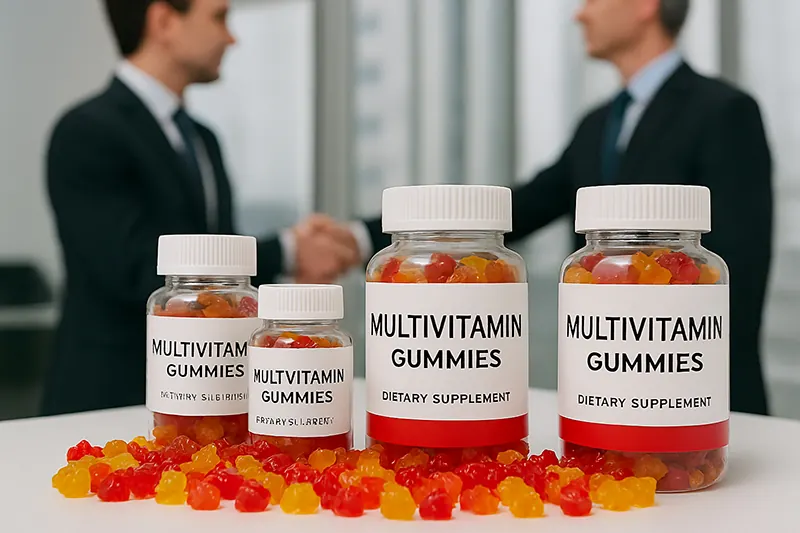
Private Label gummy projects demand flexibility without compromising quality. Experienced gummy manufacturers offer: • Multiple gelling systems (gelatin, pectin, carrageenan blends) • 30+ mold shapes and custom tooling options • Sugar-free, low-sugar, and sugar-coated variants • Full spectrum of natural colors and flavors • Dosage formats from 2 g to 8 g per piece • MOQ options scalable from pilot runs to multi-ton orders
Advanced R&D teams can also micro-encapsulate heat-sensitive actives or develop timed-release profiles, giving brands differentiated gummy Supplements that stand out in competitive markets.
Common Challenges and Technical Solutions in Gummy Candy Manufacturing
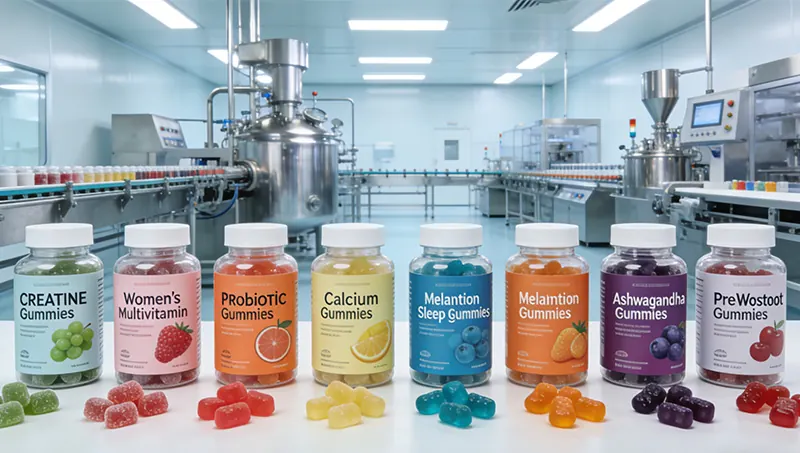
Heat-sensitive nutrients can lose potency during cooking; manufacturers solve this through staged addition, shorter cook times, and nitrogen blanketing. Stickiness during demolding is managed by precise moisture control and starch conditioning. Shelf-life stability is achieved by selecting the correct humectant balance and barrier packaging materials. Leading gummy manufacturers continuously validate these parameters through accelerated stability studies, ensuring products remain effective and visually appealing throughout their labeled shelf life.
Article Summary Gummy candy manufacturing is a sophisticated interplay of chemistry, engineering, and regulatory compliance. From ingredient sourcing through final packaging, each decision directly impacts product safety, efficacy, and consumer experience. Brands and wholesalers who understand these processes are better equipped to select capable partners, specify precise requirements, and bring consistent, high-quality gummy Supplements to market faster and more reliably.
FAQ
What is the main difference between standard gummy candy and gummy Supplements? Gummy Supplements contain precise, clinically relevant doses of vitamins, minerals, botanicals, or other actives. Manufacturing protocols are stricter, with additional potency testing and lower-temperature processing to protect these compounds—requirements rarely applied to conventional confectionery.
How long does the full gummy candy manufacturing cycle typically take? From raw-material intake to finished, packaged goods, the complete cycle ranges from 5 to 10 days. This includes 1–2 days for syrup preparation and depositing, 1–3 days for controlled drying, plus time for quality testing and labeling.
Can Private Label gummy be produced in vegan and sugar-free formats? Yes. Pectin-based formulas support fully vegan gummy Supplements, while polyols and high-intensity sweeteners enable sugar-free versions that still deliver excellent texture and flavor. Reputable gummy manufacturers maintain separate production lines or validated cleaning procedures to prevent cross-contact.
What certifications should a reliable gummy Manufacturer hold? Look for GMP, ISO 22000, HACCP, FDA registration, Kosher, Halal, and Vegan certifications. These demonstrate validated processes, traceability, and compliance with international dietary-supplement regulations.
How do manufacturers ensure accurate dosing of active ingredients in gummy Supplements? Precise metering pumps, continuous in-line mixing, and stratified sampling throughout the batch ensure uniformity. Final HPLC or microbiological assays confirm that every piece meets the declared label claim within accepted tolerances.
Is it possible to order small pilot batches before committing to full-scale Private Label gummy production? Most professional gummy manufacturers offer flexible minimum-order quantities, allowing brands to validate formulas, packaging, and market response with pilot runs before scaling to commercial volumes.
At Shenzhen Gothink Biotech Co., Ltd., we specialize in the production of various gummies as a dedicated gummy Manufacturer and dietary supplement manufacturer. Our services cover bulk production, wholesale supply, private label solutions, and full ODM/OEM contract manufacturing. Guided by our chief scientist—a professor with postdoctoral research experience at leading U.S. institutions—our GMP-certified facilities deliver consistent quality and innovation to support global brands from concept to finished product.