
Active ingredient stability in gummies is limited by high water activity, low pH, heat exposure during cooking and depositing, oxygen and light, and chemical incompatibility between ingredients. A gummy is a high-moisture, acidic gel system, so any vitamin, mineral, botanical, or probiotic that is sensitive to heat, acid, water, or oxidation will degrade faster than it would in a capsule or tablet. As an experienced fabricante de goma, we control stability by lowering water activity, timing active addition, managing pH for the gel system, and selecting packaging that limits moisture and oxygen transfer.
For supplement brands, stability is not a lab-only issue. It determines whether your finished product meets label claim at 12, 18, or 24 months, whether texture and flavor stay acceptable, and whether you face complaints, returns, or regulatory risk. Understanding the limits early helps you decide on dosage form, gummy weight, gel system, overage strategy, and packaging before you commit to tooling and production—decisions that shape every gomas de marca própria project, from first sample to commercial launch.
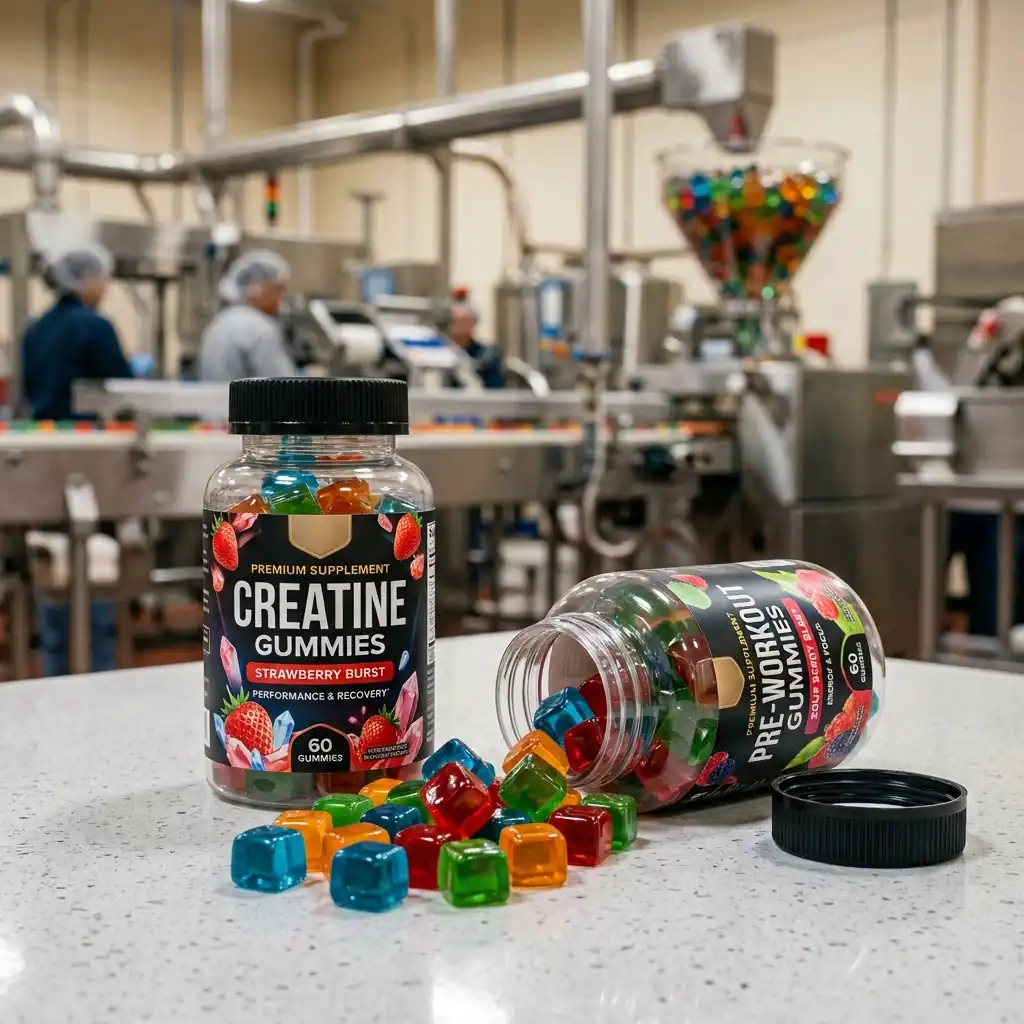
Why Active Stability Decides Commercial Success
Gummies look simple, but they are one of the most difficult delivery formats for actives—and stability is the commercial gatekeeper that decides whether a concept becomes a profitable product or a costly rework. Compared to dry formats, gummies retain 12-18% moisture after drying and have a water activity that allows chemical reactions to continue in the matrix. Acids needed for flavor and preservation lower the pH, which then affects both the gel and the actives.
When stability fails, you see potency loss, color change, off-flavor, sweating or hardening, and microbial risk. For a private label buyer, that translates into higher cost of goods if you need overages, larger gummy size to hit dosage, shorter shelf life, or special storage requirements that limit retail channels.
7 Core Factors That Limit Stability in Gummy Manufacturing
Stability in gummies is governed by a small set of physical and chemical variables: water, pH, heat, oxygen, and ingredient interactions. Screen these seven factors before formulation—each one can be engineered during Fabricação de gomas, but only if the design anticipates it.
1. Water Activity and Moisture Migration
Water activity is the single most important stability variable in a gummy matrix. Water activity (Aw) is the amount of free water available for chemical and microbiological activity. Most commercial gummies target Aw of 0.65 to 0.75 after conditioning. Even at that level, free water drives hydrolysis of vitamin C, B vitamins, and creatine, and accelerates Maillard reactions between proteins, sugars, and certain vitamins.
High active loads that are hygroscopic, such as choline salts, magnesium citrate, or certain botanical extracts, pull moisture from the gel and raise Aw during storage. This is why a formulation that is stable at pilot scale can fail at commercial scale if drying time or conditioning temperature is not tightly controlled.
2. pH and Gel System Interaction
The gel system is the gelling agent and its support system that forms texture, either gelatin or pectin—and the pH you choose for taste is also a stability decision, because it directly controls how fast acid-sensitive actives degrade. Pectin gummies require pH 3.2-3.8 and soluble solids above 75% to set. That acidity improves flavor but destabilizes acid-sensitive actives like vitamin B12, probiotics, and some anthocyanins. Gelatin tolerates a higher pH range of 3.8-5.0 and gives more flexibility for minerals, but it is more heat-sensitive and can interact with polyphenols from botanical extracts, causing haze or softening.
In gummy production, you cannot adjust pH only for taste. You must balance target texture, active compatibility, and preservation. Adding citric acid too early or in excess is a common cause of both gel failure and active degradation.
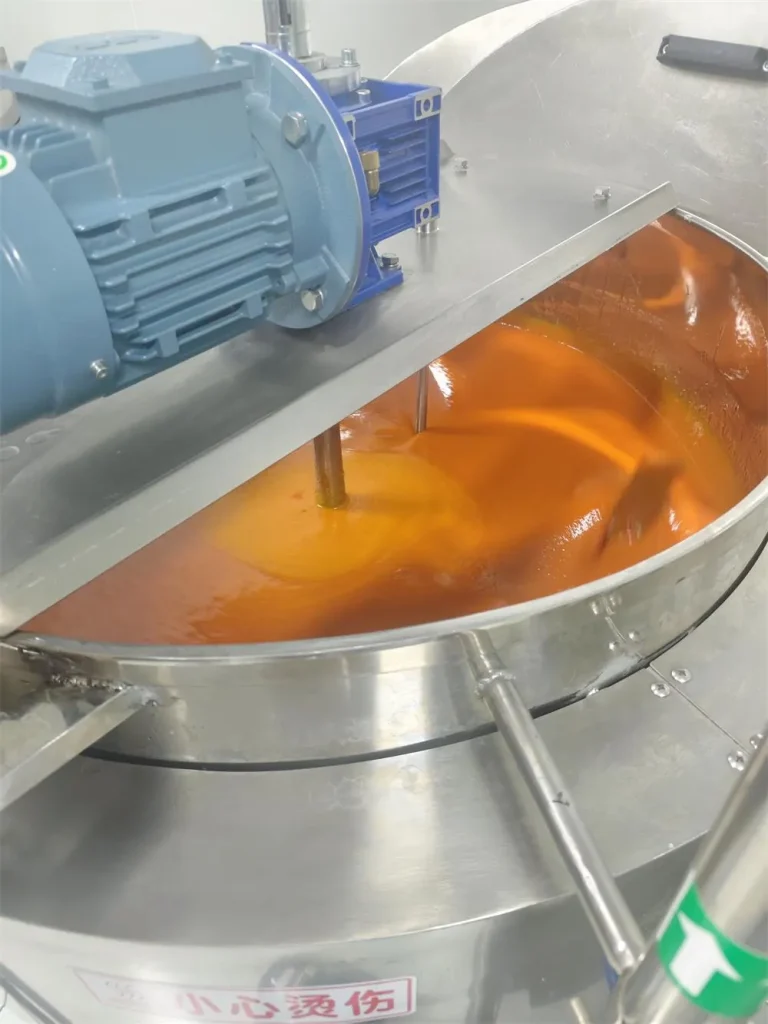
3. Heat Exposure During Cooking and Active Addition Point
Heat is unavoidable in gummy production—the real question is where and for how long the active is exposed to it. Gummy syrup is cooked to 80-110°C depending on the process. Gelatin systems are typically held at 80-90°C, pectin at 105-110°C for a short time. Most vitamins, probiotics, and botanicals cannot survive that stage.
Manufacturers protect actives by adding them after cooking, during cooling, when the mass is 60-75°C, followed by rapid mixing and depositing. If the active is added too hot, you see immediate loss. If it is added too cold, you get poor dispersion, dosage inconsistency, and visible specks. Heat-sensitive ingredients like retinol, probiotics, and enzymes require precise timing, jacketed mixing vessels, and fast depositing to limit total heat exposure time.
4. Oxygen, Light, and Oxidation
Oxidation is a storage-time failure: even a well-made gummy can lose potency slowly if oxygen and light keep working on the matrix. Unsaturated oils, vitamin A, vitamin D, omega-3, astaxanthin, and natural colors are oxygen-sensitive. In a gummy matrix, oil droplets are dispersed but not fully protected. Oxygen permeates through standard pouches and continues to oxidize during storage.
Light accelerates this, especially for riboflavin, vitamin A, and curcumin. This is why packaging compatibility is a stability decision, not just a marketing decision. High-barrier film, opaque bottles, and nitrogen flushing during packaging reduce oxidation rate more than formula tweaks alone.
5. Ingredient-Ingredient Incompatibility
In a gummy, the excipients are not neutral—every ingredient can change the stability of every other ingredient. Some incompatibilities are chemical. Reducing sugars with lysine or other amino acids drive Maillard browning. Iron and zinc catalyze oxidation of vitamin C and flavor oils. High mineral loads raise ionic strength, which can break pectin gels or make gelatin rubbery. Tannin-rich botanical extracts can bind gelatin, reducing gel strength.
Other incompatibilities are physical. Oil-based actives like CoQ10 or vitamin D need an emulsification system to stay dispersed. Without it, they migrate to the surface, causing oily spots and uneven potency.
6. Hygroscopic and High-Dose Actives
Dose size is a water-management problem as much as a dosage problem. Active loading directly affects gummy size and water management. Vitamins like vitamin C at 250-500 mg per serving, minerals like magnesium or calcium, and fiber like inulin are bulky. To fit them, you either increase gummy weight to 4-5 grams, increase serving count to 2-3 gummies, or accept lower texture quality—and with it, lower melting resistance in warm climates.
Many mineral salts are hygroscopic. They attract water after drying, which raises Aw, softens the surface, and creates a sticky, sweating gummy. This also accelerates microbial growth if Aw moves above 0.80. This is a major reason why some mineral concepts work better as capsules than as a private label gummy.
7. Packaging and Storage Conditions
Packaging is part of the formula: barrier properties determine how long the finished gummy stays inside its stability window. Even a well-formulated gummy will lose potency if packaging has high moisture vapor transmission rate (MVTR) or oxygen transmission rate (OTR). Low-barrier stand-up pouches can allow moisture ingress in humid climates, raising Aw by 0.05-0.10 within months.
Storage temperature compounds the problem. Every 10°C increase roughly doubles many degradation reactions. Products shipped without temperature control in summer can experience potency loss equivalent to several months of shelf life in a few weeks.
Ingredient-Specific Stability Challenges
Not all actives behave the same in gummies. Use this table to screen your concept before formulation—it maps the main stability risk, the mechanism, and the manufacturing response for each major active category.
| Tipo ativo | Main Stability Risk in Gummies | Por que isso acontece | Resposta da indústria |
|---|---|---|---|
| Vitamina C (ácido ascórbico) | Oxidation and browning | Sensitive to heat, oxygen, high Aw, and trace metals | Add after cooling, use non-metal contact, low Aw target, opaque high-barrier packaging |
| B12, Folate | Light and acid sensitivity | Degrades at low pH and under light exposure | Use gelatin at higher pH when possible, protect from light, minimize heat time |
| Probióticos | Moisture and heat kill | Live organisms require low heat and very low Aw | Specialized low-temperature process, Aw below 0.65, desiccant packaging, overage based on stability data |
| Iron, Zinc, Magnesium salts | Off-taste, gel disruption, catalyzed oxidation | Metallic ions increase ionic strength and redox activity | Limit dose per gummy, use coated mineral forms, separate from vitamin C when possible |
| Botanicals and polyphenols | Color bleed, flavor, protein binding | Tannins interact with gelatin, pigments sensitive to pH | Pre-test with gel system, use pectin for tannin-rich extracts, flavor masking system |
| Omega-3, CoQ10, Carotenoids | Oil separation and oxidation | Poor water solubility, oxygen-sensitive | Emulsification, antioxidant system, nitrogen-flushed packaging |
How a Gummies Manufacturer Controls Stability During Scale-Up
A concept that works in a lab beaker often fails on a depositing line because heat history, mixing shear, and drying uniformity change. Commercial control happens in four stages.
Specification review and raw material testing. Every active is checked for assay, moisture, particle size, and compatibility data. Hygroscopic actives are stored with desiccant and pre-sieved to improve dispersion.
Batch preparation and active addition. The sugar, glucose syrup, and gelling agent are cooked separately from the actives. The mass is cooled to a defined window, typically 65-75°C for gelatin and 85-95°C for pectin, then actives, acids, flavors, and colors are added under controlled shear. Mixing time is limited to prevent air incorporation and heat buildup.
Depositing, cooling, and drying. Depositing must be fast and temperature-consistent to avoid pre-gelation; cooling tunnels set the gel; drying or conditioning rooms bring moisture down to the target Aw. Over-drying hardens the surface and traps moisture inside; under-drying leaves Aw too high and compromises stability.
Coating, inspection, and packaging. Wax or oil coatings reduce sticking and provide a light moisture barrier; metal detection and visual inspection remove deformed pieces; packaging runs under controlled relative humidity, typically below 40%, to avoid moisture pickup at the final step.
Shenzhen Gothink Biotech Co., Ltd. applies this staged control in its GMP-certified facility, with a 100,000-class cleanroom and a 10,000-class R&D laboratory, so pilot batches run under temperature and humidity control similar to commercial production.
Quality Control and Shelf-Life Validation
Stability cannot be claimed—it must be verified with data. A capable manufacturer will run water activity and moisture content on every batch after conditioning; pH and Brix for process consistency; potency assays of key actives at release and during stability; microbial testing including total plate count, yeast and mold, and pathogens; and texture analysis plus sensory checks over time.
Shelf-life validation requires real-time and accelerated stability studies. Accelerated conditions (e.g., 40°C / 75% RH) help predict risk, but gummies are complex, and real-time data at 25°C / 60% RH is needed to set a defensible expiry date. For a private label project, ask how overage is calculated—and whether that overage is based on data or on assumptions.
Why Partner with a Contract Manufacturer That Engineers Stability
The difference between a successful gummy launch and a costly rework is decided before tooling is cut: by the formulation, the process, and the stability data behind them. Stability decisions affect cost directly—overages, gummy size, shelf life, and storage requirements all flow from how well the matrix protects the active.
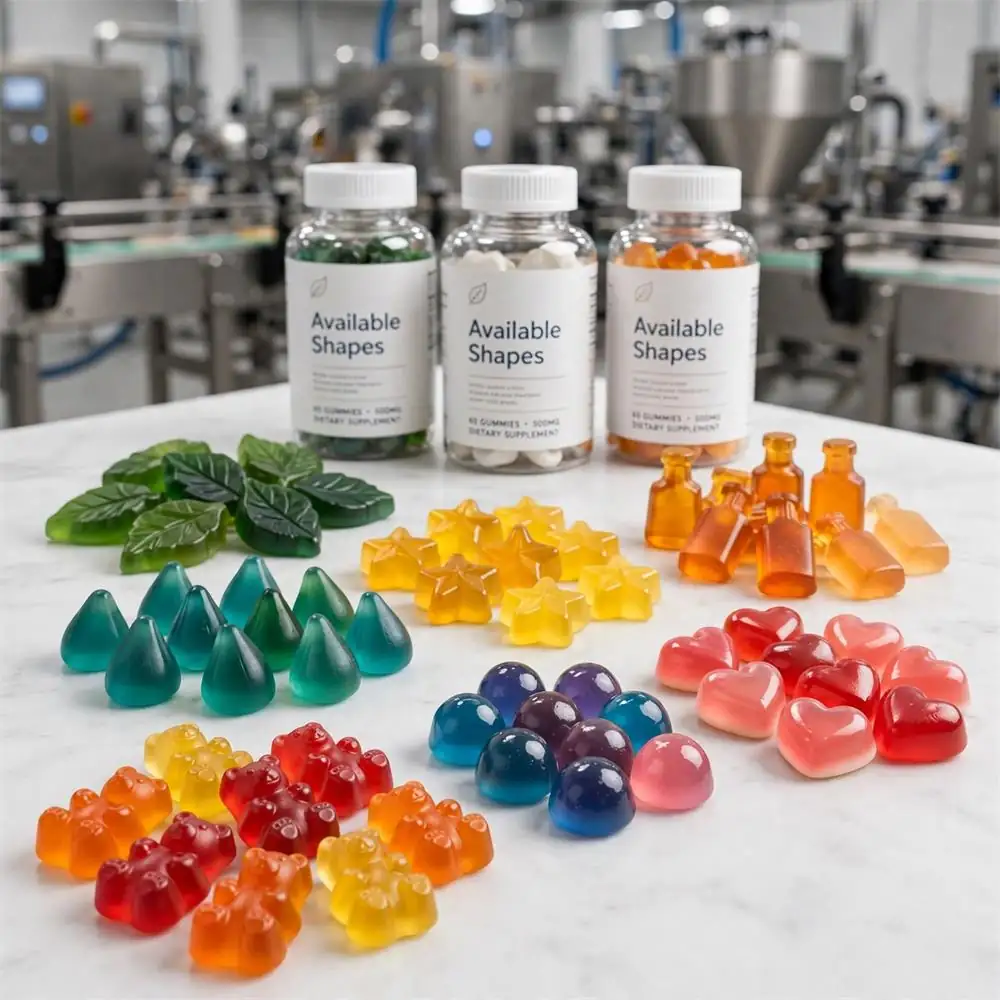
A turn-key OEM/ODM partner should cover the full decision set: custom shapes, custom flavors, color matching, sugar-free and polyol options, bottle and pouch packaging, and stability-guided formulation from the first brief. When you evaluate partners, ask for MOQ thresholds and lead times early, and request documentation—COA/TDS packages, stability protocols, and manufacturing capability statements.
Ready to de-risk your next launch? Request a 3D custom gummy mold design, custom flavor sample kits, or an instant OEM quotation, and let a stability-first manufacturer turn your concept into a compliant, shelf-stable private label gummy. Contact Shenzhen Gothink Biotech Co., Ltd. to start the conversation.
Explore more technical articles in our Central de Conhecimento.