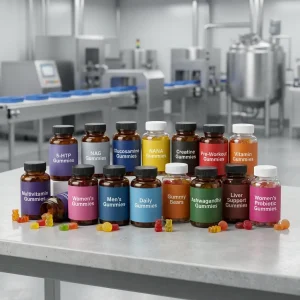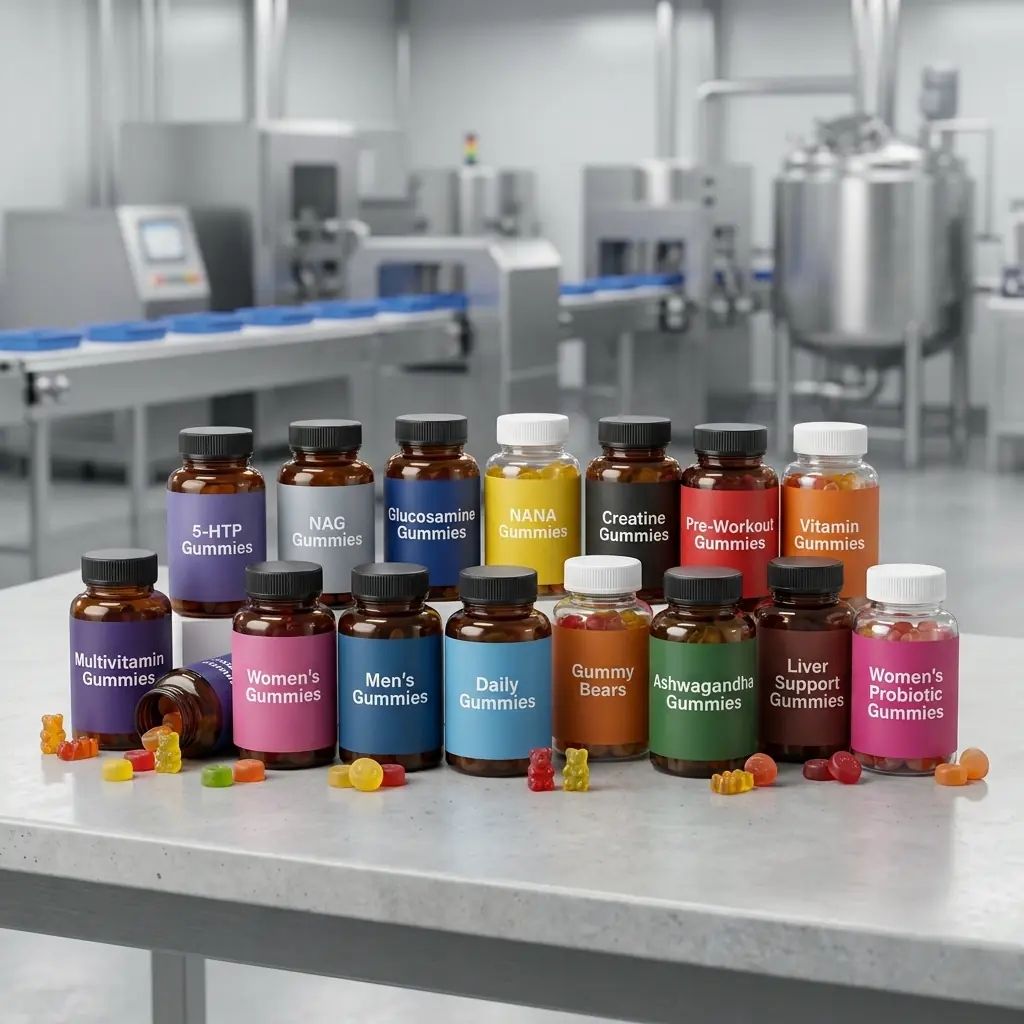

For supplement brands, private-label operators, and distributors evaluating joint-health ingredients, the terminology around “glucosamine” creates frequent confusion. One name in particular — asetilglukosamin — is often treated as a mystery ingredient, or mistakenly assumed to be interchangeable with the glucosamine in conventional joint tablets.
Bukan itu. asetilglukosamin is the common short form of N-Acetyl Glucosamine (NAG, or GlcNAc) — a distinct, acetylated amino sugar with its own chemistry, mechanism, evidence base, and commercial positioning. For manufacturers and brand owners, understanding exactly what NAG is (and is not) is the difference between a credible product claim and a compliance risk.
This guide is written for B2B buyers: formulators, brand managers, and sourcing teams who need a working, technically accurate picture before they specify an ingredient or brief a contract manufacturer.
Quick clarification for brand teams: If your product line already includes a “NAG Gummy,” you already have an acetyl glucosamine product. The two names refer to the same molecule. The related-but-different ingredient is glucosamine sulfate / HCl (the classic joint-health glucosamine), which we compare side-by-side below. Explore the full joint health gummy range.

What Is Acetyl Glucosamine (N-Acetyl Glucosamine)?
Acetyl glucosamine — properly N-Acetyl-D-Glucosamine (NAG, GlcNAc) — is an amino sugar in which an acetyl group is attached to the nitrogen of the glucosamine molecule. That small structural change separates it from glucosamine sulfate and glucosamine hydrochloride, which carry sulfate or chloride groups instead.
In the human body, NAG sits at the entry point of the hexosamine biosynthetic pathway. Once absorbed, it is converted to UDP-N-acetylglucosamine, the activated sugar donor used to build:
- Asam hialuronat — the large polysaccharide that lubricates joints and binds water in skin.
- Glycosaminoglycans (GAGs) and aggrecan — structural components of cartilage.
- Mucin glycoproteins — the protective mucus layer that lines the intestinal tract.
This shared biosynthetic role is why NAG appears in three different product categories — joint health, skin/hydration (“beauty-from-within”), and gut mucosal support — rather than in joint formulas alone.
Naturally present in: human cartilage and synovial fluid, chitin (the structural component of crustacean shells and fungal cell walls), breast milk (as part of human milk oligosaccharides), and the mucosal lining of the gastrointestinal tract.
Sourcing note for buyers: Commercial NAG is typically derived from crustacean chitin (shrimp, crab, lobster shells) or produced by fermentation (often corn-derived), which yields a shellfish-free, vegetarian/vegan-compatible material. The source matters for allergen labeling and for brands targeting vegetarian or allergy-sensitive segments.
Acetyl Glucosamine vs. Glucosamine: Not Interchangeable
The single most common specification error we see is labeling a product that contains NAG as if it contained “glucosamine sulfate.” They are different chemical entities and should be declared separately on formulations and Supplement Facts panels.
| Atribut | Acetyl Glucosamine (NAG / GlcNAc) | Glucosamine Sulfate | Glukosamin Hidroklorida (HCl) |
|---|---|---|---|
| Identitas kimia | Acetylated amino sugar | Glucosamine + sulfate salt | Glucosamine + chloride salt |
| Primary biological role | Precursor to hyaluronic acid, GAGs, and gut mucin | Building block of cartilage GAGs | Alternative glucosamine source |
| Common joint-health evidence | Supportive but smaller trial base; strong mechanistic rationale | Largest osteoarthritis trial base (e.g., GAIT and related studies) | Similar to sulfate; higher purity, no added salt |
| Sudut yang khas | Gut mucosal support; beauty-from-within crossover via HA | Established mainstream joint category | Cost-effective mainstream option |
| Typical oral dose range | ~500–1,500 mg/day (higher in some studies) | ~1,500 mg/day | ~1,500 mg/day |
| Allergen / source options | Shellfish-derived or fermentation-based (vegan) | Usually shellfish-derived | Usually shellfish-derived |
Poin penting praktis untuk merek: NAG is best positioned as a dibedakan glucosamine-form ingredient — not as a synonym for “glucosamine.” Marketing it as a premium, well-tolerated, or multi-functional alternative is defensible; silently substituting it for glucosamine sulfate in copy or labeling is not. Compare our Permen Karet N-Asetil-Glukosamin ke Permen Jeli Glukosamin.
How Acetyl Glucosamine Works
The value proposition of NAG rests on three mechanistic pillars, each relevant to a different product positioning:
1. Joint lubrication via hyaluronic acid. NAG is one of the two sugar units that make up hyaluronic acid. By supplying the activated precursor, it supports the synovial fluid and cartilage matrix that contribute to joint comfort and mobility.
2. Cartilage structure via GAGs / aggrecan. As a GAG precursor, NAG feeds the synthesis of the proteoglycans that give cartilage its shock-absorbing properties.
3. Gut mucosal integrity via mucin. This is NAG’s most distinctive, and most under-used, positioning. Mucin glycoproteins form the protective lining of the intestine. NAG is a direct building block for that layer, which is why it appears in gut-health formulations as well as joint formulas.
Evidence, stated honestly: NAG’s joint-health support is mechanistically strong and backed by smaller clinical trials suggesting symptom relief, but the overall clinical evidence base is narrower than that of glucosamine sulfate. Brands should avoid absolute efficacy claims (“superior to glucosamine sulfate”) and instead lean on mechanism, tolerability, and multi-category versatility. For gut mucosal support, the mechanistic case is excellent even where large RCTs are still limited.
Benefits by Application (and the Evidence Behind Each)
- Joint health & mobility. NAG contributes to hyaluronic acid and cartilage GAG synthesis. Several smaller trials support symptom relief, though the largest osteoarthritis studies have used glucosamine sulfate. Position NAG as a premium joint ingredient with a sound mechanistic basis rather than a proven replacement for established glucosamine forms.
- Skin hydration & “beauty-from-within.” As a hyaluronic acid precursor, NAG is relevant to skin moisture and smoothness. Oral evidence is more limited than topical; the crossover appeal is strongest when NAG is combined with collagen in a beauty-positioned formula.
- Gut barrier support. NAG is a direct precursor to intestinal mucin. This makes it relevant for combination gut-and-joint positioning — a distinctive angle versus conventional glucosamine.
- Immune & inflammatory modulation. Preliminary research suggests NAG influences immune cell signaling; this remains an emerging, not yet established, claim area.
Pengingat kepatuhan: Specific structure/function claims must be validated against the regulations of each target market (FDA, EFSA, and regional frameworks). Keep claims measured and substantiation-ready.
Formulation Considerations for NAG Gummies (B2B Depth)
Translating NAG into a gummy is not a matter of stirring powder into a standard recipe. The following factors determine whether the finished product is commercially viable:
- Dosage vs. piece size. Effective NAG doses (often 500–1,500 mg/day, split across servings) require meaningful active loading. Gummy piece size, serving count, and chewability must be engineered together.
- Taste and solubility. Amino sugars can influence mouthfeel. Flavor system, sweetener choice, and acid balance need optimization during sampling.
- Moisture and stability. Gummies are moisture-sensitive; active-ingredient retention should be verified under agreed shelf-life and storage conditions.
- Vegan / allergen positioning. Fermentation-derived NAG enables pectin-based, shellfish-free gummies — a growing requirement for clean-label and vegetarian SKUs.
- Strategi kombinasi. NAG is frequently paired with asam hialuronat (lubrication), kolagen (structure / beauty crossover), and MSM (active-lifestyle support) to build a multi-functional formula.
Working through these trade-offs is exactly where a contract manufacturer adds value. Our joint health gummy development team evaluates ingredient compatibility, dosage feasibility, sensory performance, and stability before a formula goes to production.
Market Positioning: Category Recognition + Differentiation
Consumer search behavior creates a positioning opportunity. “Glucosamine gummies” has far higher search volume than “NAG gummies,” yet NAG is the more specialized, premium ingredient. The proven two-level strategy:
- Category level: Position around the familiar need — joint health, mobility, cartilage support.
- Differentiation level: Identify NAG as the advanced, well-tolerated active — the reason a shopper should choose ini product over a commodity glucosamine gummy.
This bridges the gap between what customers search for and what the formula actually delivers, without misleading claims.
Sourcing & Quality Specifications (B2B Checklist)
When you source NAG for private-label or OEM production, the following specifications protect your brand:
- Kemurnian — verified by HPLC (commonly ≥ 98–99%).
- Source declaration — shellfish-derived vs. fermentation-based; affects allergen and vegan claims.
- Dokumentasi — Certificate of Analysis (CoA), BSE/TSE-free, non-GMO status, allergen statement.
- Pemenuhan — confirm allowable status and maximum levels per target market; shellfish-derived material triggers allergen labeling.
- Keandalan pasokan — batch-to-batch consistency and traceability for recurring production.
Gothink Biotech NAG & Glucosamine Gummy Options
We develop and manufacture both molecule families as customized gummies:
- N-Acetyl-Glucosamine (NAG) Gummies — differentiated, premium joint-health formulations; available with HA, collagen, or MSM, and in vegan systems.
- Permen Jeli Glukosamin — conventional glucosamine sulfate / HCl formats for mainstream joint-health positioning.
- Joint Health Gummy Hub — the full range of glucosamine, NAG, chondroitin, MSM, HA, and collagen formulation concepts.
All are available as OEM, ODM, and private-label programs with custom flavor, shape, packaging, and label services.
Pertanyaan yang Sering Diajukan
Is acetyl glucosamine the same as glucosamine?
No. Acetyl glucosamine (NAG) is the acetylated form of glucosamine. Glucosamine supplements usually refer to glucosamine sulfate or HCl. They have different chemical identities and should be labeled separately.
Is acetyl glucosamine the same as our NAG Gummy?
Yes — “acetyl glucosamine,” “N-Acetyl Glucosamine,” “NAG,” and “GlcNAc” all refer to the same molecule. A NAG Gummy is an acetyl glucosamine product.
Which is better for joints: NAG or glucosamine sulfate?
They are different tools. Glucosamine sulfate has the broader osteoarthritis clinical record. NAG has strong mechanistic support, a distinctive gut-mucosa benefit, and a premium, often better-tolerated positioning. The right choice depends on your brand strategy and target market.
Can NAG gummies be vegan / shellfish-free?
Yes, when produced from fermentation-derived NAG and a pectin or carrageenan gummy base rather than gelatin.
What dose should a NAG gummy contain?
Typical supplemental ranges are about 500–1,500 mg/day, split across servings. The exact per-piece dose depends on serving size, piece count, and formulation feasibility — a point to confirm during sample development. Some clinical studies have used higher doses under supervision.
Does NAG help gut health, not just joints?
NAG is a direct precursor to intestinal mucin, the protective gut lining. This makes it relevant for combination gut-and-joint positioning, though clinical evidence for gut outcomes is still developing.
Build Your NAG or Glucosamine Gummy
Whether you want a differentiated N-Acetyl-Glucosamine formula or a conventional glucosamine gummy, the formulation decision should be driven by target market, dosage, sensory goals, and positioning — not by name recognition alone.
Tell our team your target ingredients, dosage, market, and estimated volume, and we will evaluate the formula from ingredient selection through commercial production.
Start your joint health gummy project → Explore formulation options